Managing waste is not simply about getting rid of unwanted materials. For businesses, factories, recycling facilities, warehouses, and waste collection operations, the physical volume of waste can become a serious operational challenge. Cardboard, plastic bottles, paper, packaging materials, and other recyclables may be relatively lightweight, but they can quickly occupy valuable storage space.
This raises an important question: how can we reduce waste volume while making storage and transportation more efficient?
The answer starts with understanding how waste is generated, how materials can be recovered, and when compaction becomes useful.
Why Does Waste Volume Keep Increasing?
Waste volume can increase as a result of growing consumption, production activities, packaging use, and commercial operations.
In industrial and business environments, the problem can become more noticeable because waste is often generated continuously rather than occasionally.
The challenge is not always the weight of the waste. Bulky materials such as cardboard boxes, plastic containers, and packaging can occupy considerable space before they are collected, processed, or recycled.
As waste accumulates, businesses may face limited storage capacity, more complicated material handling, and potentially more frequent transportation.
This is why effective waste management needs to consider not only how much waste is generated, but also how efficiently that waste is stored and moved.
Learn more about: Indonesia’s Waste Management Crisis: Landfills Are Filling Up—Where Will the Waste Go?
How Can You Reduce Waste Volume?
The first step is to reduce waste at its source. The U.S. Environmental Protection Agency (EPA) places source reduction and reuse among the most preferred waste management strategies because they prevent waste from being generated in the first place.
Several practical approaches can be applied:
- Reduce unnecessary packaging and single-use materials.
- Reuse products and containers whenever possible
- Separate recyclable materials from other waste streams.
- Recycle materials that still have recovery value.
- Compact suitable materials when physical volume becomes a storage or transportation problem.
It is important to understand that reducing waste generation and reducing waste volume are not exactly the same thing.
Source reduction prevents waste, while compaction manages the physical size of waste that has already been generated.
What Are the Solutions for Reducing Waste?
Waste reduction should ideally follow a hierarchy rather than relying on a single method.
The EPA’s waste management hierarchy emphasizes source reduction and reuse, followed by recycling and composting, with treatment and disposal further down the hierarchy.
For businesses, practical solutions can include improving purchasing decisions, reducing unnecessary materials, reusing suitable products, separating recyclable materials, and improving collection and processing systems.
UNEP also promotes reuse and recycling as important components of a broader zero-waste approach.
When waste cannot be avoided, the next objective is to manage it efficiently. This is where sorting, processing, and, for suitable materials, waste compaction become relevant.
What Are 5 Examples of Reduce in Waste Management?
The reduce principle focuses on preventing unnecessary waste before it is created. Examples include:
- Reducing the use of single-use products.
- Choosing products with less packaging.
- Purchasing materials according to actual needs.
- Using reusable containers and equipment.
- Reducing unnecessary material consumption during production.
These actions can help reduce the amount of waste that eventually needs to be collected, transported, processed, or disposed of.
What Are the 3 Methods to Reduce Waste?
The three commonly recognized approaches are Reduce, Reuse, and Recycle.
Reduce means preventing unnecessary waste from being created.
Reuse means extending the useful life of products or materials instead of immediately discarding them.
Recycle means collecting and processing suitable waste materials so they can become raw materials for new products.
The EPA identifies recycling as an important part of sustainable materials management, while still placing source reduction and reuse higher in the hierarchy.
These approaches address waste generation and resource recovery. However, businesses handling large quantities of recyclable materials may also face another issue: physical volume.
Why Is Waste Compaction Important for Saving Space?
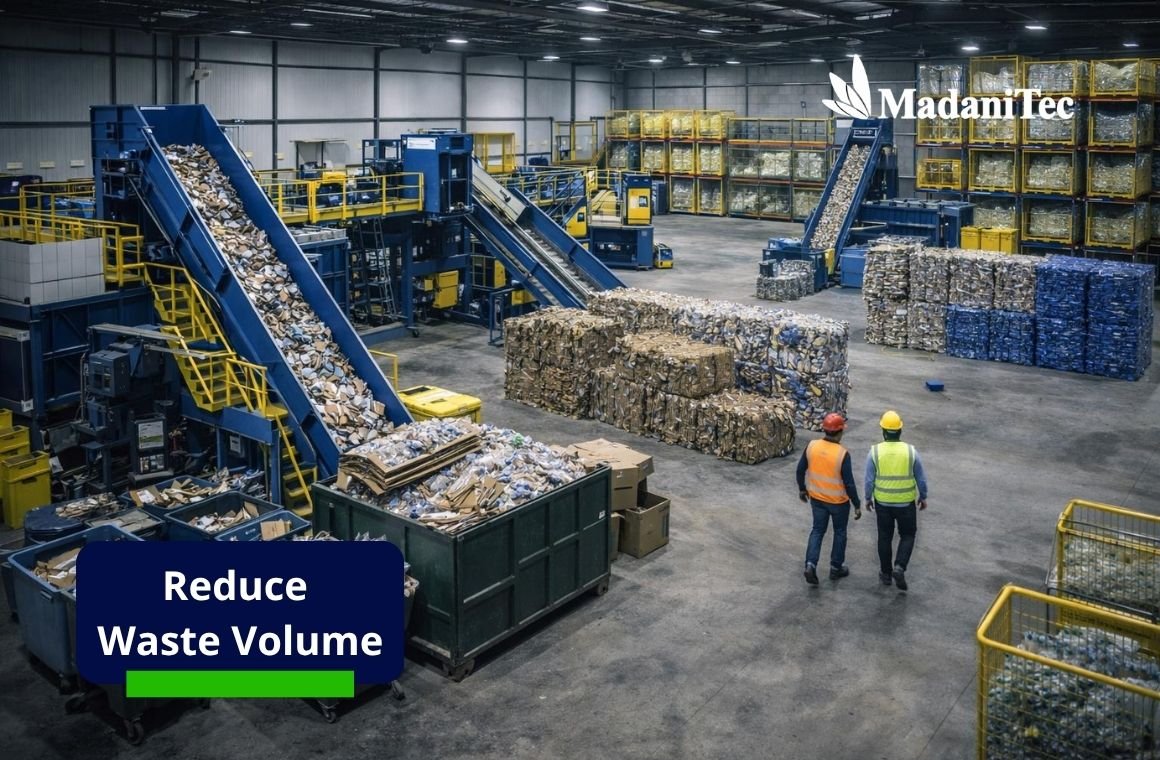
Waste compaction reduces the amount of physical space occupied by suitable materials. This can be particularly useful for bulky recyclables such as cardboard, paper, and certain types of plastic.
The U.S. EPA has documented the use of mechanical compaction systems to densify waste before transportation.
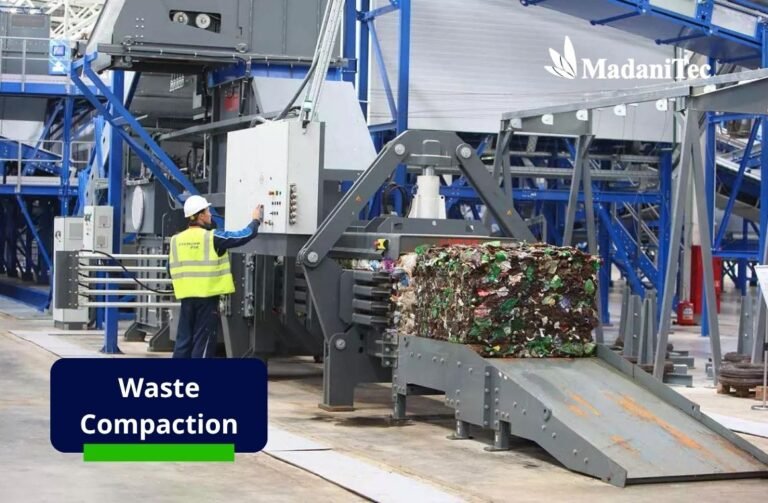
Hydraulic systems are among the technologies used for this purpose, while baling can also be used for materials that need to be transported over longer distances.
For a business, better compaction can make materials easier to organize and handle. It may also help make better use of available storage and transportation capacity.
How Can Waste Be Compacted to Reduce Its Volume?
There are several ways to approach waste compaction.
Manual compaction may be sufficient for small quantities, but it becomes increasingly difficult when material is generated continuously.
Mechanical compaction can provide more consistent results and reduce the physical effort required from operators.
For larger or recurring volumes, a Hydraulic Press Machine can be considered as one option for compressing suitable recyclable materials.
Hydraulic systems use controlled force to compress material into a denser form, making it easier to store and handle.
The appropriate equipment depends on the material, volume, desired bale size, operating frequency, and specific requirements of the facility.
When Do You Need a Hydraulic Press Machine?
A hydraulic press machine may become worth considering when manual handling starts creating operational limitations.
Some common signs include:
- Storage areas are filling up quickly.
- Recyclable materials are difficult to organize.
- Operators spend significant time compacting materials manually.
- Transportation capacity is being consumed by bulky materials.
- Waste generation is regular and predictable.
- A more consistent compaction process is required.
The goal is not simply to add another machine to the operation. The equipment should solve a specific bottleneck in storage, handling, processing, or transportation.
What Types of Waste Can Be Compacted?
Suitable materials depend on the design and specifications of the equipment. Common examples may include cardboard, paper, certain plastic materials, and PET bottles.
However, not every waste stream should be treated in the same way. Materials should first be sorted according to their characteristics, contamination level, moisture content, and recycling requirements.
Proper sorting is important because compaction should support the recycling process rather than make material separation more difficult.
What Are the Benefits of Compacting Waste Before Transportation?
Compaction can help make bulky materials more manageable. Potential benefits include better use of storage space, easier handling, improved organization, and more efficient transportation.
For recyclable materials, baling or compacting can also create standardized units that are easier to handle during loading and unloading.
However, the actual operational benefit depends on material type, density, transportation distance, vehicle capacity, and the existing waste management system.
How Can Waste Compaction Help Reduce Transportation Costs?
Transportation costs are influenced by several factors, including distance, vehicle capacity, fuel consumption, labor, and transportation frequency.
When bulky waste occupies a large amount of space before reaching the vehicle’s weight limit, transportation efficiency can become an issue. Compaction can increase material density, allowing available space to be used more effectively.
This does not automatically mean every business will reduce transportation costs. Instead, compaction should be evaluated based on the relationship between waste volume, transportation frequency, storage capacity, and operating costs.
How Should You Choose a Waste Compaction Method?
The right approach depends on the scale and characteristics of the operation.
Small quantities may be manageable through manual methods. Moderate volumes may justify mechanical assistance, while businesses handling large and recurring quantities of recyclable materials may consider hydraulic pressing or baling systems.
Before choosing equipment, consider the type of material, daily volume, desired output, available space, labor requirements, and transportation needs.
Conclusion
Reducing waste volume is not only about making waste disappear. It is about managing materials more efficiently from the point where they are generated until they are reused, recycled, transported, or otherwise managed.
Source reduction and reuse should remain priorities, followed by appropriate recycling and recovery strategies.
For businesses already dealing with significant volumes of recyclable materials, waste compaction can become an important part of a more efficient handling system.
When the volume and frequency of recyclable materials continue to increase, a hydraulic press machine may provide a practical way to make suitable materials more compact, organized, and easier to handle.
The key is choosing a system based on the actual needs of the operation rather than simply choosing the largest machine available.
Madanitec — providing technology and machinery solutions to support waste processing and the development of circular economy-based businesses, Indonesia’s waste issues.
Affordable prices and reliable quality are supported by after sales service and warranty with every purchase. Do not hesitate to contact 081215778768 via WhatsApp and get a special offer today.