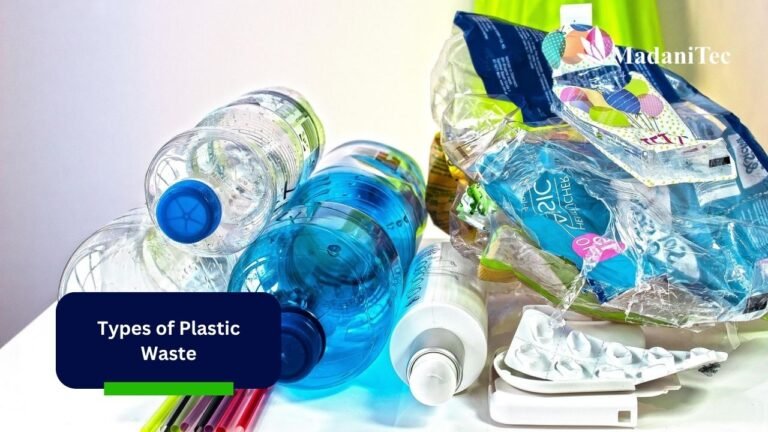
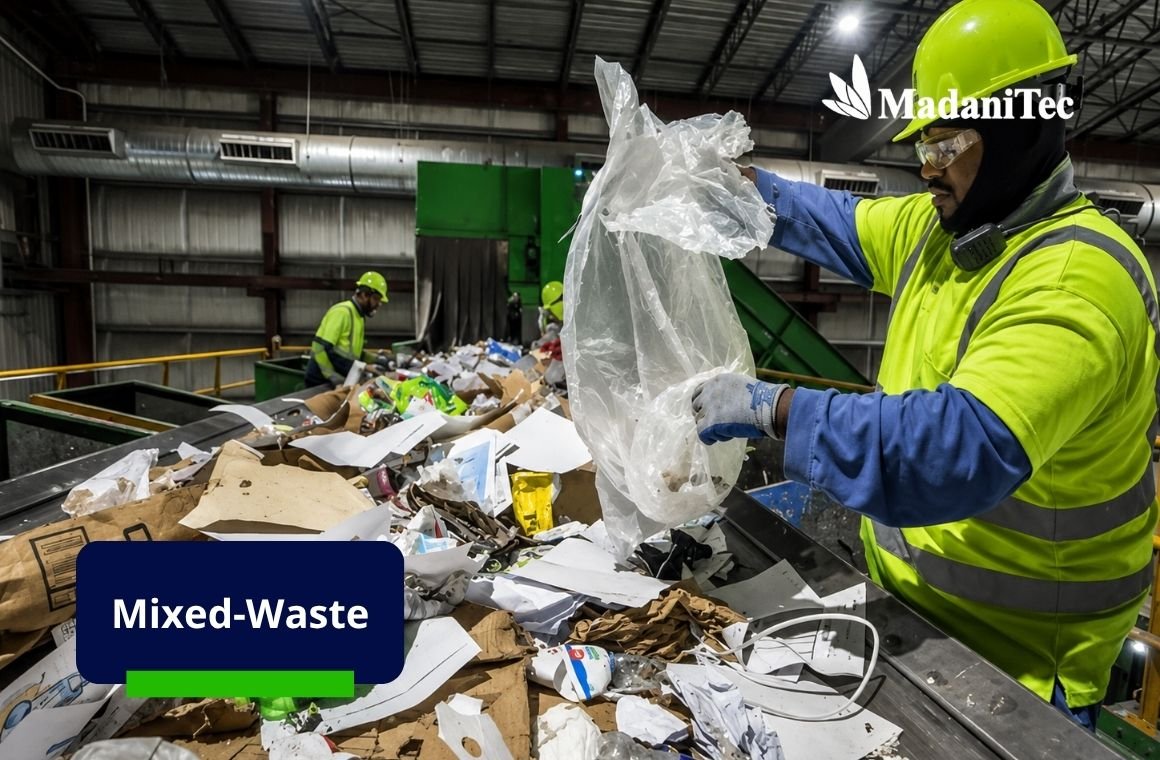
Mixed waste is becoming an increasingly important challenge in modern waste management. When different types of waste are collected and handled together, materials that could otherwise be recycled, reused, or recovered may become contaminated and more difficult to process.
As waste volumes continue to grow, the way these materials are collected, separated, and processed becomes increasingly important. The World Bank’s What a Waste 3.0 estimates that the world generated approximately 2.56 billion tonnes of municipal solid waste in 2022, with this figure projected to reach 3.86 billion tonnes by 2050 under a business-as-usual scenario.
The problem is not simply the amount of waste being generated. It is also what happens when materials with different characteristics are mixed together. Understanding this hidden cost is an important step toward better waste separation and more effective resource recovery.
What Is Waste?
The term waste generally refers to unwanted or discarded materials resulting from human activities and consumption.
UNEP notes that waste can be categorized in several ways, including by material, product type, or source.
This means waste is a broad category that can include food waste, plastics, paper, electronic waste, industrial waste, construction waste, and many other materials.
Municipal solid waste is only one part of the wider waste stream. Within it are both organic and inorganic materials.
Food scraps, garden waste, paper, cardboard, and wood are commonly classified as organic materials, while plastics, metals, and glass are generally considered inorganic materials.
Understanding these differences is important because each material may require a different handling, treatment, or recovery process.
What Is Mixed Waste?
Mixed waste refers to waste in which different material types are collected or handled together instead of being separated.
For example, a single waste stream may contain food scraps, plastic packaging, cardboard, metal cans, glass, and other discarded materials.
At first glance, putting everything into one container may seem convenient. The problem becomes more apparent when the material reaches a sorting or processing facility.
Organic materials can contain moisture and residues that contaminate dry recyclable materials. Food waste stuck to paper or plastic, for example, can make those materials more difficult to recover at their original quality.
This is why separation is not simply about keeping waste containers organized. It can directly influence what happens to the material later.
Why Does Mixed Waste Become a Problem?
The biggest issue with mixed waste is contamination.
When materials with different physical and chemical characteristics are combined, separating them later can require additional handling, labor, equipment, and processing steps.
Some materials may also become unsuitable for certain recovery processes.
The European Environment Agency highlights that collection systems have a significant influence on recycling quality.
Its analysis notes that mixed collection systems can lead to greater material losses and lower recycling efficiency, while effective sorting can help improve the quality of recovered materials.
In other words, the cost of poor separation may not appear when waste is first thrown away. It often appears later in the processing chain.
Learn more about: Indonesia’s Waste Management Crisis: Landfills Are Filling Up—Where Will the Waste Go?
How Does Mixed Waste Affect Recycling?
Recycling depends on recovering materials in a condition that allows them to be processed and used again.
When recyclable materials are heavily contaminated, additional sorting, cleaning, or treatment may be required. In some cases, the material may lose enough quality or value that recovery becomes less attractive.
This is particularly important for businesses that depend on recovered materials as raw inputs. A cleaner and more consistent material stream can make downstream processing easier to manage.
The EEA identifies separate collection and effective sorting as important factors in achieving higher-quality recycling.
Therefore, recycling does not really begin at the recycling plant. It begins much earlier with how waste is collected, separated, and handled.
The Economic Impact of Poor Waste Separation
The environmental impact of mixed waste is often discussed, but there is another side that deserves attention: the economic cost.
When waste arrives at a facility in a highly mixed condition, operators may need additional labor, sorting stages, storage, transportation, cleaning, or treatment. These requirements can increase operating costs.
At the same time, potentially valuable materials may be lost or downgraded.
The World Bank describes solid waste management as a technically and financially complex service, with poor management creating environmental, health, and economic consequences.
This creates a simple but important relationship:
Poor separation → more contamination → more processing requirements → higher costs → greater material losses.
That is the hidden cost behind mixed waste.
Why Is Waste Separation Important?
Waste separation helps create more suitable material streams for different treatment and recovery processes.
Instead of sending everything into one mixed stream, organic materials can be directed toward composting or other biological treatment, while recyclable materials such as plastics, metals, paper, and glass can be prepared for material recovery.
The benefits extend beyond recycling. Better separation can also make waste facilities easier to organize, improve material quality, and reduce the amount of recoverable material that ends up being discarded.
The World Bank’s data shows that waste composition varies significantly across regions and income levels, reinforcing the importance of understanding the characteristics of the waste stream before selecting appropriate management solutions.
How Can Better Waste Sorting Improve Resource Recovery?
The goal of modern waste management is increasingly shifting from simply disposing of waste toward recovering resources from it.
When materials are separated more effectively, each fraction can be directed toward a process that matches its characteristics.
Organic material may become compost or another useful output, while plastics, metals, paper, and other recyclable materials can enter different recovery pathways.
This approach supports the principles of a circular economy, where materials are kept in productive use for as long as possible rather than immediately becoming waste.
However, effective recovery depends on more than technology alone. The World Bank emphasizes that locally appropriate solutions, good collection systems, financing, policy, and operational capacity all play important roles in improving waste management.
Where Does Technology Fit Into Modern Waste Management?
As waste volumes increase, manual sorting can become difficult to scale. The challenges may involve labor availability, processing speed, consistency, and the sheer quantity of material that needs to be handled.
Technology can help address some of these limitations by supporting more structured and efficient sorting processes.
This does not mean that every waste facility needs the same equipment. The appropriate solution depends on the type of waste, desired output, processing capacity, available space, and overall management system.
Can Waste Sorting Machines Help Handle Mixed Waste?
For facilities handling significant volumes of mixed material, Waste Sorting Machine can become part of a broader separation system.
For facilities handling significant volumes of mixed material, waste sorting machines can become part of a broader separation system.
Depending on the design, equipment can help separate materials based on characteristics such as size, weight, shape, or other physical properties.
The objective is not simply to make sorting faster, but to create more consistent material streams that can be processed more effectively afterward.
For businesses and waste-management operators, the key consideration is therefore not simply whether a machine can sort waste, but whether the technology fits the actual material composition, capacity requirements, workflow, and recovery objectives.
Depending on the design, equipment can help separate materials based on characteristics such as size, weight, shape, or other physical properties.
The objective is not simply to make sorting faster, but to create more consistent material streams that can be processed more effectively afterward.
For businesses and waste-management operators, the key consideration is therefore not simply whether a machine can sort waste, but whether the technology fits the actual material composition, capacity requirements, workflow, and recovery objectives.
Conclusion
Mixed waste is more than an environmental challenge. It can also become an economic problem when potentially useful materials are contaminated, lost, or made more expensive to recover.
Better waste separation can help reduce these challenges by creating cleaner and more suitable material streams for recycling, biological treatment, and resource recovery.
As waste volumes continue to rise, the future of waste management will depend not only on how much waste can be collected, but also on how effectively its materials can be separated and returned to productive use.
Technology, including waste sorting machinery, can support that transition—but the most effective system is one designed around the characteristics of the waste, the needs of the facility, and the value that can still be recovered from each material stream.
Madanitec — providing technology and machinery solutions to support waste processing and the development of circular economy-based businesses, Indonesia’s waste issues.
Affordable prices and reliable quality are supported by after sales service and warranty with every purchase. Do not hesitate to contact 081215778768 via WhatsApp and get a special offer today.