Waste management is often associated with collection, sorting, recycling, and disposal. However, another stage can have a significant impact on daily operations: waste compaction.
For businesses that regularly handle recyclable materials, manually compacting waste may initially seem like a simple and affordable solution. But as the volume increases, the process can require more time, physical effort, and labor.
This raises an important question: when does manual waste compaction become a productivity problem, and when should a business consider a more efficient method?
What Is Waste Compaction and Why Does It Matter?
Waste compaction is the process of reducing the physical volume of waste by applying pressure. The objective is generally to make suitable materials denser and easier to handle, rather than simply reducing their weight.
This distinction is important. A pile of cardboard or plastic can retain essentially the same mass after pressing, while occupying considerably less physical space.
Compaction is therefore different from waste prevention. According to the United Nations Environment Programme (UNEP), the waste management hierarchy prioritizes prevention and reduction first, followed by reuse, recycling, recovery, and finally disposal.
Compaction is better understood as a downstream handling technique for waste that has already been generated.
For businesses, this process can make suitable materials easier to organize, store, move, and prepare for further processing.
Why Is Waste Compaction Important?
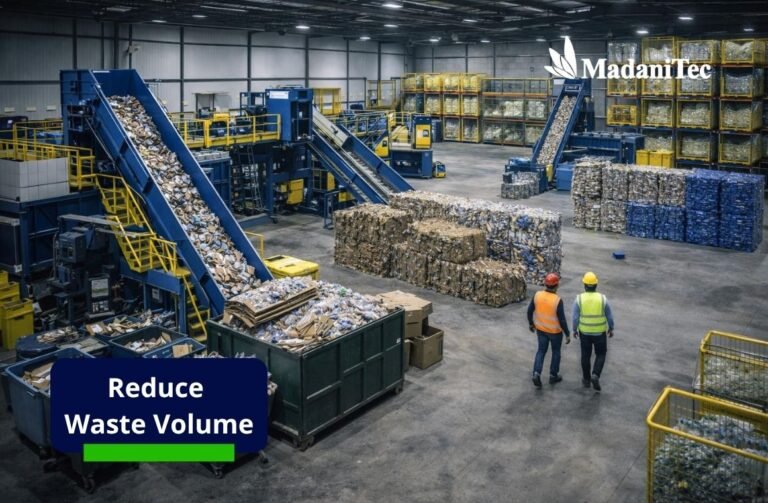
One of the main reasons to compact waste is to manage physical volume more efficiently.
Bulky materials can quickly occupy valuable storage space even when their total weight is relatively low. Compacting suitable materials can make them easier to stack, organize, and handle.
The U.S. Environmental Protection Agency has studied high-pressure compaction and baling of solid waste, including the use of hydraulic presses.
Its research examined factors such as pressure, compression cycles, bale stability, material characteristics, handling, storage, and transportation.
This shows that compaction is not simply about applying as much pressure as possible. The material being processed, required density, equipment configuration, and handling process all influence the result.
For businesses, the practical objective is therefore to create a more manageable material flow rather than simply achieving the smallest possible volume.
Learn more about: Waste Is Increasing, Storage Space Is Shrinking: How to Reduce Waste Volume and Transportation Costs
How Can You Compact Waste?
There is no single method suitable for every waste stream. In general, compaction can be performed manually, mechanically, or through hydraulic systems.
Manual Waste Compaction
Manual compaction relies primarily on human effort. It may be reasonable when the volume of material is small and the process is occasional.
Its main advantage is simplicity. A business does not necessarily need specialized equipment to begin compacting certain materials.
However, the limitations become more noticeable as the volume increases. Operators have to repeatedly handle the material and apply physical force, while the consistency of the result can depend on the person performing the task.
Mechanical Waste Compaction
Mechanical compaction uses equipment to apply force to the material. This can reduce the amount of physical effort required from operators and make the process more repeatable.
The approach may be appropriate for operations where waste volumes are increasing but the requirements do not justify a larger hydraulic system.
Hydraulic Waste Compaction
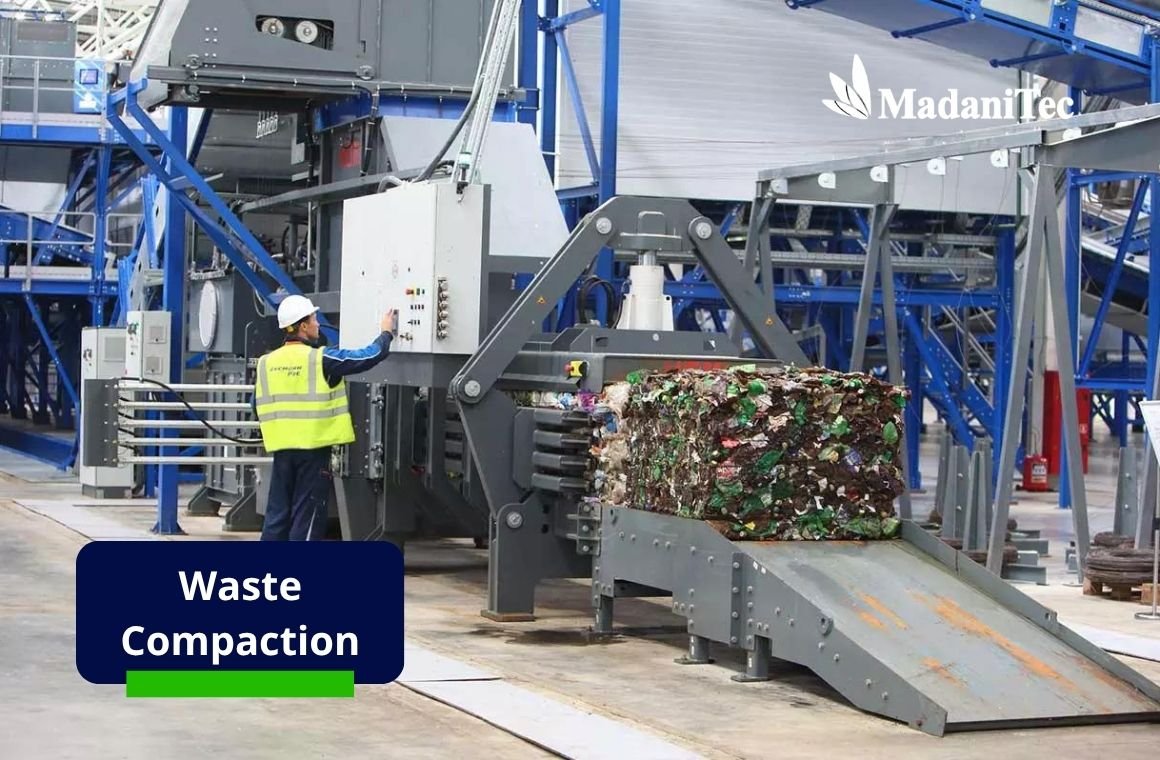
Hydraulic compaction uses hydraulic pressure to generate controlled pressing force.
Hydraulic presses have long been investigated for solid-waste compaction because the force and pressure can be controlled according to the requirements of the process.
The EPA’s high-pressure compaction study specifically evaluated hydraulic press systems and the relationship between pressure, cycle time, bale formation, and material characteristics.
A hydraulic press machine can therefore be configured according to factors such as the type of material, required pressing force, chamber dimensions, and desired output.
The important consideration is not simply choosing the machine with the highest pressure, but selecting a system that matches the material and workflow.
What Are the Problems with Manual Waste Compaction?
Manual compaction is not automatically inefficient. It can work well for small quantities and occasional operations.
The problem appears when a method designed for limited volumes is used for a continuous or substantially larger waste stream.
Several challenges can emerge:
- More operator time is required.
- Physical workload increases.
- Processing speed depends heavily on available workers.
- Compaction results may vary between cycles.
- Maintaining a consistent working rhythm becomes more difficult.
- The compaction stage can become a bottleneck.
This issue also relates to workplace ergonomics. OSHA identifies refuse and recyclable-material collection among occupations with exposure to musculoskeletal-disorder risks and recommends engineering controls that reduce the weight, range of motion, and frequency associated with manual material-handling tasks.
For that reason, the question is not simply whether workers can compact the material manually, but whether continuing to do so is the most efficient approach for the operation.
How Does Waste Compaction Affect Productivity?
Productivity is closely connected to time, labor, and output.
Consider a simple workflow:
Waste arrives → material is sorted → waste is compacted → material is moved → storage or transportation
If the compaction stage takes too much time, it can slow down the activities that follow.
For example, when workers repeatedly spend part of their working time manually compressing bulky materials, the accumulated labor time can become significant over the course of a day or week.
A mechanical or hydraulic system can shift part of the physical pressing task from manual labor to equipment.
This does not mean every operation automatically needs a hydraulic press. Instead, businesses should evaluate the relationship between waste volume, processing time, labor requirements, and output.
The EPA’s research on high-pressure waste compaction also considered cycle time and production-scale operation as important performance factors when evaluating compaction equipment.
What Types of Waste Can Be Compacted?
The appropriate material depends on the design and specifications of the compaction equipment.
Cardboard and Paper
Cardboard and paper can be bulky relative to their weight. Compacting suitable cardboard and paper can make these materials easier to store and handle.
Plastic Bottles and PET
Plastic bottles can occupy substantial space because of their shape. Suitable pressing equipment can reduce their physical volume before further processing.
Plastic Packaging
Certain plastic packaging materials may also be suitable for compaction, depending on their characteristics and the design of the machine.
Other Suitable Materials
Other recyclable materials may also be compacted, but they should be evaluated individually.
Material thickness, elasticity, moisture, contamination, shape, and desired output density can all influence the appropriate method.
This is why a compaction system should be selected according to the material being processed rather than based solely on machine capacity.
When Should You Move from Manual to Mechanical Compaction?
There is no universal waste volume at which every business must switch from manual to mechanical compaction.
Instead, several operational indicators can be considered.
A transition may be worth evaluating when:
- Waste volume continues to increase.
- Operators spend too much time on compaction.
- Manual pressing creates excessive physical workload.
- Storage areas become difficult to organize.
- Consistent compaction is required.
- Waste is generated continuously throughout the working day.
At this stage, mechanical or hydraulic equipment can become a practical option.
For businesses handling larger and recurring quantities of suitable recyclable materials, a hydraulic press machine can provide controlled pressing force and a more structured compaction process.
The objective is not to replace workers unnecessarily, but to improve how people and equipment work together.
Can Waste Compaction Help with Storage and Transportation?
Yes, compaction can help businesses manage the physical volume of suitable materials more efficiently.
When materials become denser, they can be easier to stack, organize, and move. Compacted materials may also be more convenient to handle during loading and transportation.
The EPA’s research into high-pressure compaction and baling specifically examined bale handling, storage, transfer stations, and transportation considerations.
However, compaction should not automatically be presented as a guaranteed way to reduce transportation costs.
The actual result depends on material density, vehicle capacity, transportation distance, handling requirements, and how often materials need to be moved.
How Do You Choose the Right Waste Compaction Method?
The appropriate method depends on the scale and characteristics of the operation.
| Operating Condition | Method to Consider |
|---|
| Small and occasional volume | Manual compaction |
| Increasing waste volume | Mechanical assistance |
| Large and recurring volume | Hydraulic compaction |
| Specialized material | Customized pressing system |
Before investing in equipment, consider the type of waste, daily volume, desired output size, available space, labor requirements, and frequency of operation.
A hydraulic press should not be selected simply because it has a high pressing force. The machine should be appropriate for the material, production pattern, available space, and desired workflow.
Conclusion
Manual waste compaction can be practical for small-scale operations, particularly when the volume is limited and the process is performed occasionally.
However, as waste volume and processing frequency increase, manual compaction can require more time and physical effort.
At that point, the issue becomes more than waste management—it can also affect labor efficiency, workflow, and productivity.
Waste prevention, reduction, reuse, and recycling should remain priorities within an integrated waste management strategy, as emphasized by UNEP.
For waste that has already been generated, appropriate handling and compaction can help businesses manage recyclable materials more efficiently.
Mechanical and hydraulic compaction can provide alternatives when manual methods no longer fit the operational requirements.
A hydraulic press machine may be worth considering when material volume, operating frequency, physical workload, and the need for consistent compaction justify a more structured system.
Ultimately, the goal is not simply to press more waste. It is to build a waste-handling process that is efficient, practical, safe, and suited to the actual needs of the operation.
Madanitec — menyediakan solusi teknologi dan mesin untuk mendukung pengolahan limbah dan pengembangan bisnis berbasis ekonomi sirkular, serta mengatasi permasalahan limbah di Indonesia.
Harga terjangkau dan kualitas terpercaya didukung oleh layanan purna jual dan garansi untuk setiap pembelian. Jangan ragu untuk menghubungi 081215778768 melalui WhatsApp dan dapatkan penawaran spesial hari ini.