
Small business ideas do not always require large capital, advanced technology, or a sophisticated production facility. Many businesses can start with simple resources and gradually grow by using the right equipment to improve efficiency, consistency, and production capacity.
As demand increases, manual processes can become time-consuming and harder to manage. Simple technology can help small businesses reduce repetitive work, improve production, and turn available materials into more valuable products.
The key is choosing technology based on actual business needs rather than simply adopting the most advanced equipment.
Why Simple Technology Matters for Small Businesses
Small businesses often have limited capital, workers, production space, and operating resources. Because of this, every improvement in the production process can make a difference.
Technology can help entrepreneurs reduce repetitive manual work, improve consistency, process materials more efficiently, and increase production capacity when demand rises.
It can also allow a business to move from selling basic raw materials toward creating products with greater added value.
However, technology should not be adopted simply because it is modern. The more important question is whether a particular tool solves a real business problem.
The OECD points out that SMEs face barriers such as limited resources, skills gaps, and financial constraints when adopting technology.
This makes gradual technology adoption particularly relevant for small businesses.
Learn more about: Small Machines, Bigger Opportunities: How Production Technology Supports Growing Businesses
7 Small Business Ideas That Could Grow With Simple Technology
1. Biomass and Wood Waste Products
Wood waste from furniture workshops, sawmills, and other activities can become more than something that needs to be discarded.
Depending on its condition and composition, it can be processed into useful biomass materials, wood chips, or other products.
A small business can begin by collecting available wood waste from nearby sources. As the supply and customer demand increase, processing equipment can help make the material more consistent and easier to handle.
This creates an opportunity to combine waste utilization with a practical business model.
2. Coconut-Based Product Processing
Coconut is another example of a widely available agricultural resource that can support different types of small businesses.
Instead of selling raw coconuts, entrepreneurs can explore products made from coconut milk, coconut meat, coconut water, or other derivatives.
The challenge is that processing larger quantities manually can require considerable time and labor.
Simple processing technology can help entrepreneurs handle more material while maintaining a more consistent production process.
This can become particularly useful when a business begins receiving larger or more regular orders.
3. Recycled Plastic Products
Plastic waste is often discussed as an environmental problem, but some discarded plastic materials can also become an input for recycling businesses.
Entrepreneurs can collect, sort, clean, process, and prepare plastic materials for further use.
Depending on the type of plastic and the intended output, equipment for shredding, processing, or forming materials can become part of the production workflow.
The opportunity lies not simply in collecting waste, but in creating a process that turns discarded materials into a more useful and marketable resource.
4. Fabric and Textile Waste Recycling
Textile businesses can generate leftover fabric, cutting scraps, and other materials that may no longer be useful for their original purpose.
Instead of treating all of these materials as waste, entrepreneurs can explore textile recycling or repurposing businesses.
Fabric waste can potentially be processed into filling materials, recycled textile products, or other useful applications depending on its characteristics.
For a growing operation, equipment designed to process textile materials can reduce the amount of manual work required and make material handling more manageable.
5. Small-Scale Food Processing
Food processing remains another area where simple technology can create opportunities for small entrepreneurs.
Many agricultural products have a short shelf life when sold in their raw form. Processing can help turn these materials into products that are easier to package, store, distribute, and sell.
Examples include dried foods, processed spices, flour-based products, sauces, and other food products.
The right equipment can help improve consistency while allowing entrepreneurs to gradually increase production.
6. Agricultural Product Processing
Agricultural commodities can also become the foundation for businesses focused on value-added processing.
Instead of selling crops only in their raw form, entrepreneurs can explore ways to clean, cut, mill, dry, or otherwise process agricultural materials before selling them.
This approach can create additional stages of value within the local supply chain. As production increases, simple processing equipment can help reduce dependence on manual processes and make larger orders easier to handle.
7. Waste Sorting and Recycling Services
Waste sorting can also become a business opportunity, particularly where different materials have different recycling or processing values.
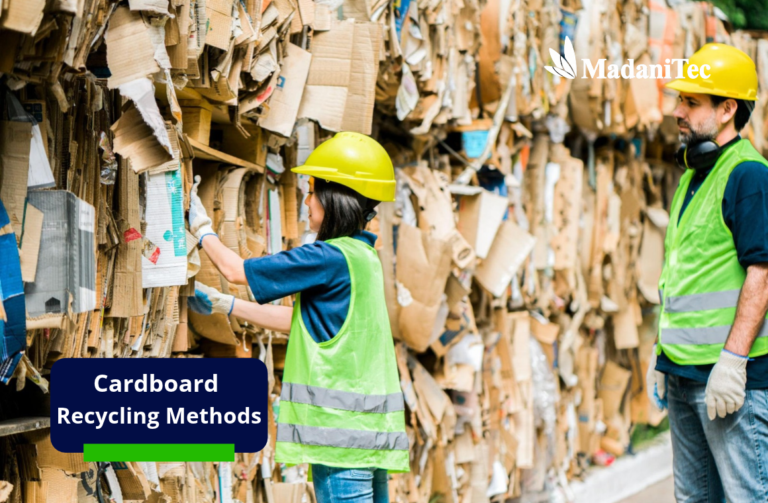
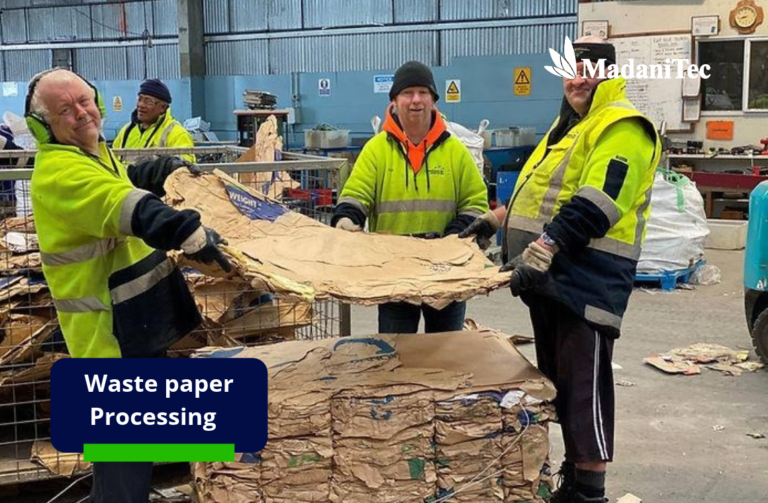
A small business can begin by collecting and separating materials such as plastic, cardboard, paper, metal, and organic waste. As the volume grows, manual sorting can become increasingly demanding.
Simple sorting equipment can help organize materials more efficiently and support a more structured recycling operation.
The business can then develop from basic collection and sorting toward material processing and supply.
How Technology Can Help Small Businesses Grow
The role of technology is not necessarily to replace the entire production process. In many cases, its value comes from improving one or two stages that create the biggest bottleneck.
For example, a business may start manually and later introduce a machine when production volume becomes difficult to manage.
This allows investment to follow actual business needs rather than assumptions. Technology can also support consistency.
When customers begin expecting the same quantity and quality repeatedly, relying entirely on manual processes may become increasingly difficult.
Research from the OECD and ILO shows that technology adoption can support productivity, innovation, resilience, and competitiveness among smaller businesses,
although the benefits depend on factors such as skills, resources, and the way technology is integrated into business operations.
Learn more about: How Technology Is Changing the Way Small Industries Produce and Grow
What Should Entrepreneurs Consider Before Investing in Technology?
Before purchasing equipment, entrepreneurs should first understand the production problem they want to solve.
Consider the type of material being processed, expected production capacity, available workspace, electricity or fuel requirements, labor needs, maintenance, and future business plans.
Capacity is especially important. A machine that is too small may become a bottleneck when demand increases, while equipment that is unnecessarily large can create higher investment and operating costs.
The goal should therefore be to find technology that fits the current stage of the business while leaving reasonable room for future development.
Conclusion: Start Small, Then Grow With the Right Technology
A small business does not have to begin with sophisticated technology. Many small business ideas can begin with simple resources and gradually develop as demand grows., local resources, agricultural products, or materials that are often overlooked.
As the business develops, technology can be introduced gradually to solve specific production challenges, improve consistency, and handle increasing demand.
The important part is choosing technology based on actual business requirements rather than simply following technological trends.
For entrepreneurs who are ready to take the next step, Madanitec provides various machinery and appropriate-technology solutions for different processing and production needs.
Exploring the available options and discussing the production requirements first can help businesses identify equipment that fits their materials, capacity, and development stage.
In the end, the right technology is not necessarily the most complicated one. It is the technology that helps a small business turn a practical idea into a more consistent and scalable operation.
For consultations regarding machines and appropriate technology solutions for various processing and production needs, please contact the Madanitec team via WhatsApp at 081215778768.