The growing interest in renewable energy and alternative fuels has increased demand for biomass processing equipment. Businesses working with wood residues, sawdust, and other organic materials are looking for practical ways to prepare and process these resources into valuable products.
For companies searching for a biomass pellet mill machine manufacturer, choosing the right equipment involves more than comparing machine prices. Raw material characteristics, production capacity, energy requirements, processing stages, and long-term business plans all need to be considered.
Understanding the equipment required before pellet production can help businesses make more informed investment decisions.
What Is a Biomass Pellet Mill Machine?
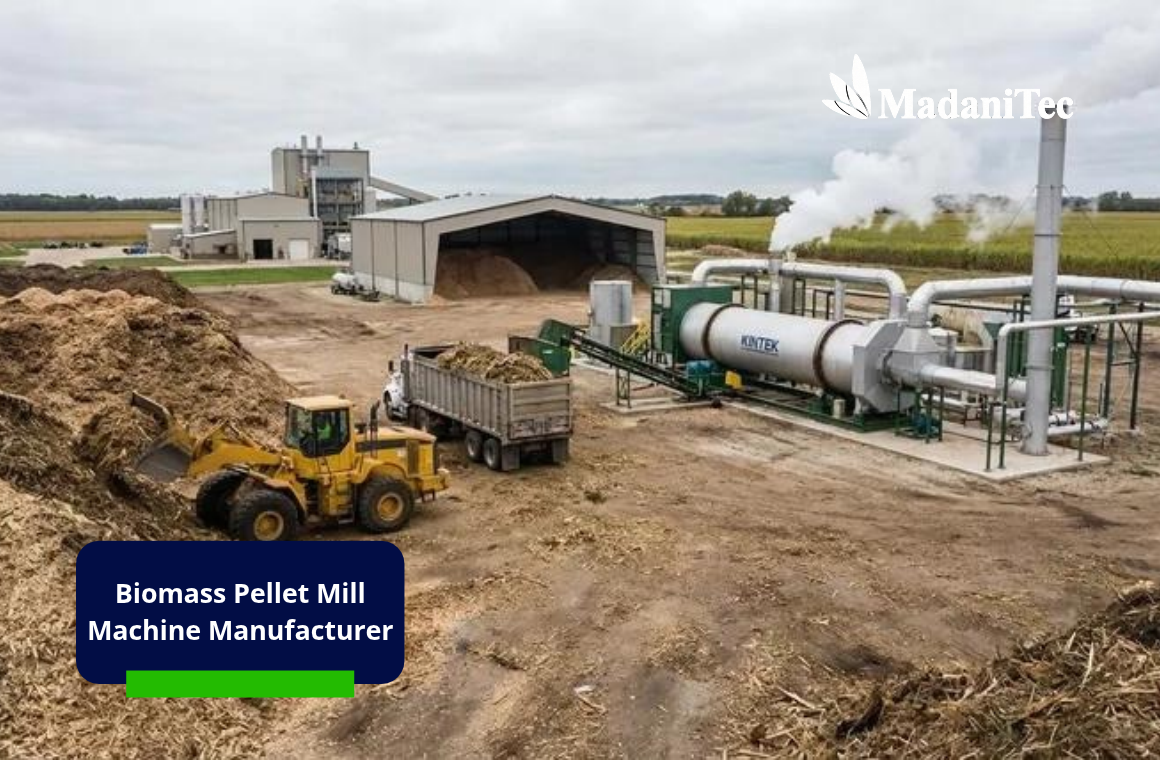
A biomass pellet mill machine is equipment designed to compress prepared biomass materials into small, compact pellets.
Depending on the application, biomass pellets can be produced from materials such as sawdust, wood residues, and certain agricultural residues.
The quality of the final pellets depends not only on the pelletizing stage but also on how well the raw material has been prepared beforehand.
For this reason, a pellet mill should be viewed as one part of a broader biomass processing system rather than an isolated machine.
Why Biomass Processing Matters Before Pellet Production
The condition of the raw material can significantly affect the efficiency and consistency of subsequent processing stages.
Preparing Biomass Raw Materials
Biomass materials can come in different forms and sizes. Sawdust may already be relatively fine, while branches, wood pieces, or other residues may require additional processing.
Removing unwanted materials and preparing a consistent feedstock can make the production process easier to manage.
Reducing Material Size
Large wood residues generally need to be reduced in size before they can move efficiently into subsequent processing stages.
A Wood Chipper for Biomass can be useful for reducing larger wood materials into smaller pieces. However, a wood chipper is not a pellet mill. Its role is primarily to prepare oversized biomass materials for further processing.
Controlling Material Quality
Particle size, moisture content, and material cleanliness can influence the downstream process.
A business that understands these factors before selecting equipment is better positioned to build a processing system that matches its actual production requirements.
What Biomass Processing Equipment May Be Needed?
The equipment required depends on the raw material and the intended production process.
Wood Chipper for Biomass
A wood chipper can be useful when the available biomass consists of larger wood residues that need size reduction.
It can form part of the upstream preparation stage before the material undergoes additional processing.
Size Reduction Equipment
Some biomass materials require further size reduction to achieve a more suitable particle size.
The appropriate equipment depends on the initial material size and the specifications required for the next processing stage.
Material Handling and Preparation Equipment
Larger production operations may also need equipment and systems for moving, feeding, storing, and preparing biomass materials.
These components can become important when production volumes increase and manual material handling becomes less practical.
Other Processing Equipment
Additional equipment may be necessary depending on the type of biomass and final product.
Therefore, businesses should evaluate the complete processing flow instead of purchasing equipment based on a single production stage.
How to Choose the Right Biomass Processing Equipment?
Selecting the right equipment requires a clear understanding of the business’s production requirements.
Consider the Type of Raw Material
Different biomass materials have different characteristics.
Sawdust, branches, wood chips, and agricultural residues may require different preparation methods. The equipment should therefore be selected according to the actual material that will be processed.
Match the Machine With Production Capacity
Production capacity should be calculated based on the expected volume of raw material and target output.
A machine that is too small may create a production bottleneck, while equipment with excessive capacity may increase investment and operating costs unnecessarily.
Consider Energy and Operating Requirements
Power requirements, working hours, labor, maintenance, and operating conditions should also be evaluated.
Looking at the initial purchase price alone can make it difficult to estimate the actual long-term cost of operating the equipment.
Think About Future Production Growth
Businesses often begin with smaller production targets and expand as demand increases.
Choosing equipment with a realistic path for future expansion can help prevent the need to redesign the entire processing system when production grows.
What Should You Ask a Biomass Pellet Mill Machine Manufacturer?
Before purchasing equipment, potential buyers should ask detailed questions about how the machine or processing system fits their requirements.
What Raw Materials Can the Equipment Process?
Confirm whether the equipment is suitable for the specific type, size, and condition of the available biomass.
What Is the Actual Production Capacity?
Ask about realistic operating capacity rather than relying only on maximum theoretical figures.
What Are the Power Requirements?
Understanding electrical or fuel requirements helps businesses estimate operating costs and prepare the necessary infrastructure.
How Is Maintenance Handled?
Regular maintenance can affect machine reliability and production continuity. Buyers should understand which components require routine inspection or replacement.
Is Technical Support Available?
Technical guidance, spare parts availability, installation assistance, and after-sales support can become important considerations for long-term equipment operation.
Common Mistakes When Choosing Biomass Processing Equipment
One of the most common mistakes is choosing equipment based only on price.
A cheaper machine may not necessarily be the most suitable option if its capacity, configuration, or operating requirements do not match the business.
Another mistake is ignoring the characteristics of the raw material. A machine designed for one type of biomass may not automatically provide the same performance with another material.
Businesses can also make the mistake of purchasing excessive capacity before they have established sufficient demand.
Finally, focusing on one machine without considering the complete production process can create bottlenecks between processing stages.
How the Right Equipment Supports Biomass Business Growth
The right processing equipment can provide a more organized foundation for biomass-based businesses.
When raw materials can be prepared consistently and processed according to a planned workflow, businesses can better manage production capacity, labor requirements, and operational planning.
Appropriate equipment can also make future expansion easier because production stages are designed around measurable requirements rather than relying entirely on manual processing.
However, the right solution will always depend on the material, production target, available resources, and intended application.
Learn more about: How Can Wood Waste Management Turn Waste Into Valuable Resources?
Choosing the Right Biomass Processing Solution for Your Business
Not every biomass business needs the same equipment. The most suitable solution depends on the type of material, its initial size, required processing stage, target capacity, and future development plans.
This is where a consultation-based approach can be useful. Instead of selecting equipment simply because it has a high capacity or low price, businesses can first identify the actual processing problem they need to solve.
Madanitec provides machinery solutions for various material-processing and biomass-related applications.
For businesses working with wood residues or other materials, equipment can be considered based on the characteristics of the raw material and the intended production workflow.
The goal is not simply to add more machines, but to develop a processing system that fits the business and can support its growth.
Conclusion
Finding a biomass pellet mill machine manufacturer is only one part of developing a biomass processing business.
Before investing in equipment, businesses should understand their raw materials, required processing stages, production capacity, energy requirements, maintenance needs, and future growth plans.
A pellet production system can involve several stages, from preparing and reducing the size of biomass materials to handling and processing the feedstock.
Choosing equipment according to the complete workflow can help businesses avoid unnecessary investment and production bottlenecks.
For businesses that need biomass or material-processing solutions, Madanitec can be considered as a partner for evaluating equipment based on actual processing requirements.
A practical approach is to start with the material and production goals, then determine which machinery is genuinely needed to support the operation.
For consultations regarding machines and appropriate technology solutions for various processing and production needs, please contact the Madanitec team via WhatsApp at 081215778768.