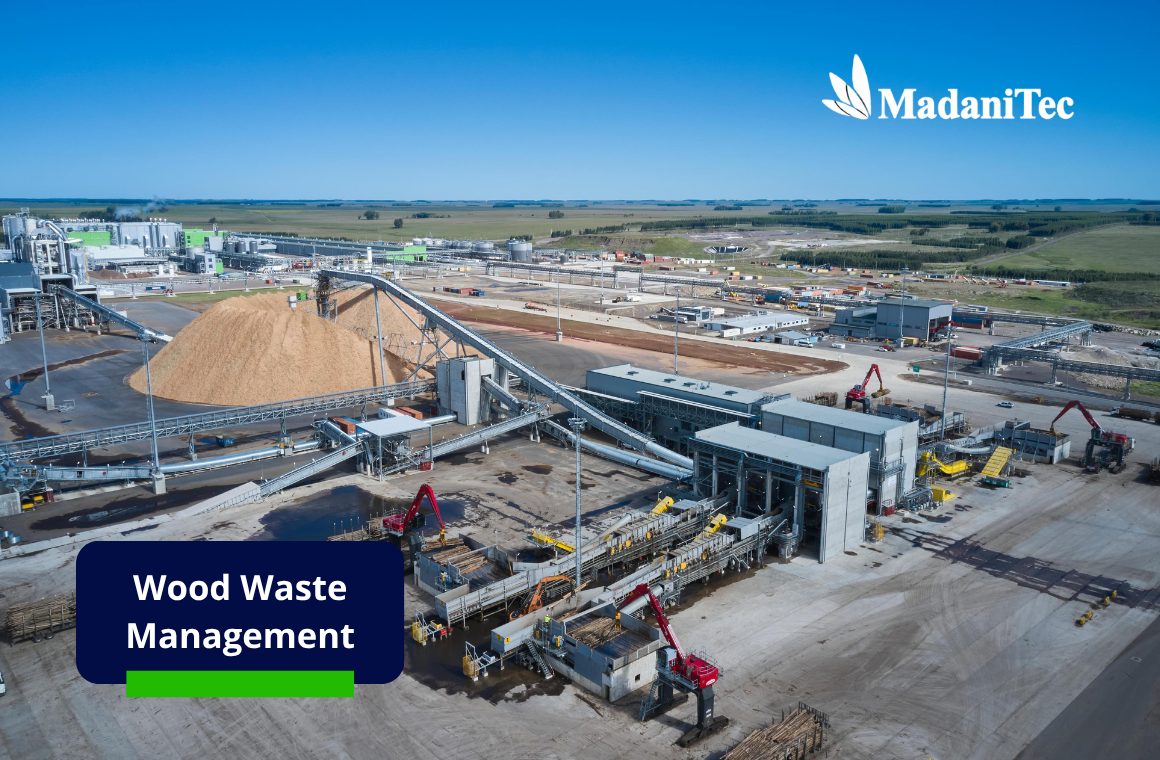
Wood waste management is becoming an increasingly important consideration for industries that process, manufacture, or use wood-based materials. Furniture production, sawmills, woodworking facilities, construction activities, and packaging operations can all generate wood residues in different forms, including sawdust, wood chips, offcuts, shavings, and larger production scraps.
However, not every piece of discarded wood has to remain a waste material. With proper handling, preparation, and processing, wood residues can become useful feedstock for other applications. This approach is closely connected with the principles of circularity and resource efficiency, where materials are kept in productive use for as long as possible rather than being discarded after their first use. The Food and Agriculture Organization (FAO) highlights the potential of cascading use and circular approaches to create additional value from wood resources.
Why Is Wood Waste Becoming an Important Industrial Issue?
Wood waste is a natural consequence of many production processes. Cutting, shaping, milling, sanding, packaging, and construction can all leave behind material that no longer fits the original product but may still have useful characteristics.
The challenge is that these residues can accumulate quickly when production volumes increase. Without an organized approach, businesses may need additional storage space, transportation, handling, and disposal.
More importantly, potentially useful material can be lost even though it still contains significant physical and energy value.
This makes wood waste management more than a disposal issue. It becomes part of how industries manage materials and improve resource efficiency.
Where Does Industrial Wood Waste Come From?
Industrial wood waste can originate from several activities, including:
- Furniture manufacturing
- Sawmills and wood processing
- Carpentry and woodworking
- Construction and renovation
- Wooden pallets and packaging
- Panel and board production
The material can vary considerably depending on its source. Sawdust from a cutting process, for example, has different characteristics from large wood offcuts or contaminated construction timber.
Understanding the source and condition of the material is therefore an important first step before deciding how it should be reused.
Why Should Industries See Wood Waste as a Resource?
The most important shift is changing the way wood residues are viewed.
Instead of considering every leftover piece as something with no further purpose, industries can evaluate whether the material still has characteristics that make it suitable for another application.
FAO describes circular wood systems as approaches that retain value and transform materials that would otherwise become waste into new resources.
Wood Waste Can Still Have Material Value
Wood residues may still contain useful fibers, organic material, and energy potential. Their value depends on factors such as wood type, particle size, moisture content, cleanliness, and whether other materials are mixed with them.
This means that the same category of “wood waste” can have very different potential uses.
From Waste Material to Usable Feedstock
Once appropriately prepared, wood residues can become feedstock for another process. In some cases, sawmill residues can be used in wood-based panels, pulp and paper production, or biomass applications. FAO notes that processing wood by-products can help increase the value extracted from the original material.
The concept is simple: a production residue from one process can become an input for another.
How Can Wood Waste Be Processed for Better Utilization?
Effective wood waste processing generally begins with understanding the material before reducing or transforming it.
Sorting and Preparing Wood Waste
Wood residues should first be separated according to their condition and intended use. Important considerations include particle size, wood type, moisture level, and contamination.
For example, clean production residues may be easier to reuse than wood mixed with soil, plastic, metal, paint, or other materials.
Good preparation can therefore determine whether the resulting material is suitable for a specific application.
Reducing Wood Waste Into Smaller Particles
Larger wood residues may need to be reduced into smaller and more uniform particles before they can be used effectively.
A simplified process can look like:
Wood waste → shredding or crushing → smaller particles → usable wood material
The required particle size depends on the intended application. Some processes may require chips, while others may need finer material such as sawdust.
This is where appropriate processing technology can help industries handle wood residues more consistently and efficiently.
Learn more about: Sawdust Is Not Just Waste: 7 Innovations That Give Wood Residues a Second Life
What Can Industries Do With Processed Wood Waste?
Once properly processed, wood residues can have several potential applications.
Sawdust and Biomass Applications
Sawdust and other clean wood residues can be considered for biomass-related applications, including briquettes, pellets, and certain forms of solid biofuel. FAO also identifies wood residues as potential feedstock for bioenergy production.
However, not every type of wood waste is automatically suitable for fuel production. Moisture, contamination, chemical treatment, and other material characteristics need to be evaluated first.
Supporting a More Circular Use of Wood Materials
Processed wood waste can also support a broader circular economy strategy. Instead of relying entirely on new raw materials, industries can look for opportunities to keep existing materials within productive cycles.
This can help businesses move from a take-use-discard model toward a system where materials are reused, processed, and redirected into new applications.
What Are the Challenges of Wood Waste Management?
Although the opportunity is significant, managing wood residues effectively is not always simple.
Moisture and Contamination
High moisture can affect storage, processing, and some biomass applications. Contamination can create an even greater challenge, particularly when wood is mixed with non-wood materials or treated substances.
Different Wood Sizes and Material Conditions
A facility may generate large offcuts, chips, sawdust, and shavings at the same time. These materials may require different handling and processing methods.
Processing Costs and Operational Efficiency
Processing equipment, labor, energy, storage, and transportation all influence the economic feasibility of a wood waste utilization strategy.
This is why the broader industrial waste management challenges faced by businesses also apply to wood residues. Understanding the problem before selecting a processing approach is essential.
Learn more about: 5 Challenges Industries Face When Managing Growing Waste Volumes
How Can Better Wood Waste Management Create Business Opportunities?
Better wood waste management can potentially create value in several ways.
Businesses may reduce the amount of material requiring disposal, recover usable secondary materials, create biomass feedstock, or develop new products from previously underutilized residues.
The opportunity becomes particularly interesting when waste generation is consistent. A stable supply of clean wood residues can make it easier for businesses to develop predictable processing and utilization systems.
In this context, waste management becomes connected not only to environmental responsibility but also to operational efficiency and new business opportunities.
The Future of Wood Waste Management
The future of wood utilization is increasingly connected with circular economy principles, resource efficiency, and the bioeconomy.
FAO describes the wood-based bioeconomy as an approach that includes the production, transformation, use, and conservation of wood resources, including recycled wood products.
It also emphasizes the importance of creating new uses and reuses for wood materials.
This suggests that the future is not simply about producing more wood-based products. It is also about getting greater value from the material that has already entered the production cycle.
For industries, that means viewing residues as part of the resource flow rather than automatically treating them as the end of the process.
Conclusion: Wood Waste Can Become More Than Just Waste
Wood waste management is not simply about finding a way to dispose of leftover wood. It is about understanding the material, processing it appropriately, and identifying opportunities to keep its value within the production cycle.
From sawdust and wood chips to larger production residues, different types of wood waste can potentially become useful feedstock for biomass, wood-based products, and other applications.
The right approach depends on material characteristics, processing requirements, operational costs, and the final market.
For industries looking to improve how they handle wood residues, the first step is not necessarily to process more waste—but to understand what value is still contained within the material.
Madanitec provides technology solutions for processing wood and biomass materials, helping businesses explore more efficient ways to handle and utilize production residues.
the right processing approach, material that was once considered waste can become part of a more productive and circular resource system.
Affordable prices and reliable quality are supported by after sales service and warranty with every purchase. Do not hesitate to contact 081215778768 via WhatsApp and get a special offer today.