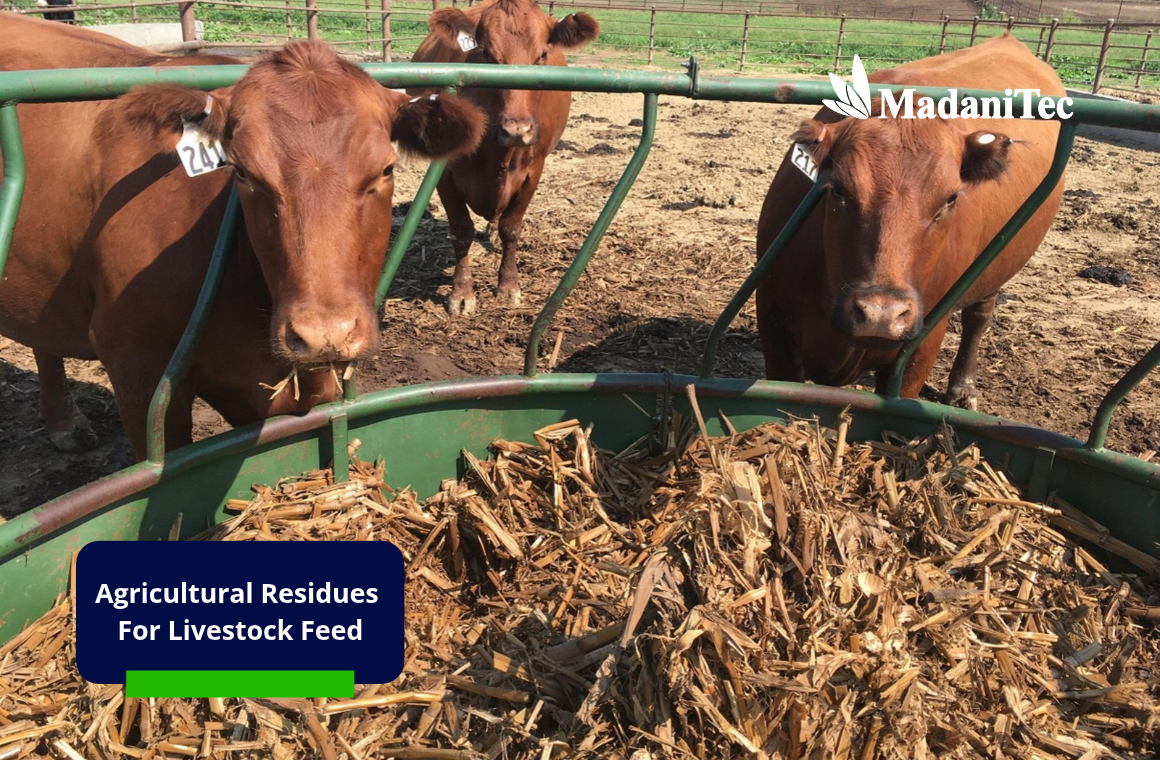
Agricultural activities produce more than just crops. After harvesting and processing, farmers often have large amounts of residues such as rice straw, corn stalks, bran, and other byproducts. Instead of leaving these materials unused, some can be processed and incorporated into livestock feeding systems. Understanding agricultural residues for livestock feed can help farmers reduce waste while exploring more affordable and locally available feed resources.
However, not every agricultural residue is automatically suitable for animals. Its nutritional value, safety, digestibility, and processing requirements should always be considered before it is included in a livestock diet.
Why Are Agricultural Residues Useful for Livestock Feed?
Agricultural residues can provide an additional source of feed materials, particularly for ruminants such as cattle, goats, and sheep. Their availability near farming areas can also make them attractive for small-scale livestock businesses.
Proper utilization can provide two benefits at once. Farmers can reduce the amount of agricultural material left unused while potentially lowering dependence on certain conventional feed ingredients.
The key is proper processing. Some residues have high fiber content, low digestibility, or physical characteristics that make them difficult for livestock to consume efficiently.
Processing can help make selected materials more manageable and suitable for their intended use.
Learn more about: Farm Waste Recycling Machine: A Practical Solution for Sustainable Agriculture
7 Agricultural Residues That Can Be Used for Livestock Feed
1. Rice Straw
Rice straw is one of the most abundant agricultural residues in rice-producing regions. It contains a significant amount of fiber and can be considered as a roughage source for ruminants.
Because untreated straw can have relatively low digestibility, it may require chopping or other appropriate treatments before being incorporated into a feeding program.
2. Rice Bran
Rice bran is a byproduct of rice milling and is commonly used as a feed ingredient. Compared with coarse crop residues, it is easier to incorporate into feed formulations.
Its nutritional contribution depends on its quality and composition, so farmers should ensure that the material is clean, fresh, and suitable for the intended livestock.
3. Corn Stalks and Leaves
After corn harvesting, stalks and leaves can remain in substantial quantities. These materials can provide fiber for ruminants when properly prepared.
Chopping the material into smaller pieces can make handling easier and may improve its suitability as part of a broader feed preparation process.
4. Corn Cobs
Corn cobs are another agricultural byproduct that can potentially be utilized in livestock feed systems. Their hard structure, however, means they generally require size reduction before further use.
Grinding or chopping can make the material easier to mix with other feed ingredients, depending on the feeding strategy and processing method.
5. Cassava Byproducts
Cassava processing generates several byproducts that may have potential as animal feed ingredients. However, this material requires greater attention to safety and processing.
Certain parts of cassava can contain cyanogenic compounds, so appropriate preparation is important.
Farmers should not assume that raw cassava residues can simply be fed directly to livestock without considering their composition and safe-processing requirements.
6. Sugarcane Bagasse
Sugarcane bagasse is the fibrous material remaining after juice extraction. It contains a high proportion of fiber and may have limited nutritional value when used alone.
For this reason, its potential use in livestock feeding should be evaluated carefully, particularly regarding digestibility and the need for additional nutritional sources.
7. Coconut Byproducts
Coconut processing can generate fibrous residues and other byproducts. Some may have potential for agricultural or livestock applications depending on their composition and processing.
As with other residues, farmers need to distinguish between materials that are suitable for feed and those better suited to other applications.
How Should Agricultural Residues Be Prepared for Livestock Feed?
Using agricultural residues for livestock feed requires more than simply collecting leftover materials. Preparation is an important part of maintaining quality and usability.
Sorting and Cleaning
Residues should be separated from soil, stones, plastic, metal, and other contaminants. Clean raw materials provide a better foundation for further processing.
Chopping and Size Reduction
Large or fibrous materials such as straw and corn stalks can be difficult to handle in their original form. A suitable chopping or size-reduction process can make them easier to mix, store, and distribute.
For farmers and small feed businesses handling larger quantities, appropriate feed-processing equipment can also reduce manual work and improve processing consistency.
Drying and Storage
Moisture control is important because excessive moisture can encourage mold growth and reduce storage quality. Proper drying and storage conditions should therefore be considered when preparing agricultural residues.
Fermentation or Other Treatments
Certain residues may benefit from fermentation or other treatment methods. However, the appropriate method depends on the material, intended livestock, and feeding system.
What Are the Benefits of Using Agricultural Residues for Livestock Feed?
One major benefit is waste reduction. Materials that would otherwise remain unused can potentially be redirected into productive agricultural applications.
Another benefit is the possibility of reducing feed costs when suitable local materials are available.
Farmers may also create additional value from their own agricultural byproducts or develop businesses around collecting and processing feed materials.
More broadly, this approach supports a circular agricultural system in which resources are used more efficiently rather than discarded after harvest.
What Should Farmers Consider Before Using Agricultural Residues as Feed?
The first consideration is nutritional value. Different residues provide different amounts of fiber, energy, protein, and other nutrients.
Safety is equally important. Materials should be checked for mold, chemical contamination, pesticides, and foreign objects.
Farmers should also consider digestibility and processing requirements. A material may be abundant and inexpensive but still be unsuitable as a major feed ingredient if it is difficult for livestock to digest.
For this reason, agricultural residues should be evaluated as part of a balanced feeding strategy rather than treated as a universal replacement for conventional feed.
Can Agricultural Residues Create a Livestock Feed Business Opportunity?
The availability of agricultural residues can create opportunities beyond farming itself. Entrepreneurs can develop businesses around collecting, chopping, processing, storing, or supplying suitable feed materials.
A viable business depends on several factors, including local raw-material availability, processing costs, livestock demand, product quality, and access to buyers.
For small businesses, starting with locally abundant materials can be a practical way to understand the market before expanding processing capacity.
Learn more about: How to Make Silage Feed: A Practical Guide to Better Livestock Nutrition
How Can Feed Processing Equipment Help Farmers?
As the volume of material increases, manual preparation can become time-consuming. Appropriate processing equipment can help farmers and small businesses reduce manual labor, achieve more consistent material sizes, and handle larger quantities.
The right equipment should be selected according to the type of residue, required output size, processing capacity, and operating conditions.
Madanitec provides machinery solutions for various agricultural and material-processing applications, which can be considered based on the specific needs of a farming or livestock business.
Conclusion
Agricultural residues for livestock feed offer an opportunity to connect crop production with livestock farming while reducing unused agricultural materials.
Rice straw, rice bran, corn residues, cassava byproducts, sugarcane bagasse, and coconut byproducts are examples of materials that may have potential when properly selected and processed.
However, successful utilization requires attention to nutritional value, safety, digestibility, and preparation methods.
With the right processing approach and equipment, farmers can make better use of available agricultural resources while exploring new opportunities for livestock and feed-related businesses.
For consultations regarding machines and appropriate technology solutions for various processing and production needs, please contact the Madanitec team via WhatsApp at 081215778768.