Forage is one of the most important sources of feed for livestock, but its availability can change depending on the season. During periods when fresh grass and other green forage are difficult to obtain, farmers need a practical way to preserve available feed materials. One commonly used method is silage.
Learning how to make silage feed can help farmers preserve forage through controlled fermentation while making better use of agricultural materials that are already available on the farm. When prepared and stored correctly, silage can become an important part of a more organized livestock feeding system.
What Is Silage Feed?
Silage feed is forage that has been preserved through fermentation under low-oxygen or anaerobic conditions.
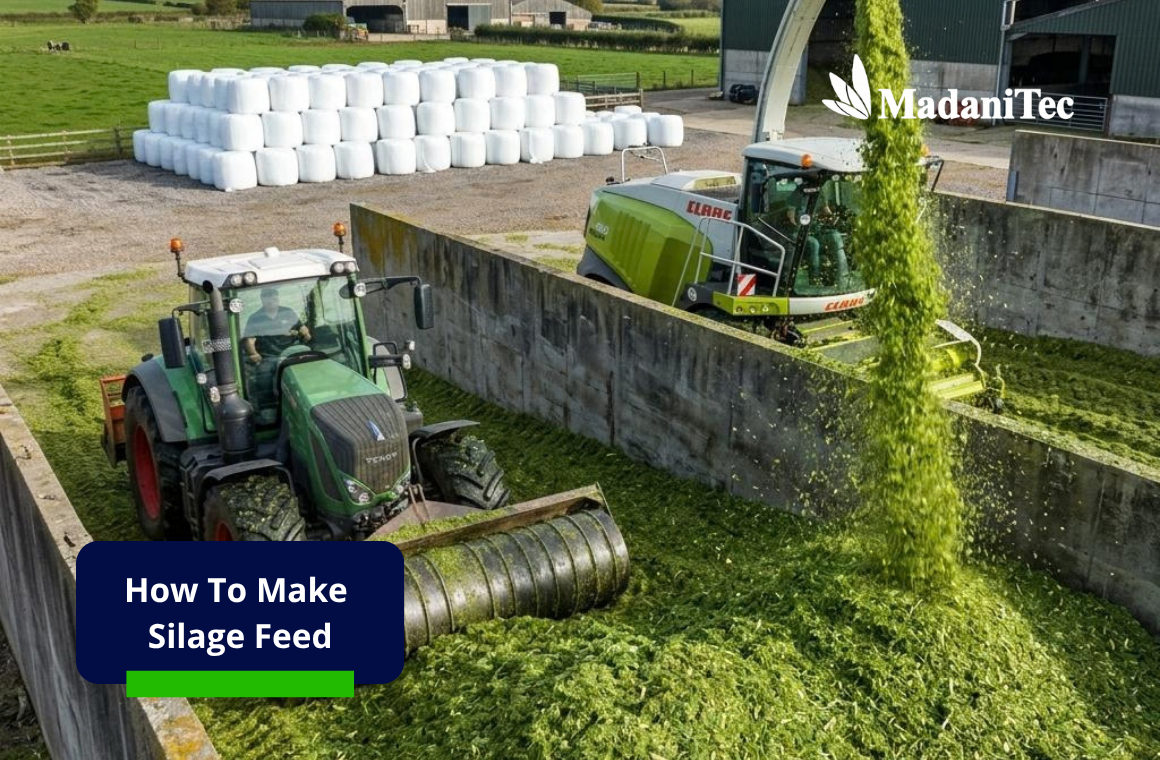
Fresh forage is prepared, chopped, compacted, and sealed so that naturally occurring microorganisms can ferment the material.
During fermentation, lactic acid-producing bacteria convert available carbohydrates into organic acids. This lowers the pH of the material and helps slow the growth of undesirable microorganisms.
The basic principle is simple: good silage requires suitable forage, sufficient fermentable material, effective compaction, and proper sealing.
Why Do Farmers Use Silage Feed?
Preserving Forage for Longer Periods
One of the main benefits of silage is its ability to preserve forage beyond the period when it is freshly harvested. This can help farmers maintain a more consistent feed supply.
Providing Feed When Fresh Forage Is Limited
Seasonal changes can affect grass and crop residue availability. Stored silage can provide an alternative feed source when fresh forage is less available.
Making Better Use of Available Forage
Farmers can use suitable grasses, corn forage, legumes, and other plant materials to produce silage. This provides an opportunity to make better use of available agricultural resources instead of allowing suitable forage to go unused.
Learn more about: What Are the Benefits of Fermented Feed for Goats and Cattle? Check Here!
What Ingredients Are Needed to Make Silage?
The exact materials depend on the type of forage and the feeding system, but several components are commonly considered.
Fresh Forage
The main ingredient is suitable plant material such as grass, corn forage, sorghum, or other livestock-safe forage. The material should be reasonably fresh and free from contamination.
Fermentable Carbohydrates
Fermentable carbohydrates provide an energy source for beneficial microorganisms during fermentation. Depending on the forage, farmers may use carbohydrate-rich ingredients when additional fermentable material is needed.
Starter or Supporting Ingredients
Some silage-making practices use microbial inoculants or other supporting ingredients to help manage fermentation. Their use depends on the material, local practices, and the desired silage-making method.
How to Make Silage Feed Step by Step?
Understanding how to make silage feed starts with controlling each stage of the process. Small differences in preparation can affect the final quality.
1. Select and Prepare the Forage
Choose suitable forage and remove soil, stones, spoiled material, or other contaminants. The forage should have an appropriate moisture level for ensiling.
2. Chop the Forage into Suitable Pieces
Chop the forage into relatively small and consistent pieces. This makes the material easier to compact and can help reduce the amount of trapped air.
3. Add Supporting Ingredients
If the selected method requires additional fermentable carbohydrates or inoculants, distribute them evenly throughout the forage. Avoid concentrating the ingredients in only one part of the material.
4. Pack the Material into a Container
Place the prepared forage into a suitable silo, plastic bag, drum, or other appropriate container. Add the material gradually rather than placing a large amount into the container at once.
5. Remove as Much Air as Possible
Compaction is one of the most important stages. Press the forage firmly to remove trapped air between the particles. Poor compaction can create conditions that encourage undesirable fermentation and spoilage.
6. Seal the Silage Properly
After compaction, close the container as tightly as possible. The objective is to prevent oxygen and unwanted moisture from entering during fermentation.
7. Allow the Fermentation Process to Continue
Store the sealed material in a suitable location and avoid opening it unnecessarily. Stable storage conditions help maintain the anaerobic environment required for fermentation.
How Long Does Silage Take to Ferment?
The fermentation period can vary depending on the forage, moisture level, temperature, packing quality, and storage conditions. Farmers should follow a consistent process rather than relying only on a fixed number of days.
The important point is to allow sufficient time for fermentation to stabilize before opening the silage for feeding. Once opened, exposure to oxygen can accelerate deterioration, so only an appropriate amount should be removed for daily use.
How Can You Tell If Silage Is Good Quality?
Good-quality silage generally has characteristics associated with controlled fermentation.
Pleasant Fermented Smell
Properly fermented silage commonly has a noticeable acidic or fermented aroma rather than a strong rotten or putrid smell.
Appropriate Color and Texture
The appearance depends on the original forage and fermentation process, but the material should generally retain a recognizable forage structure rather than becoming excessively slimy or decomposed.
No Signs of Mold or Spoilage
Visible mold, unusual discoloration, excessive heating, or strong spoilage odors can indicate problems with fermentation or storage. Suspect material should not simply be assumed to be safe for livestock.
What Are Common Mistakes When Making Silage?
Using Material with Excessive Moisture
Very wet forage can create undesirable conditions and may result in poor-quality silage. Managing the moisture level before sealing is therefore important.
Leaving Too Much Air Inside
Insufficient compaction leaves oxygen between forage particles. This can interfere with the desired fermentation process.
Poor Sealing
Even well-prepared forage can deteriorate if the storage container allows air or water to enter.
Opening the Silage Too Early
Premature opening can interrupt the fermentation process and expose the material to oxygen before it has stabilized.
How Should Silage Feed Be Stored?
Silage should be stored in a location protected from excessive heat, rain, flooding, animals, and physical damage. The container or covering should remain intact throughout storage.
Farmers should also inspect the storage area regularly. Any damaged packaging or signs of water infiltration should be addressed as soon as possible.
After opening, good handling becomes equally important. Remove only the amount needed for feeding and minimize unnecessary exposure of the remaining silage to air.
Can Silage Feed Help Improve Livestock Feed Management?
Yes. Silage can support a more planned approach to livestock feed management by allowing suitable forage to be preserved when it is available.
Instead of relying entirely on the daily availability of fresh forage, farmers can prepare and store feed materials in advance.
This can be particularly useful for livestock operations that need a more consistent feeding routine throughout changing seasons.
However, silage should be considered as part of a balanced livestock feeding program.
The nutritional value of the final feed depends on the original forage, harvesting stage, fermentation quality, storage, and the overall ration provided to the animals.
Learn more about: Farm Waste Recycling Machine: A Practical Solution for Sustainable Agriculture
Conclusion
Knowing how to make silage feed is useful for farmers who want to preserve suitable forage and improve the organization of livestock feed supplies.
The process depends on several basic principles: selecting appropriate forage, preparing it properly, achieving good compaction, limiting oxygen exposure, and maintaining suitable storage conditions.
Successful silage making is not simply about sealing fresh forage in a container. Each stage—from preparation and chopping to fermentation and storage—can influence the final result.
For agricultural businesses that are looking to improve their feed-processing activities through appropriate technology, choosing equipment based on the type of material and scale of operation can also make the preparation process more efficient.
Madanitec develops appropriate-technology solutions for various agricultural and small-business needs, making it possible to explore equipment options according to specific processing requirements.
For consultations regarding machines and appropriate technology solutions for various processing and production needs, please contact the Madanitec team via WhatsApp at 081215778768.