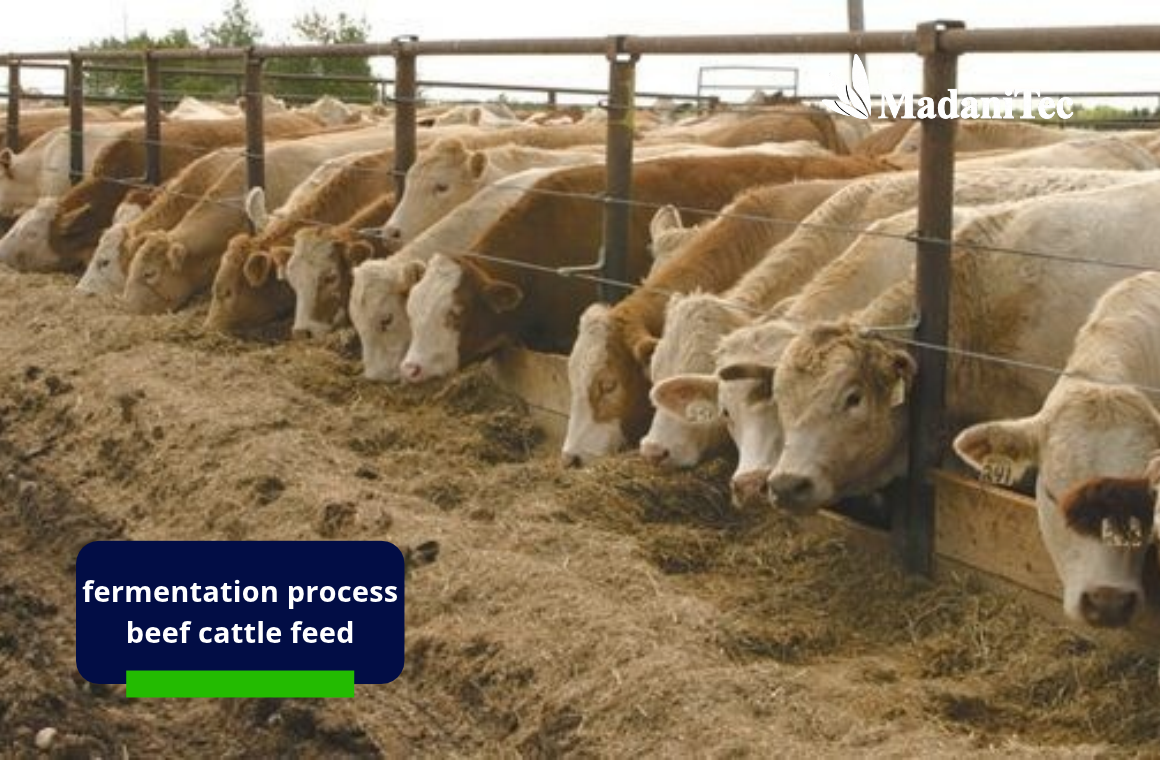
Providing sufficient and suitable feed is an important part of raising beef cattle. Farmers need to manage feed supplies carefully because the availability of fresh forage and agricultural materials can vary throughout the year. One approach that can help with feed management is fermentation.
The fermentation process for beef cattle feed involves treating suitable feed materials under controlled conditions with the help of microorganisms. When properly prepared, fermented feed can become part of a practical feed management strategy while also helping farmers make better use of locally available materials.
What Is Fermented Feed for Beef Cattle?
Fermented feed is feed material that has undergone a biological process involving microorganisms under controlled conditions.
The process can change certain characteristics of the material and may help make some feed resources easier to manage and store.
However, fermentation is not simply a matter of placing feed materials in a container and leaving them for several days.
The quality of the original materials, moisture level, mixing, sealing, and storage conditions all influence the result.
Understanding Feed Fermentation
During fermentation, microorganisms interact with the available components in the feed material. The process needs suitable conditions to take place properly.
For cattle farmers, understanding the basic principle is important because different materials may require different preparation methods.
A good fermentation process starts with suitable raw materials and careful handling rather than relying on fermentation alone to improve every type of feed.
Why Is Cattle Feed Fermented?
There are several reasons farmers may use fermentation as part of feed management.
It can help utilize certain locally available materials, support feed storage planning, and provide an alternative way to prepare suitable agricultural by-products.
Fermentation can therefore be useful when it is integrated into a broader feeding strategy that considers the nutritional needs of beef cattle.
Learn more about: How to Make Cattle Feed from Corn Cobs: An Easy and Practical Guide
Materials Commonly Used for Fermented Cattle Feed
The materials used for fermentation should be selected carefully. They need to be suitable for cattle and should not be spoiled, contaminated, or otherwise unsafe.
Grass and Forage
Grass and other forage materials are commonly used as sources of fiber in cattle feeding. Before fermentation, they should be fresh enough for processing and free from visible contamination or excessive spoilage.
Proper preparation is important because the condition of the raw material influences the quality of the final fermented feed.
Agricultural By-Products
Certain agricultural by-products can also be considered as feed resources when they are suitable for cattle and properly processed. Examples may include rice straw, corn residues, and other plant materials.
Using suitable agricultural by-products can help farmers make better use of resources that are readily available around the farm.
Fermentation Supporting Ingredients
Depending on the fermentation method, farmers may use water, an energy source, or an appropriate microbial starter or inoculant.
The ingredients and proportions should follow a reliable formulation suitable for the selected feed material. Adding too much or too little of a supporting ingredient does not necessarily produce better fermentation.
Fermentation Process for Beef Cattle Feed
The fermentation process for beef cattle feed consists of several important preparation stages. While the exact method can vary depending on the materials used, the basic principles remain similar.
1. Select and Prepare the Feed Materials
Start by selecting suitable feed materials that are still in good condition. Remove dirt, unwanted objects, and materials that show obvious signs of spoilage.
Good raw materials provide a better starting point for the fermentation process. Farmers should avoid assuming that already spoiled materials can be made safe simply through fermentation.
2. Chop the Materials
Long or bulky forage should be chopped into smaller and more uniform pieces before mixing. This can make the material easier to handle and help create a more consistent mixture.
For small quantities, chopping can be done manually. However, when feed preparation becomes a daily activity or the volume increases, a grass chopping machine can help reduce manual work and improve preparation efficiency.
3. Mix the Materials Properly
The prepared materials should then be mixed with the supporting ingredients according to the selected fermentation method.
Uniform mixing is important because areas that are excessively wet or dry can affect the fermentation process. Moisture should therefore be managed carefully rather than added without measurement.
4. Pack and Compress the Mixture
Place the mixture into a suitable container and compress it properly. The purpose is to reduce unnecessary air within the material and create conditions that support the intended fermentation process.
After packing, seal the container securely. A poorly sealed container can allow unwanted air to enter and potentially affect the fermentation result.
5. Allow the Fermentation Process to Take Place
Leave the material for the appropriate fermentation period based on the selected method and type of feed.
There is no single fermentation duration that applies to every material. Factors such as moisture, temperature, microbial starter, material composition, and storage conditions can influence the process.
For this reason, farmers should evaluate the condition of the feed rather than relying only on a predetermined number of days.
How to Tell If Fermented Cattle Feed Is Ready
Checking the final condition of fermented feed is an important step before it is given to cattle. Farmers should examine the material carefully instead of assuming that every fermented batch is suitable.
Check the Smell
Properly fermented material generally develops a characteristic fermentation smell. An unusually rotten, putrid, or strongly unpleasant odor can indicate that something went wrong during preparation or storage.
Check the Appearance
Look for abnormal changes, unwanted mold, or visible contamination. If the material shows clear signs of spoilage, it should not be treated as safe simply because it has undergone fermentation.
Check the Texture
The texture should also be evaluated. Excessive sliminess, unusual decomposition, or other abnormal changes may indicate poor fermentation or spoilage.
These simple checks can help farmers identify problems before the feed becomes part of the cattle ration.
Benefits of Fermented Feed for Beef Cattle
When prepared from suitable materials, fermented feed can offer several practical benefits from a feed-management perspective.
Helps Utilize Locally Available Feed Materials
Fermentation can provide another option for managing suitable forage and agricultural by-products available around the farm. This can encourage better utilization of local resources.
Supports Feed Supply Management
Feed availability can change due to weather, seasonal conditions, and agricultural cycles. Properly prepared fermented feed can become one component of a broader strategy for managing feed supplies.
Helps Organize Feed Preparation
Preparing feed in advance can make daily feed management more structured. However, fermented feed should still be considered as part of an overall feeding program based on the nutritional requirements of the cattle.
Can Help Reduce Feed Preparation Challenges
When feed materials need to be prepared in larger quantities, manual chopping and handling can require considerable time and physical effort.
Appropriate processing equipment can help make these activities more efficient.
Common Mistakes When Fermenting Cattle Feed
Several simple mistakes can affect the fermentation result. One common problem is using raw materials that are already spoiled or contaminated.
Other mistakes include incorrect moisture levels, uneven mixing, poor sealing, excessive exposure to air, and opening the container too frequently during fermentation.
Another important mistake is giving fermented feed to cattle without checking its condition first. Farmers should inspect the smell, appearance, and texture before deciding whether the material is suitable for feeding.
Tips for More Efficient Cattle Feed Preparation
Efficient feed preparation becomes increasingly important as the number of cattle and daily feed requirements increase.
Use Suitable Local Feed Materials
Farmers can consider suitable materials that are readily available in their area. This may include forage and selected agricultural by-products that are appropriate for cattle feeding.
Make Feed Preparation More Efficient
Chopping and preparing large quantities of forage manually can take considerable time. Improving the preparation process can help farmers focus more efficiently on other livestock management activities.
Choose Equipment Based on Farm Capacity
The right equipment should be selected according to the type of material, daily processing volume, available space, and operational needs.
For farmers and livestock businesses looking to improve feed-material preparation, Madanitec can be considered as a partner for discussing suitable processing equipment based on the scale and requirements of the operation.
Learn more about: 7 Agricultural Residues That Can Be Used for Livestock Feed
Conclusion
The fermentation process for beef cattle feed can be a useful approach for managing suitable forage and agricultural feed materials.
The process starts with selecting good raw materials and continues through chopping, mixing, packing, sealing, and controlled fermentation.
Successful fermentation depends on proper preparation and storage rather than fermentation alone.
Farmers should also inspect the final material before feeding it to cattle and consider fermented feed as part of a balanced feeding program.
As feed preparation volumes increase, appropriate equipment can help reduce manual work and improve operational efficiency.
With the right process and equipment, farmers can manage feed resources more systematically while making better use of suitable materials available around the farm.
For consultations regarding machines and appropriate technology solutions for various processing and production needs, please contact the Madanitec team via WhatsApp at 081215778768.