Fermented cattle feed can be a practical option for farmers who want to manage available feed materials more efficiently. However, making fermented feed is only one part of the process. Proper storage is equally important because poor storage conditions can affect its quality and usability.
Knowing how to keep fermented cattle feed fresh can help farmers protect the results of the fermentation process. Proper packaging, limited exposure to air, suitable storage conditions, and regular quality checks all play an important role in maintaining fermented feed.
Why Proper Storage Matters for Fermented Cattle Feed
Fermentation changes the characteristics of feed materials through the activity of microorganisms under controlled conditions. Once fermentation is complete, the feed still needs to be protected from factors that can cause unwanted changes.
Protecting Feed Quality After Fermentation
Good storage helps maintain the condition of fermented feed after preparation. If the feed is exposed to unsuitable conditions, its smell, texture, moisture, and overall quality may change.
For this reason, farmers should treat storage as part of the entire feed preparation process rather than as a separate step.
Preventing Moisture, Air, and Contamination
Excess moisture, unnecessary air exposure, and contamination can create problems during storage. A clean storage area and properly sealed container can help reduce these risks.
The goal is to keep the fermented feed protected while making it easy to access when needed.
Learn more about: Understanding the Fermentation Process for Nutritious Beef Cattle Feed and Its Benefits
How to Keep Fermented Cattle Feed Fresh After Fermentation

Learning how to keep fermented cattle feed fresh starts with choosing the right storage method. The ideal approach depends on the type and quantity of feed, but several basic principles can be applied on most farms.
Choose Clean and Suitable Storage Containers
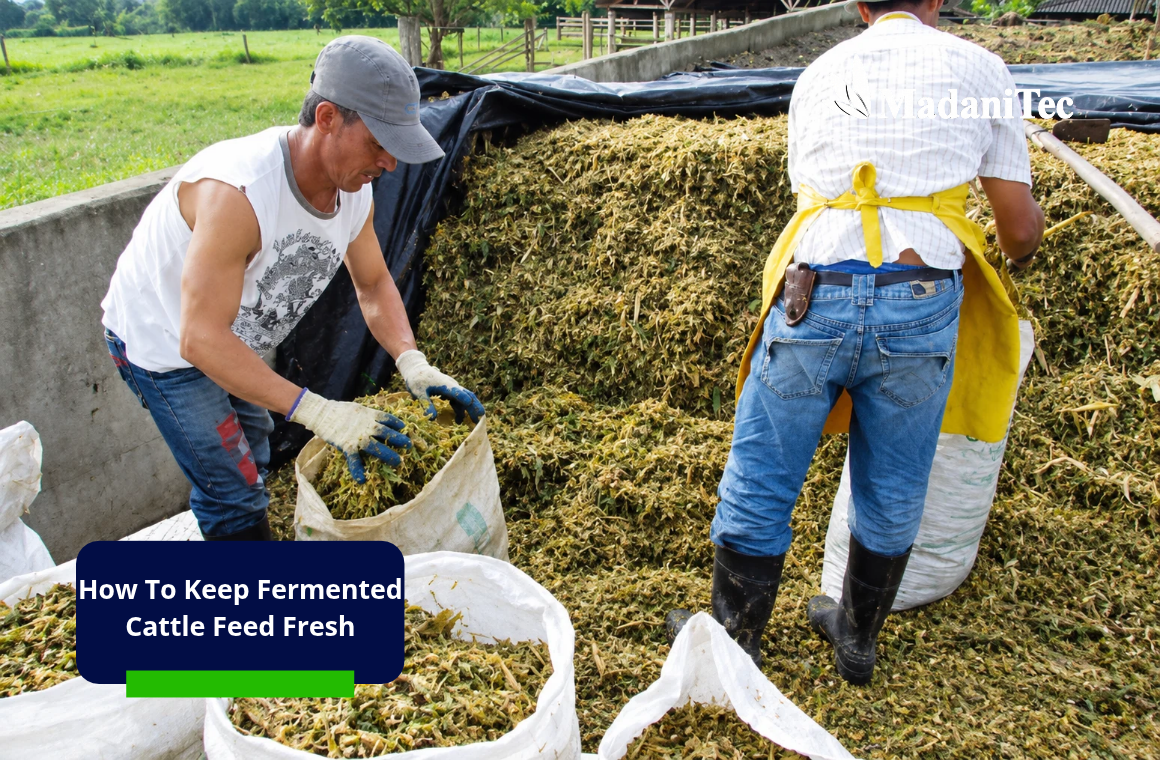
Always use clean containers or storage bags that are appropriate for fermented feed. The container should be strong enough to hold the feed and should not introduce dirt or unwanted materials.
Before filling a container, make sure it is clean and dry. Using a dirty container can increase the risk of contamination and may affect the stored feed.
Remove Excess Air Before Sealing
Air exposure should be minimized when storing fermented feed. After placing the feed into its container, compress it properly and seal the container as tightly as practical.
For larger quantities, farmers can divide the feed into manageable portions. This can make it easier to open only the amount needed instead of repeatedly exposing the entire batch to air.
Keep the Storage Area Cool and Dry
The storage location also matters. Fermented feed should be protected from excessive heat, rain, direct sunlight, and unnecessary moisture.
A clean, shaded, and well-managed storage area can help provide more stable conditions. Farmers should also avoid placing containers directly in locations where water can accumulate.
Avoid Frequent Opening of Large Feed Batches
Opening the same large container repeatedly can expose the remaining feed to air and contamination. Dividing fermented feed into practical portions can make daily feeding easier while helping protect unused portions.
This is particularly useful for farmers who prepare feed in larger quantities.
How Long Does Fermented Cattle Feed Last?
One common question about fermented feed is how long it can remain usable. There is no single storage period that applies to every fermented feed because its condition depends on several factors.
Factors That Affect Storage Life
The potential storage life can be influenced by:
- The quality of the original feed materials
- Moisture content
- Fermentation conditions
- Cleanliness of the preparation process
- How well the container is sealed
- Storage temperature and humidity
- How often the container is opened
Therefore, farmers should evaluate the actual condition of the feed rather than relying only on a fixed number of days.
Why Storage Conditions Matter More Than a Fixed Timeline
Two batches prepared from different materials or under different conditions may not remain in the same condition for the same amount of time.
This is why proper fermentation, suitable packaging, and regular inspection are important parts of fermented cattle feed storage.
Signs That Fermented Cattle Feed Is Still in Good Condition
Regular inspection is an important part of learning how to keep fermented cattle feed fresh. Farmers should check the feed before using it.
Normal Smell and Appearance
Fermented feed generally develops a distinctive fermented smell. Major changes in smell or appearance should not be ignored.
The feed should also be examined for visible contamination or unusual changes.
Texture and Moisture Condition
Texture can provide another useful indication of feed condition. Excessively wet, slimy, or significantly altered material may indicate a storage problem.
Farmers should become familiar with the normal condition of their fermented feed so unusual changes can be identified more easily.
Signs of Mold or Spoilage
Visible unwanted mold, unusual discoloration, foul odors, or other obvious signs of spoilage should be treated seriously. Feed showing clear signs of deterioration should not simply be mixed with a fresh batch.
When in doubt about feed safety, it is better to seek advice from a qualified livestock or animal nutrition professional.
Common Mistakes When Storing Fermented Cattle Feed
Several simple mistakes can reduce storage quality.
One common problem is using containers that have not been properly cleaned. Another is leaving the feed exposed to air for too long during storage or feeding.
Farmers may also store fermented feed in areas exposed to excessive heat or moisture. Another mistake is combining older and newer batches without properly considering their different storage conditions.
Avoiding these practices can make feed management more organized and consistent.
Baca juga: How to Make Silage Feed: A Practical Guide to Better Livestock Nutrition
Tips for More Efficient Fermented Feed Preparation and Storage
Good storage starts with an efficient preparation process.
Prepare Feed in Manageable Batches
Producing an amount that matches the farm’s feeding requirements can make storage easier. Smaller, manageable batches may also reduce unnecessary exposure when feed is being taken out for daily use.
Keep Preparation and Storage Areas Clean
Clean equipment, containers, working surfaces, and storage areas can help reduce contamination risks. Good hygiene should be maintained throughout the preparation and storage process.
Use Suitable Equipment for Feed Preparation
As the volume of feed increases, manual preparation can require considerable time and labor. Producing consistently chopped forage can also become more challenging when handling larger quantities.
Using suitable equipment such as a grass chopping machine can help farmers prepare forage more efficiently before fermentation.
For small and medium-scale livestock operations, choosing equipment according to actual processing capacity can make feed preparation more practical without unnecessarily increasing operational costs.
Madanitec can be considered when farmers or livestock businesses need suitable equipment to support more efficient feed preparation.
The right equipment can be selected based on the type of material, processing volume, and operational needs.
Conclusion
Understanding how to keep fermented cattle feed fresh involves more than simply placing fermented feed inside a container.
Proper preparation, clean storage conditions, limited air exposure, suitable moisture management, and regular inspection all contribute to better feed storage.
Farmers should also avoid relying on a fixed storage period alone. The actual condition of the feed should always be checked before it is used.
With a well-managed preparation and storage process, fermented cattle feed can become a more organized part of feed management.
For farms handling larger quantities, suitable processing equipment can also help reduce manual work and improve preparation efficiency.
For consultations regarding machines and appropriate technology solutions for various processing and production needs, please contact the Madanitec team via WhatsApp at 081215778768.