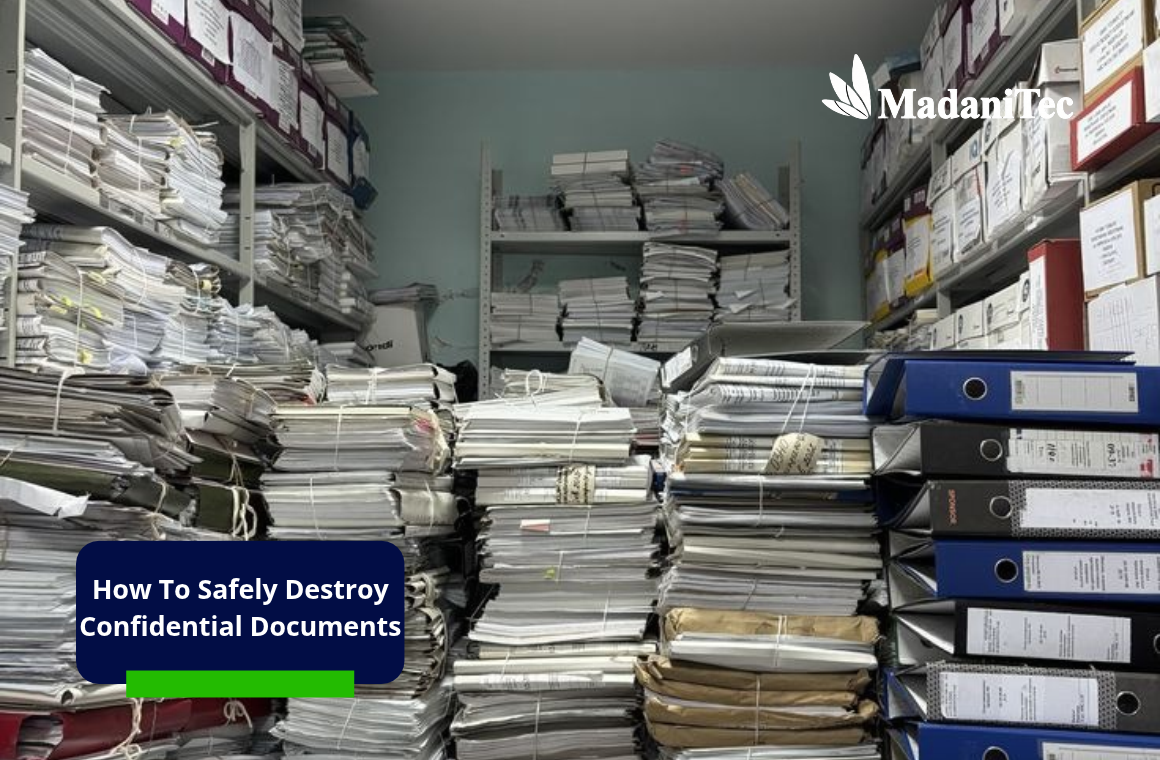
Businesses handle many types of documents containing sensitive information, from employee records and financial reports to customer details and internal business documents. Once these records are no longer needed, simply throwing them into regular trash can create unnecessary security risks.
Knowing how to safely destroy confidential documents is therefore an important part of responsible document management. A secure disposal process should make sensitive information difficult to read, access, or reconstruct while also ensuring that the resulting paper waste is handled properly.
Why Confidential Documents Require Secure Destruction
Confidential documents may continue to contain valuable information even after they are no longer needed for daily operations.
Improper disposal can expose information to unauthorized individuals and create problems for businesses.
Sensitive Information Can Remain Valuable After Use
Old documents can contain names, addresses, employee information, financial details, contracts, customer records, and internal business information.
Although the documents may no longer have administrative value, the information inside them can still be sensitive.
For this reason, businesses should consider document disposal as part of their broader information security practices.
Improper Disposal Can Create Data Exposure Risks
Leaving confidential papers in open trash bins or mixed waste can make them accessible to people who are not authorized to handle them.
Even partially damaged documents may contain information that can be read or connected with other pieces.
Secure destruction reduces the chance that discarded records can be easily accessed or reconstructed.
How to Safely Destroy Confidential Documents
Understanding how to safely destroy confidential documents starts with establishing a consistent disposal process rather than simply choosing a way to get rid of unwanted paper.
Identify and Separate Confidential Documents
The first step is to identify documents that contain sensitive information. Businesses can separate confidential records from ordinary recyclable paper before the destruction process begins.
This makes document handling more organized and reduces the possibility of sensitive papers accidentally entering regular waste streams.
Choose a Secure Destruction Method
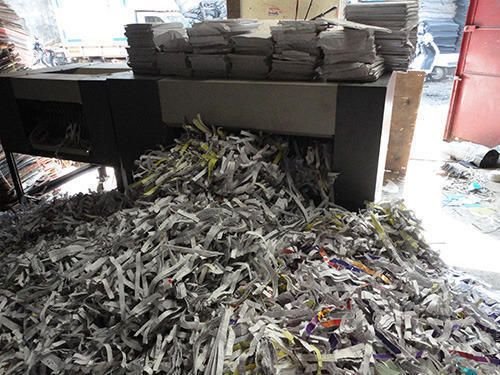
For paper-based records, shredding is one practical method of reducing documents into smaller pieces.
The appropriate method depends on the sensitivity of the information, the amount of paper, and the organization’s document management procedures.
Businesses should choose a method that makes the original information difficult to read or reconstruct.
Make the Documents Difficult to Reconstruct
Simply tearing a document in half may not provide sufficient protection for highly sensitive information.
Smaller shredded pieces can make reconstruction more difficult, particularly when the destruction process is designed for confidential records.
The goal is not merely to reduce the size of the paper but to prevent the original information from remaining readily readable.
Control Access During the Destruction Process
Confidential documents should be protected before they are destroyed.
Businesses can use designated collection containers or controlled storage areas so that unauthorized people do not have unnecessary access to documents waiting for destruction.
Access control is especially important in offices that handle large amounts of personal, financial, or business-sensitive information.
Learn more about: Cardboard Recycling: Modern Way to Process Cardboard Waste
Which Documents Should Be Destroyed Securely?
Not every piece of paper requires the same level of handling. However, businesses should pay particular attention to records containing sensitive or personally identifiable information.
Financial and Accounting Records
Invoices, financial statements, payment information, and other accounting records may contain information that should not be exposed after their retention period ends.
Employee and Customer Information
Employee records, customer details, applications, contact information, and other personal data should be handled carefully when they are no longer required.
Contracts and Internal Business Documents
Contracts, internal reports, business plans, and confidential correspondence may also contain information that could be valuable to unauthorized parties.
Before destroying any record, businesses should follow applicable retention requirements and internal policies. A document should not be destroyed simply because it is old.
Common Mistakes When Destroying Confidential Documents
Several simple practices can undermine otherwise good document security.
One common mistake is putting confidential documents directly into regular trash. Another is relying only on hand-tearing, particularly when documents contain sensitive information.
Businesses may also leave shredded paper unsecured after destruction or allow confidential records to accumulate without a clear disposal schedule.
Another important mistake is destroying documents without checking whether they are still subject to legal, regulatory, accounting, or internal retention requirements.
A consistent document disposal policy can help prevent these problems.
How to Manage Shredded Confidential Paper Waste
Secure destruction does not necessarily end when documents have been shredded. The resulting paper waste should also be managed properly.
Keep Shredded Paper Separate From Regular Waste
Keeping shredded confidential paper separate can make the waste stream easier to control and may support responsible recycling practices.
Store Shredded Material in a Controlled Area
If shredded paper is not immediately processed or recycled, it should be placed in suitable containers and kept in a controlled area to reduce unnecessary exposure.
Consider Recycling After Secure Destruction
Once confidential information has been securely destroyed, the resulting paper material may be suitable for recycling depending on its condition and the organization’s waste management process.
This creates an opportunity to connect information security with more responsible paper waste management.
How Businesses Can Make Document Destruction More Efficient
For companies that generate large amounts of paper records, manual document destruction can become time-consuming and difficult to manage consistently.
Establish a Regular Document Disposal Schedule
A regular schedule can prevent outdated documents from accumulating in offices, storage rooms, or temporary collection areas.
Match Equipment to Document Volume
The right equipment should be selected according to the amount and type of paper being processed.
A small office with limited documents may have different requirements from a company handling large volumes of confidential records.
Use Suitable Shredding Equipment for Larger Volumes
When document volumes increase, suitable shredder equipment equipment can help reduce manual work and make the destruction process more consistent.
For businesses looking to improve their paper waste management, Madanitec can be considered as a partner in exploring appropriate processing equipment based on operational capacity and waste volume.
This approach can help connect secure document disposal with more efficient management of the resulting paper waste.
Conclusion
Knowing how to safely destroy confidential documents is an important part of responsible business information management.
The process should begin by identifying sensitive records, separating them from ordinary waste, choosing an appropriate destruction method, controlling access, and managing the resulting paper waste properly.
Businesses should also check document retention requirements before destroying records.
Once documents are no longer required and have been securely destroyed, the resulting paper material can potentially be managed through an organized recycling or waste-processing system.
For companies handling large quantities of confidential paper, choosing suitable equipment can make document destruction more efficient while supporting better overall waste management.
For consultations regarding machines and appropriate technology solutions for various processing and production needs, please contact the Madanitec team via WhatsApp at 081215778768.