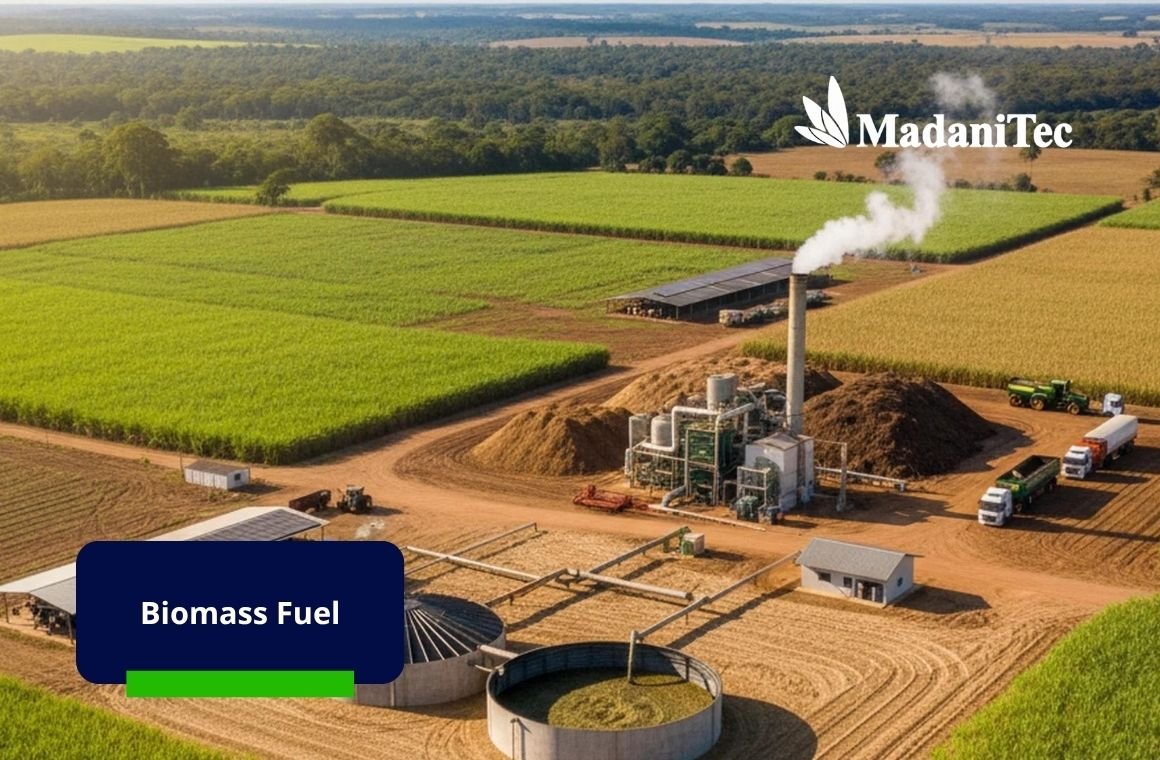
Agricultural waste is often viewed as a leftover material that needs to be removed. Straw, corn stalks, rice husks, branches, and other residues may accumulate after harvesting. However, these materials can also become biomass fuel for energy production when they are collected and processed properly. The U.S. Department of Energy identifies agricultural crop residues, forestry residues, wood-processing residues, food waste, and other organic materials as potential biomass feedstocks.
This raises an interesting question: can agricultural waste really become biomass Fuel? The answer is yes, although the process depends on the type and quality of the biomass, its moisture content, preparation, and the technology used to convert it into energy.
What Is Biomass Fuel?
Biomass fuel refers to fuel derived from organic biological materials, commonly known as biomass. These materials can come from plants, agricultural residues, forestry resources, and certain organic waste streams.
Biomass can be used directly as a solid fuel or converted into other forms of energy, including heat, electricity, biogas, and biofuels.
Unlike fossil fuels, biomass originates from recently living biological material. This is why biomass is generally categorized as a renewable energy resource when it is sourced and managed sustainably.
However, renewable does not automatically mean impact-free; harvesting, transportation, processing, and combustion can still create environmental impacts.
What Are the Different Types of Biomass?
Biomass comes in many forms, depending on its source and characteristics.
Agricultural Biomass
Agricultural biomass includes crop residues such as rice straw, corn residues, sugarcane residues, and other materials left after harvesting or processing agricultural products.
FAO notes that crop residues and other agricultural resources can form part of sustainable bioenergy systems.
Wood and Forestry Biomass
Wood chips, sawdust, branches, and forestry residues can also serve as biomass feedstocks. These materials may be processed into forms such as wood chips, pellets, or briquettes depending on their intended application.
Organic Waste Biomass
Food waste, livestock residues, and other organic materials can also become energy resources. The IEA groups crop residues, animal manure, biowaste, and woody biomass among potential feedstocks for biogas and biomethane production.
Read more about: Benefits of Organic Waste Crusher Machine for Farmers and Breeder
What Are 5 Examples of Biomass Energy?
Biomass can be converted into energy through different pathways. Five common examples include wood fuel, agricultural residues, biomass briquettes, biogas, and liquid biofuels.
Agricultural residues can be burned directly or processed into denser fuels, while organic waste and animal manure can be converted into biogas through anaerobic digestion.
FAO also notes that crop residues and sawdust can be made into briquettes, while animal waste can be converted into methane gas.
What Is the Difference Between Biogas and Biomass?
Biomass and biogas are related but not the same. Biomass refers to the organic material itself, while biogas is a gaseous fuel produced from organic material through biological processes such as anaerobic digestion.
For example, crop residues, wood, or animal manure can be considered biomass. When suitable organic waste is processed through anaerobic digestion, it can produce biogas containing methane that can then be used for energy.
This distinction matters because biomass can be used through several conversion routes, while biogas represents one particular energy product derived from organic feedstocks.
What Are the Advantages of Biomass?
One major advantage of biomass is its ability to turn agricultural and organic residues into useful energy resources instead of leaving them unused.
Sustainable bioenergy can also support rural development, improve energy access, create economic opportunities, and complement other renewable energy sources.
FAO has also highlighted the potential of using crop residues and manure for bioenergy as an alternative to simply burning unused agricultural residues.
However, the benefits depend on responsible sourcing, efficient processing, emissions control, and appropriate logistics.
How Is Agricultural Waste Prepared for Biomass Fuel?
Before agricultural waste can become useful biomass fuel, it often needs to be prepared according to the requirements of the next processing stage. Sorting, cleaning, drying, and size reduction can all be important.
Why Does Size Reduction Matter for Biomass?
Large and irregular agricultural residues can be difficult to handle, transport, dry, or process consistently.
Chopping or shredding biomass into a more manageable size can help prepare the material for subsequent processing, depending on the technology being used.
This is where Organic Waste Crusher Machine can become an important part of the biomass preparation chain.
The objective is not simply to make the waste smaller, but to produce feedstock with characteristics that are more suitable for the next stage.
Can Agricultural Waste Really Become Biomass Fuel?
Yes, agricultural waste can become a valuable biomass fuel feedstock when the material is suitable and the entire processing chain is properly designed.
From crop residues to wood waste and selected organic materials, biomass offers a pathway for recovering energy from resources that might otherwise be discarded or burned without productive use.
The key is to look beyond waste disposal. With proper collection, size reduction, drying, processing, and conversion technology, agricultural residues can become part of a more useful biomass fuel system—while still requiring careful consideration of sustainability, efficiency, emissions, and economic feasibility.
Madanitec — providing technology and machinery solutions to support waste processing and the development of circular economy-based businesses, Indonesia’s waste issues.
Affordable prices and reliable quality are supported by after sales service and warranty with every purchase. Do not hesitate to contact 081215778768 via WhatsApp and get a special offer today.