A hydraulic press machine relies on a hydraulic system to generate and control the force needed for pressing, forming, compacting, or shaping materials. Understanding the hydraulic system components of a press machine is important because each part has a specific role in maintaining pressure, controlling movement, and supporting reliable operation.
From the hydraulic pump to the cylinder, valves, reservoir, hoses, and filters, these components work together as one system. When properly maintained, they can help a press machine operate efficiently and consistently.
What Is a Hydraulic Press Machine?
A Hydraulic Press Machine uses pressurized hydraulic fluid to generate mechanical force. The system generally works according to Pascal’s principle, where pressure applied to a confined fluid is transmitted throughout the fluid.
In a typical hydraulic press, the pump moves hydraulic oil from the reservoir into the hydraulic circuit. Valves then control the direction and pressure of the fluid, while the hydraulic cylinder converts fluid pressure into linear mechanical movement.
This mechanism allows hydraulic presses to produce substantial force while maintaining controlled and repeatable movement.
Hydraulic System Components of a Press Machine
Several essential components work together to operate a hydraulic press. Here are the main parts and their functions.
1. Hydraulic Pump
The hydraulic pump is responsible for circulating hydraulic fluid through the system. It converts mechanical energy from the motor or engine into hydraulic flow.
The pump does not directly create pressure by itself. Instead, pressure develops when the fluid encounters resistance within the hydraulic system. Proper pump performance is therefore essential for maintaining adequate flow and supporting the required pressing operation.
2. Hydraulic Cylinder
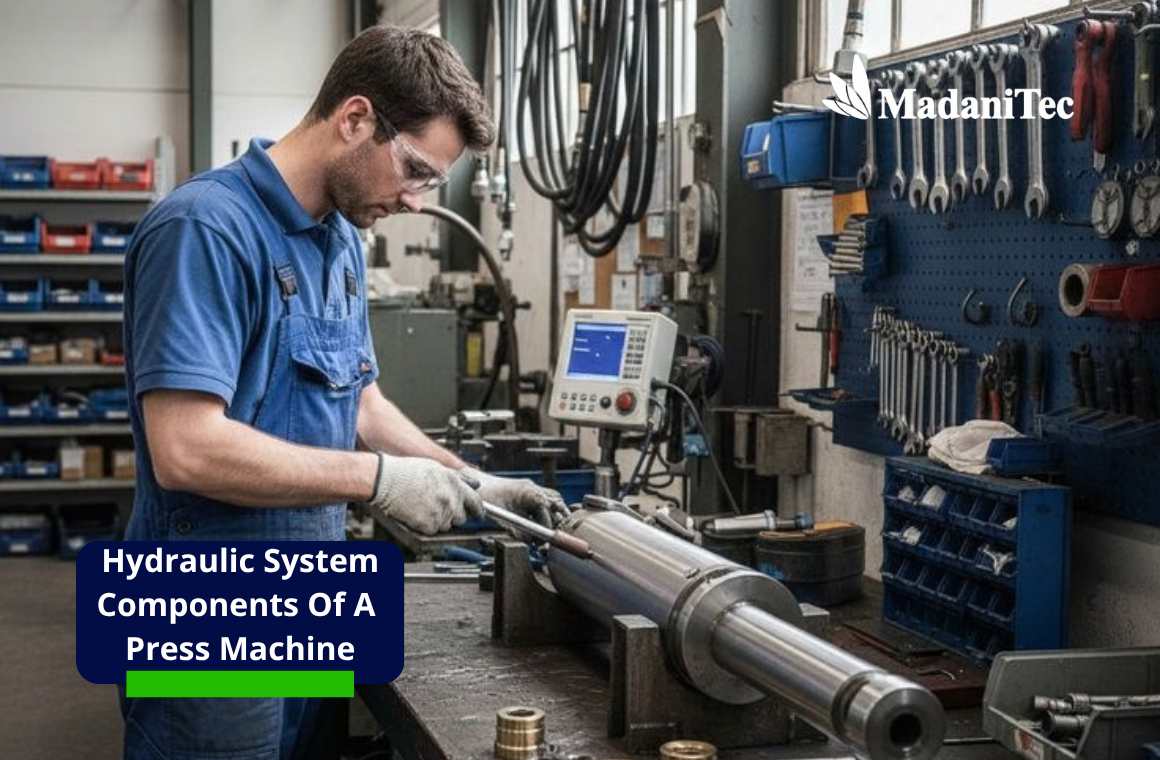
The hydraulic cylinder converts hydraulic energy into linear mechanical force. Pressurized oil enters the cylinder and moves the piston, producing the movement required for pressing.
The cylinder is one of the most important hydraulic press components because its size and operating pressure influence the amount of force that the machine can produce.
Cylinder seals also require regular inspection because damaged seals can result in hydraulic oil leakage and reduced performance.
3. Hydraulic Reservoir
The hydraulic reservoir stores the hydraulic fluid used by the system. It also provides space for the fluid to cool, release trapped air, and allow certain contaminants to settle.
A properly maintained reservoir helps maintain fluid quality and ensures that the pump receives an adequate supply of hydraulic oil.
4. Hydraulic Valves
Hydraulic valves control how fluid moves through the system. Depending on the design, valves can regulate flow direction, pressure, or the speed of hydraulic actuators.
A pressure relief valve is particularly important because it helps protect the system from excessive pressure. Directional control valves, meanwhile, determine whether the cylinder extends, retracts, or remains stationary.
5. Hydraulic Hoses and Pipes
Hoses and pipes transport hydraulic fluid between the pump, valves, cylinder, reservoir, and other components.
Because they operate under pressure, hoses and fittings should be inspected regularly for cracks, abrasion, loose connections, or oil leaks. Damaged hydraulic lines can reduce system efficiency and may create safety risks.
6. Hydraulic Filter
The hydraulic filter helps remove contaminants from the hydraulic fluid. Dust, metal particles, and other impurities can damage pumps, valves, and cylinders if they circulate through the system.
Regular filter inspection and replacement can therefore help protect other hydraulic system parts and support longer equipment service life.
How Do These Hydraulic Components Work Together?
The hydraulic system components of a press machine operate as an interconnected circuit rather than as isolated parts.
A simplified operating sequence is:
Reservoir → Pump → Control Valve → Hydraulic Cylinder → Return Line → Reservoir
The pump draws hydraulic fluid from the reservoir and sends it through the hydraulic circuit. The valves control where the fluid goes and how much pressure or flow is permitted.
The pressurized fluid then enters the cylinder, causing the piston to move and generate pressing force.
After the operation, the hydraulic fluid returns through the circuit to the reservoir, where the cycle can continue.
Why Proper Hydraulic Components Matter
The condition and compatibility of hydraulic components can directly affect machine performance.
Properly functioning components help maintain stable pressure, controlled movement, efficient operation, and reliable pressing results.
Using unsuitable components or neglecting maintenance can contribute to problems such as pressure loss, overheating, oil leakage, slow cylinder movement, and unexpected downtime.
For this reason, operators should monitor hydraulic oil condition, inspect hoses and fittings, check pressure levels, and follow the recommended maintenance schedule.
How to Maintain a Hydraulic Press System
Basic maintenance can help prevent common hydraulic problems. Operators should regularly:
- Check the hydraulic oil level and condition.
- Inspect hoses, pipes, and fittings for leaks.
- Monitor abnormal pressure fluctuations.
- Clean or replace hydraulic filters when necessary.
- Inspect cylinder seals for signs of leakage.
- Keep the hydraulic reservoir clean.
- Follow the manufacturer’s maintenance recommendations.
Regular inspection is especially important for presses used frequently in workshops, recycling operations, manufacturing, and other industrial applications.
Learn more abou: Hydraulic Press Losing Pressure Causes: Common Problems and How to Fix Them
Conclusion
Understanding the hydraulic system components of a press machine makes it easier to operate, maintain, and troubleshoot hydraulic equipment.
The pump, cylinder, reservoir, valves, hoses, pipes, and filter each perform different functions, but they must work together as one integrated hydraulic system.
For businesses and industries that depend on pressing processes, selecting equipment according to the required capacity, material, and operating conditions is equally important.
If you are exploring machinery solutions for business or industrial applications, Madanitec can be considered as a technology partner for suitable equipment and production needs.
For consultations regarding machines and appropriate technology solutions for various processing and production needs, please contact the Madanitec team via WhatsApp at 081215778768.