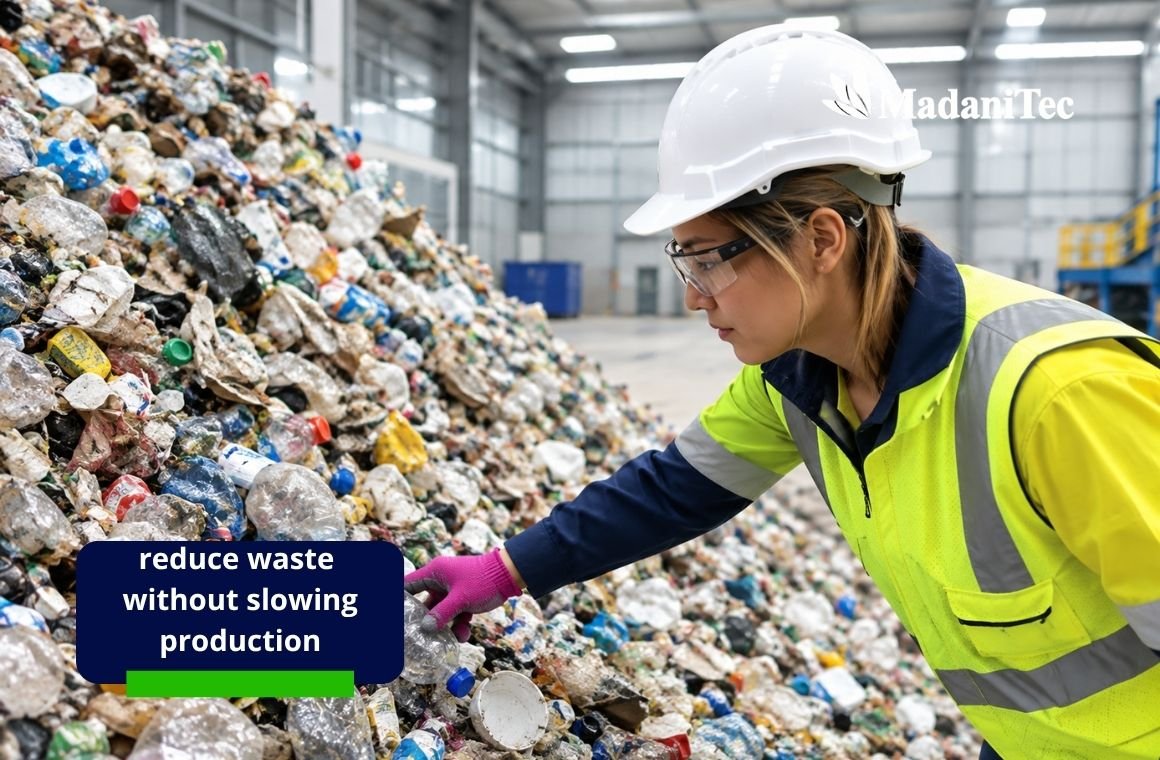
Industries face a difficult challenge as production volumes continue to grow: how can they reduce waste without slowing down the production process? At first glance, waste reduction and production efficiency may seem to compete with each other. More sorting, handling, or processing could appear to require additional time, labor, and resources.
However, the relationship is not necessarily that simple. With the right approach, technology can help industries reduce waste without slowing production by integrating waste prevention, material handling, sorting, and recovery into the production workflow. In fact, the U.S. Environmental Protection Agency recognizes process and equipment modifications, automation, maintenance, and material management as important approaches to source reduction.
Why Is Waste Reduction a Challenge for Modern Industries?
Rising Production and Growing Waste
Higher production usually means greater consumption of raw materials, packaging, energy, and other resources.
Without an efficient management system, a portion of these materials can become production scraps, damaged materials, packaging waste, or other forms of industrial waste.
The challenge becomes greater when production operates continuously. Waste cannot simply be allowed to accumulate around the production line because it can interfere with movement, storage, safety, and workflow.
The Hidden Cost of Inefficient Waste Handling
Waste also creates costs beyond disposal. Workers may need to spend additional time collecting and moving materials.
Storage areas can become occupied by materials that have not yet been processed, while transportation costs can increase when waste is bulky or poorly organized.
This is why waste management should not always be viewed as an activity that happens after production. It can be part of a broader strategy for improving resource efficiency.
Why Industries Cannot Simply Stop Production to Manage Waste
For many industries, production downtime can be expensive. Waste handling therefore needs to work alongside production rather than interrupt it.
The goal is not simply to process waste faster. The larger objective is to create a workflow in which waste is identified, separated, reduced, or recovered with as little disruption as possible.
Learn more about: The Hidden Cost of Mixed Waste: Why Proper Separation Matters
Can Technology Reduce Waste Without Slowing Production?
The answer can be yes—provided that the technology is properly matched to the production process.
Automating Repetitive Waste Handling Tasks
Some waste-related activities are repetitive and time-consuming, such as moving materials, separating certain waste streams, or preparing materials for further processing.
Automation can reduce the amount of manual work required for these repetitive tasks. This allows workers to focus on activities that require greater judgment while machines handle consistent, repetitive operations.
Improving Material Sorting and Separation
Mixed waste can be difficult to manage because different materials require different treatment. Technology can help separate materials according to their type, size, composition, or other characteristics.
Better separation can also improve the possibility of recovering materials that still have economic value.
This supports a more resource-efficient production system rather than treating every discarded material as something with no further use.
Reducing Waste Volume Before Transportation or Processing
Waste volume is another important consideration. Bulky materials can occupy significant storage space and increase transportation requirements.
Technologies such as compacting, pressing, shredding, and size reduction can change the physical characteristics of certain waste streams, making them easier to handle, store, transport, or process further.
Recovering Materials That Still Have Economic Value
Not every material leaving a production process is necessarily useless. Plastic, cardboard, paper, organic materials, and certain industrial residues may still have value when properly separated and processed.
UNIDO emphasizes that resource efficiency, recycling, and designing waste out of production are important elements of cleaner production and the circular economy.
How Does Technology Improve Production Efficiency and Waste Management?
Less Manual Handling
When waste handling becomes more systematic, workers may spend less time repeatedly moving or preparing waste materials. This can help reduce unnecessary movement within the facility.
More Consistent Processing
Manual waste handling can vary depending on workload, operator experience, and working conditions. Properly selected technology can provide more consistent processing conditions, particularly for repetitive operations.
Better Use of Production Materials
Waste reduction is also about using raw materials more effectively. Monitoring material losses, improving process conditions, and modifying equipment can prevent unnecessary waste before it is created.
EPA identifies process and equipment modifications as established source-reduction practices.
Reduced Downtime and Operational Bottlenecks
An effective waste-handling system can help prevent accumulated materials from becoming a bottleneck. When waste is handled as part of the workflow, production areas can remain more organized and accessible.
What Types of Waste Can Modern Technology Help Manage?
Plastic and Packaging Waste
Plastic packaging, production scraps, and other plastic materials can be sorted, compacted, shredded, or prepared for further recovery depending on their characteristics.
Cardboard and Paper Waste
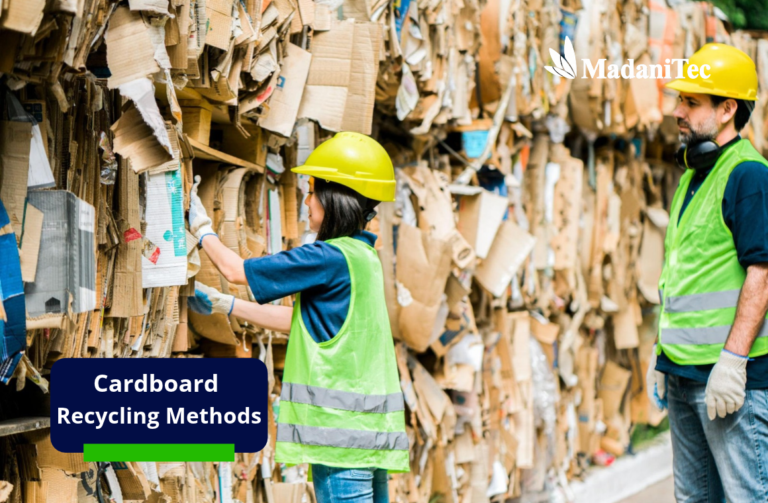
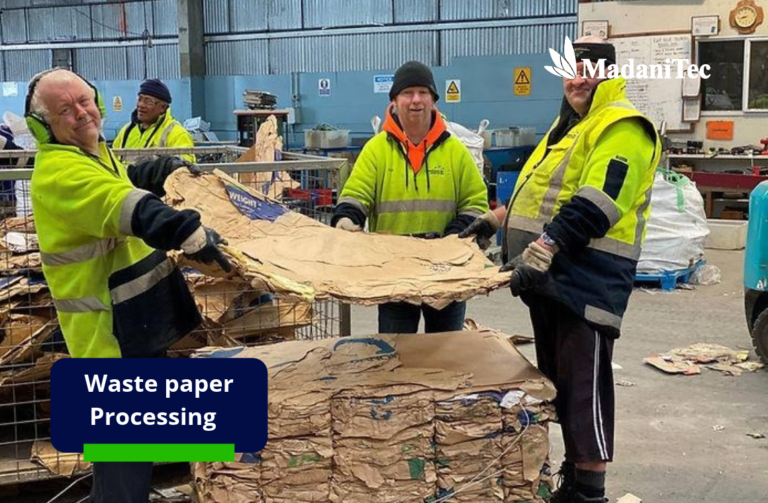
Cardboard and paper can occupy substantial storage space when collected without size reduction. Appropriate processing can make these materials easier to store and transport.
Organic and Agricultural Waste
Organic residues and agricultural materials may also be processed into forms that are easier to handle or potentially suitable for further utilization, depending on their composition and intended application.
Industrial and Mixed Waste
More complex industrial waste streams require greater attention to material characteristics and separation.
Technology can support sorting and preparation, but the appropriate solution depends on the type and volume of waste involved.
Learn more about: Indonesia’s Waste Management Crisis: Landfills Are Filling Up—Where Will the Waste Go?
What Should Industries Consider Before Adopting Waste-Reduction Technology?
Technology should not be selected simply because it is modern. The first consideration should be the type of waste being generated.
Industries should also evaluate production volume, material characteristics, required processing capacity, available space, workflow, labor requirements, maintenance, and operating costs.
The best system is not necessarily the most sophisticated one. It is the technology that fits the actual production environment and solves a specific operational problem.
The Future of Production: Less Waste, More Efficiency
Reducing industrial waste does not have to mean slowing production. When waste reduction is integrated into the production workflow, technology can help industries handle materials more efficiently, reduce unnecessary manual work, improve separation, and recover resources that might otherwise be discarded.
The broader direction is moving toward production systems that use fewer resources while creating greater value from the materials already available.
UNIDO describes resource-efficient and cleaner production as an important pathway toward more sustainable and competitive industry.
Ultimately, the question is not whether industries should choose between productivity and waste reduction. The more important question is how production systems can be designed so that both objectives support each other.
With the right process, appropriate technology, and careful planning, less waste and efficient production can become part of the same industrial strategy.
Madanitec — providing technology and machinery solutions to support waste processing and the development of circular economy-based businesses, Indonesia’s waste issues.
Affordable prices and reliable quality are supported by after sales service and warranty with every purchase. Do not hesitate to contact 081215778768 via WhatsApp and get a special offer today.