Not all textile waste has to end up as landfill waste. Many thick fabrics still contain useful fibers and materials that can be recovered, reused, or transformed into new products. Understanding the types of thick fabric for recycling can help businesses, manufacturers, and waste-management operators identify materials with greater recovery potential.
From denim and canvas to upholstery and industrial fabrics, each material has different characteristics that influence how it should be sorted and processed. With proper handling, thick fabric waste can become a valuable resource while supporting more responsible textile waste management.
Why Is Thick Fabric Worth Recycling?
Thick fabrics are widely used in clothing, furniture, bags, workwear, outdoor equipment, and industrial applications.
Because these products can be relatively durable, discarded fabric may still contain useful material even after the original product is no longer needed.
Recycling and reuse can help reduce the amount of textile waste that requires disposal.
More importantly, recovering materials from used fabrics can create opportunities to produce new fibers, filling materials, mats, insulation-related products, and other applications.
However, not every fabric should be processed in exactly the same way. Fiber composition, thickness, contamination, and physical condition all need to be considered before selecting a recycling method.
7 Types of Thick Fabric for Recycling
1. Denim Fabric
Denim is one of the most recognizable thick fabrics and is commonly found in jeans, jackets, and other garments. Its relatively strong construction makes discarded denim an interesting material for textile recovery.
Old denim can be collected and sorted before being cut or mechanically processed into smaller pieces.
Depending on the fiber composition and processing method, recovered denim fibers may be used in new textile applications or other value-added products.
2. Canvas Fabric
Canvas is a strong woven fabric commonly used for bags, covers, footwear, outdoor products, and work equipment. Its durability makes discarded canvas potentially useful for reuse and recycling.
Clean canvas waste can be separated according to its material composition and condition. Some pieces may be suitable for direct upcycling, while others can be processed into smaller textile materials.
3. Corduroy Fabric
Corduroy is recognizable by its raised ridges and relatively substantial structure. It is commonly used for clothing, upholstery, and accessories.
Although its distinctive texture can make direct reuse attractive, damaged corduroy can also be considered for material recovery.
Sorting it by fiber composition is important before selecting an appropriate recycling or reuse route.
4. Upholstery Fabric
Upholstery fabric comes from sofas, chairs, cushions, and other furniture. It can represent a significant volume of textile waste, particularly when furniture is replaced or renovated.
The main challenge is that upholstery fabric is often attached to other materials such as foam, wood, plastic, staples, or metal. These components should be separated before the fabric enters a recycling process.
Once properly separated, suitable textile material can potentially be reused, processed into fiber, or converted into other textile-based products.
5. Wool and Heavy Wool Blends
Wool and heavy wool-blend fabrics have different properties from common synthetic textiles. They may come from coats, jackets, blankets, and other thick textile products.
The composition of the fabric is particularly important because wool blends may contain synthetic fibers.
Understanding the fiber mix helps determine whether the material is better suited to reuse, mechanical recycling, or another recovery process.
6. Heavy Polyester Fabric
Polyester is widely used in clothing, bags, upholstery, workwear, and various technical textiles. Heavy polyester fabrics can therefore become an important source of recyclable textile material.
Before processing, the fabric should be inspected for coatings, mixed fibers, attached components, and contamination.
The specific recycling pathway will depend on the material composition and the desired final product.
7. Industrial and Workwear Fabrics
Industrial textiles and workwear can generate substantial quantities of thick fabric waste. Examples include uniforms, protective clothing, heavy-duty covers, and other textile products used in industrial environments.
These materials require careful inspection because some may have been exposed to oils, chemicals, dust, or other contaminants.
Only materials considered suitable for the intended recycling process should proceed to further processing.
What Makes Thick Fabric Suitable for Recycling?
Knowing the types of thick fabric for recycling is only the first step. The condition and composition of the material are equally important.
Fabric Composition
Cotton, polyester, wool, and blended fabrics can behave differently during recycling. Identifying the dominant fiber or fiber combination helps determine which processing method is appropriate.
Fabric Condition
Clean and relatively intact fabric offers more possibilities for reuse. Heavily damaged or contaminated material may require additional treatment or may have fewer recovery options.
Fiber Structure and Thickness
Thicker materials may require cutting, shredding, or other size-reduction processes before further treatment. The physical structure of the fabric should therefore be considered when planning a recycling system.
What Can Recycled Thick Fabric Become?
Once properly processed, thick textile waste can become a raw material for various products.
Recycled Textile Fiber
Recovered fibers can potentially be incorporated into new textile products or blended with other materials, depending on their quality and composition.
Textile-Based Filling and Padding
Processed textile fibers can also be used in selected filling, padding, or cushioning applications where the material meets the required specifications.
Recycled Mats and Industrial Materials
Some textile waste can be processed into mats, padding, or other industrial materials. These applications can provide a practical destination for fabrics that are no longer suitable for their original purpose.
Creative and Upcycled Products
Fabric that remains visually attractive or structurally intact may be better suited for upcycling. Bags, accessories, decorative products, and other creative goods can give discarded fabric a second life.
How Does Thick Fabric Recycling Work?
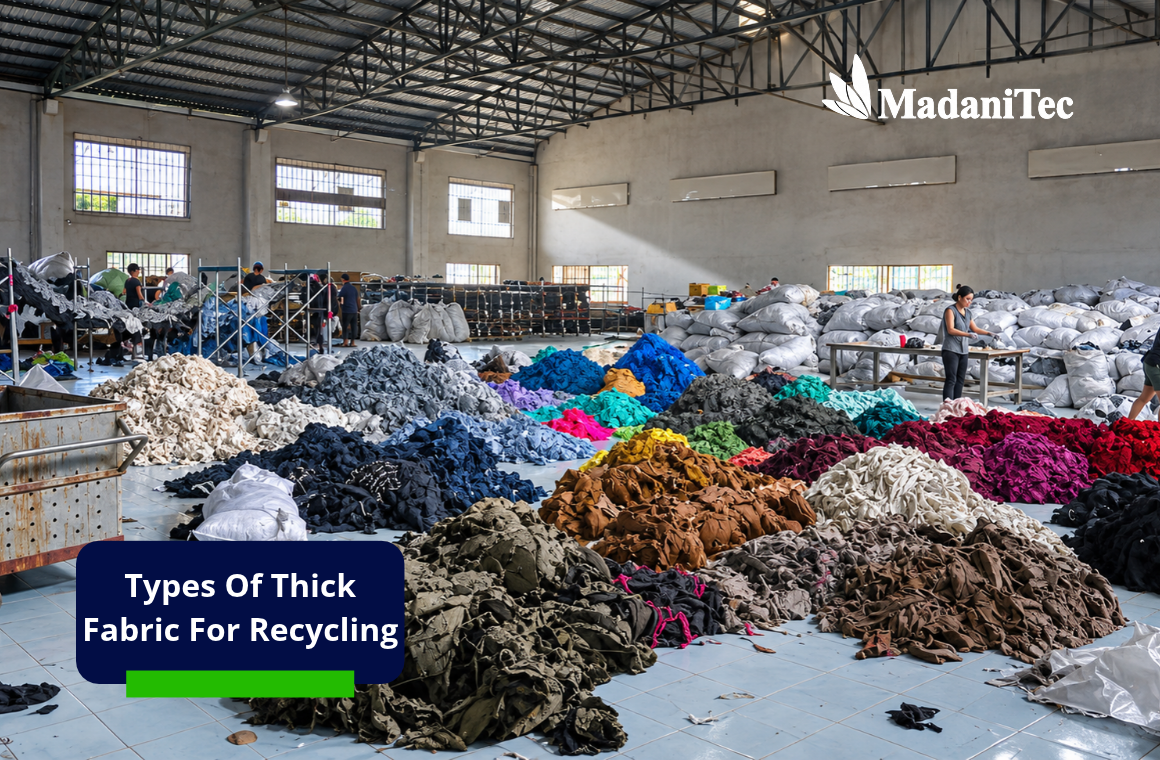
Although recycling systems vary, the process generally begins with collection and sorting. Materials are inspected and separated according to fiber type, color, condition, and contamination.
The next stage may involve cutting or shredding the fabric into smaller pieces. Depending on the intended application, the processed material can then undergo further fiber recovery, separation, blending, or product manufacturing.
Good sorting at the beginning can make later processing more efficient because incompatible materials are removed before they enter the system.
Learn more about: The Surprisingly Important Role of Simple Technology in Everyday Life
Why Is Material Sorting Important in Textile Recycling?
Sorting is one of the most important stages in textile waste management. Fabrics that look similar may have very different fiber compositions, coatings, or attached materials.
Separating materials before processing can help businesses maintain more consistent feedstock and select an appropriate recycling pathway. It can also prevent unwanted materials from reducing the quality of the final product.
For businesses handling large quantities of textile waste, an organized sorting and processing system can therefore make material recovery more practical.
Turning Thick Fabric Waste into a Valuable Resource
The types of thick fabric for recycling range from familiar materials such as denim and canvas to upholstery, heavy polyester, wool blends, and industrial textiles.
Each material has different characteristics, so successful recycling depends on proper identification, sorting, and processing.
Rather than viewing discarded fabric simply as waste, businesses can explore ways to recover its material value and extend its useful life.
For operations handling significant volumes of textile waste, the right processing technology can make this approach more efficient and consistent.
Madanitec can be considered when businesses need technology solutions for processing and managing production waste.
The appropriate solution can be selected based on the material characteristics, processing requirements, and scale of the operation.
For consultations regarding machines and appropriate technology solutions for various processing and production needs, please contact the Madanitec team via WhatsApp at 081215778768.