The growing amount of waste has become a major challenge for cities, businesses, and industries around the world. While some materials can be recycled, a significant portion of waste is difficult to recover through conventional recycling methods. This is where Refuse Derived Fuel (RDF) can provide an alternative approach.
But what is refuse derived fuel (RDF), and how can waste be transformed into a usable fuel? RDF is produced by processing selected combustible waste materials to create a fuel with properties suitable for certain industrial applications. Instead of sending all waste directly to landfills, materials with energy potential can be recovered and processed for further use.
What Is Refuse Derived Fuel (RDF)?
Refuse Derived Fuel, commonly abbreviated as RDF, is a fuel produced from selected combustible components of municipal or commercial waste.
The production process generally involves sorting, removing unsuitable materials, reducing particle size, and controlling moisture and other characteristics.
The objective is to separate combustible materials from materials that cannot contribute useful energy.
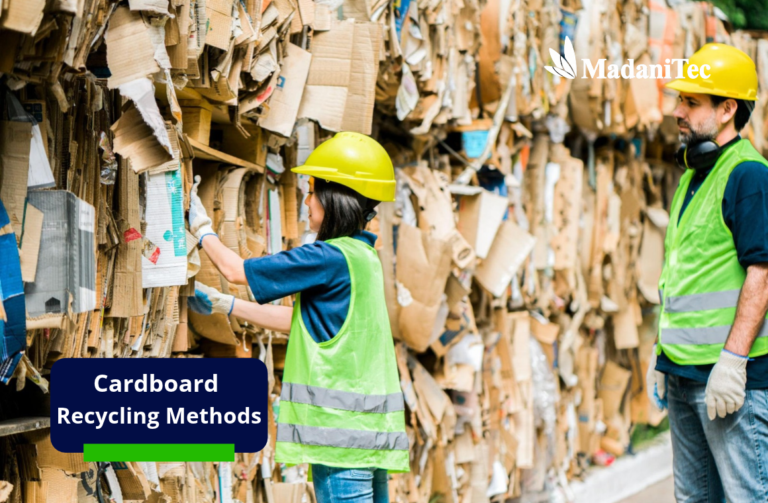
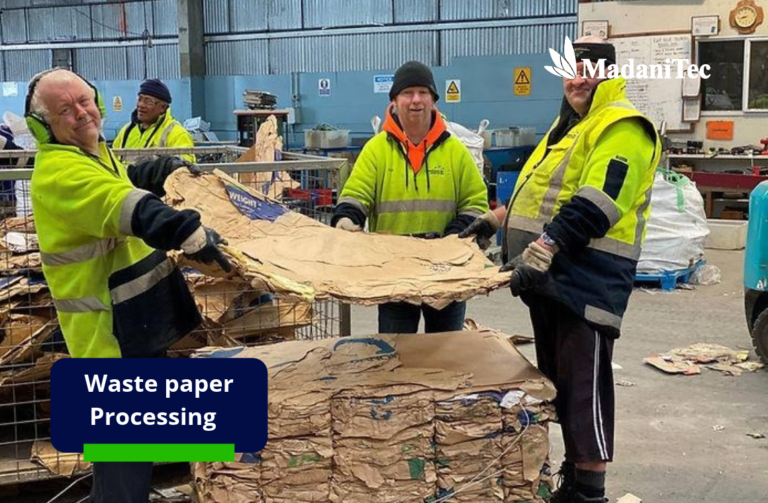
Common materials found in RDF may include plastics, paper, cardboard, textiles, packaging materials, and other non-recyclable combustible waste.
Unlike untreated waste, RDF is processed to achieve more consistent characteristics, making it more suitable for specific thermal applications.
How Is Refuse Derived Fuel Made?
Producing RDF involves several stages. The exact process can vary depending on the type and condition of the incoming waste, as well as the requirements of the end user.
1. Waste Collection and Sorting
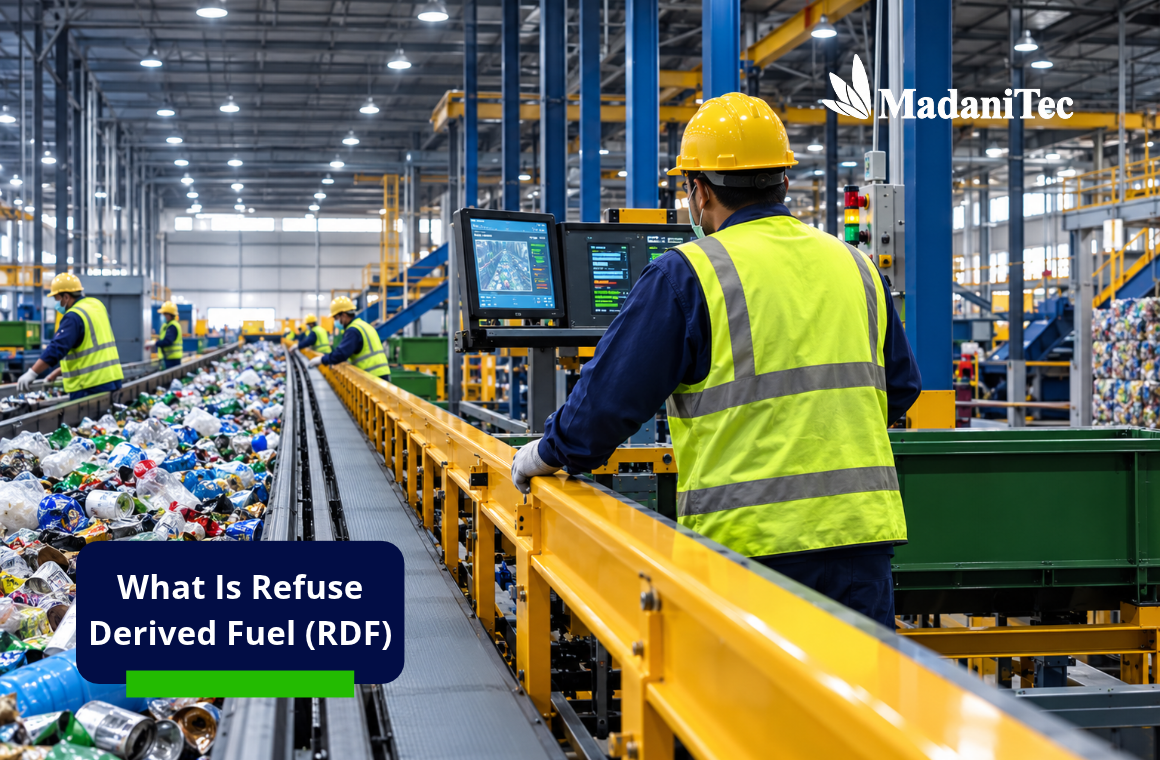
The first step is collecting waste and separating materials based on their characteristics. Recyclable, hazardous, organic, and non-combustible materials need to be identified and removed according to the processing system.
Effective sorting is important because the quality of the final RDF depends heavily on the quality of the incoming material.
2. Removing Non-Combustible Materials
Materials such as glass, stones, metals, and other unwanted components can reduce fuel quality or damage processing equipment. These materials therefore need to be separated before further processing.
3. Shredding and Size Reduction
Selected combustible materials are then reduced in size through RDF Shredder Machine or other size-reduction processes. This creates a more uniform material that is easier to handle and process.
Size reduction is an important part of RDF production because different waste materials can have very different shapes, sizes, and physical properties.
4. Drying and Moisture Control
Moisture can affect the energy performance of RDF. Waste with excessive moisture may have a lower usable energy content and can be more difficult to process.
Depending on the feedstock and production system, drying or other moisture-control methods may therefore be required.
5. Preparing RDF for Use
After processing, the resulting material can be prepared according to the requirements of the intended application. Factors such as particle size, moisture content, composition, and calorific value can influence its suitability as a fuel.
What Materials Can Be Used to Make RDF?
RDF can contain different types of combustible waste depending on the available feedstock and processing method.
Common examples include:
- Plastic packaging and other combustible plastics
- Paper and cardboard
- Textile waste
- Certain types of commercial waste
- Non-recyclable combustible packaging
- Other materials with useful energy content
However, not every waste material is suitable for RDF production. Hazardous substances, excessive moisture, high levels of contamination, and certain non-combustible materials may require separate handling.
What Are the Benefits of RDF?
RDF can provide several benefits when it is produced and used under appropriate conditions.
Reducing Waste Sent to Landfills
One of the main advantages of RDF is its potential to reduce the amount of combustible waste that ends up in landfills.
Instead of treating all waste as something that must simply be disposed of, selected materials can be recovered for further use.
Recovering Energy From Waste
RDF allows part of the energy contained in waste to be recovered. Materials that are difficult to recycle but still have useful calorific value can potentially become an alternative fuel.
Supporting the Circular Economy
RDF can contribute to a more resource-efficient waste management system by recovering value from materials that might otherwise be discarded.
Providing an Alternative Fuel Source
For suitable industrial applications, RDF can serve as an alternative fuel alongside conventional energy sources.
Its suitability depends on factors such as composition, fuel quality, equipment, emissions requirements, and local regulations.
Where Is RDF Used?
RDF can be used in various thermal applications where the fuel characteristics meet the technical requirements of the facility.
One notable application is the cement industry, where alternative fuels can be used in suitable thermal processes.
RDF may also be considered for certain industrial boilers, waste-to-energy systems, and other facilities designed to handle processed alternative fuels.
However, RDF should not be treated as a universal replacement for conventional fuels. Its use requires appropriate fuel specifications, combustion systems, environmental controls, and operational procedures.
What Challenges Should Be Considered in RDF Production?
Although RDF offers opportunities for waste recovery, its production also comes with challenges.
Waste composition can vary significantly from one location to another. Contamination, moisture, inconsistent particle sizes, and variations in calorific value can affect the quality of the final product.
Processing equipment is another important consideration. Sorting, shredding, and other preparation stages need to be designed according to the characteristics of the waste being handled.
Consistent quality is particularly important when RDF is supplied to industrial users because the fuel must meet the requirements of the receiving facility.
RDF and the Future of Waste Management
RDF represents one approach to recovering value from waste that cannot easily be recycled through conventional methods.
As waste management continues to move toward resource recovery and circular economy principles, technologies and processes that can separate, prepare, and utilize waste more effectively may become increasingly important.
The key is not simply turning waste into fuel, but creating a controlled process in which suitable materials are recovered while unsuitable materials are properly managed.
Baca juga: Indonesia’s Waste Management Crisis: Landfills Are Filling Up—Where Will the Waste Go?
Conclusion
So, what is refuse derived fuel (RDF)? In simple terms, RDF is a processed fuel made from selected combustible waste materials.
Through sorting, removal of unwanted materials, shredding, moisture control, and other preparation steps, waste with energy potential can be transformed into a more usable fuel.
RDF can help reduce landfill waste, recover energy, and support more efficient waste management when produced and used appropriately.
For businesses and waste-processing operations, the quality of the processing stage is essential. Proper sorting and size reduction can make a significant difference in how efficiently waste is prepared for further use.
Madanitec provides waste-processing solutions that can support businesses looking to develop more practical approaches to waste handling and resource recovery.
For consultations regarding machines and appropriate technology solutions for various processing and production needs, please contact the Madanitec team via WhatsApp at 081215778768.