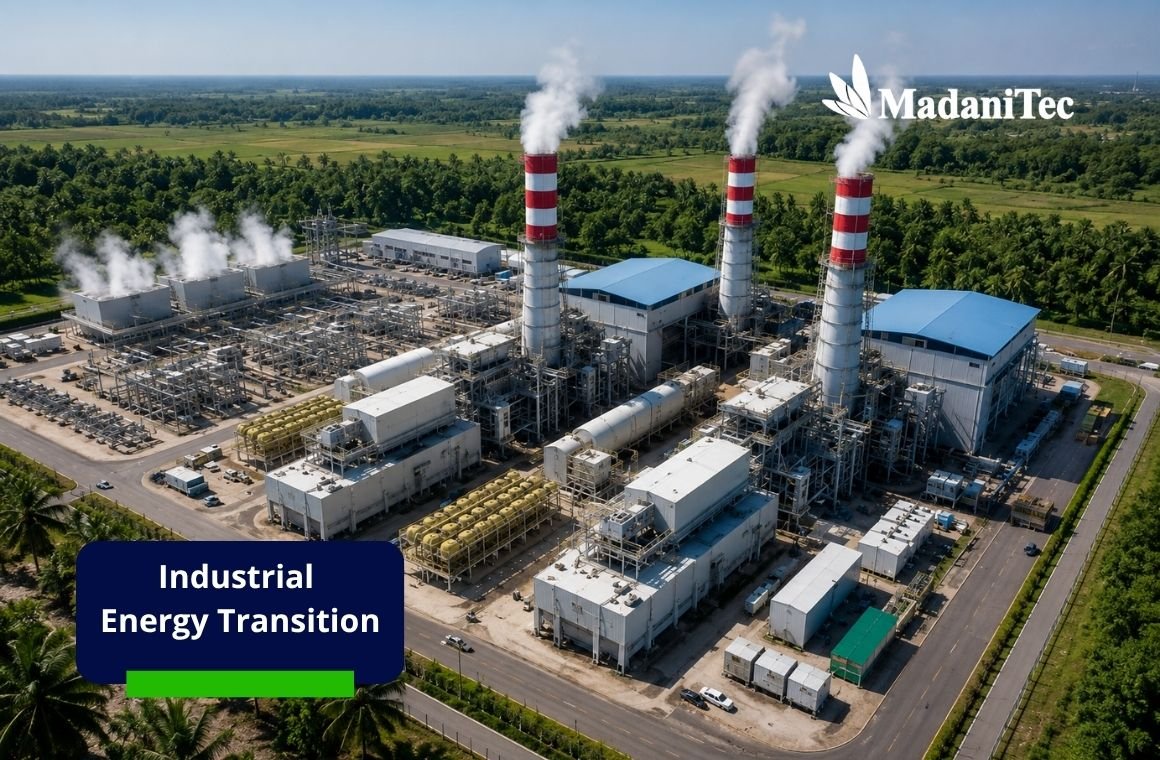
Industrial energy demand continues to grow as manufacturing and production activities expand. At the same time, dependence on fossil fuels creates challenges related to energy costs, energy security, and the need to reduce emissions. These conditions are making the energy transition increasingly important, not only for the power sector but also for industries that require large amounts of energy for production processes.
In simple terms, the energy transition is the shift from an energy system heavily dependent on fossil fuels toward one that increasingly uses renewable energy, energy efficiency, electrification, and low-emission technologies. This does not necessarily mean that conventional energy sources will disappear immediately. Instead, the transition takes place gradually according to technological readiness, infrastructure, and the needs of each sector.
What Is the Energy Transition?
The energy transition refers to the transformation of how energy is produced and consumed toward a more sustainable and lower-emission system.
In practice, it can involve greater use of renewable energy, electrification of industrial processes, energy efficiency improvements, and the adoption of lower-carbon energy sources.
The global direction is becoming increasingly clear. The International Energy Agency (IEA) expects global renewable power capacity to increase by around 4,600 GW by 2030.
Solar PV is expected to account for the largest share of this growth, followed by wind, hydropower, bioenergy, and geothermal energy.
For industry, however, the energy transition is more complex because energy is needed not only as electricity. Many production processes require significant amounts of heat.
As a result, the choice of energy sources for industrial process heat has become an important part of the transition.
Why Does Industry Need an Energy Transition?
Industries need energy that is reliable, available, and suitable for their production processes.
At the same time, growing pressure for efficiency and lower emissions is encouraging companies to consider a wider range of energy sources and technologies.
According to the IEA, heat accounted for almost half of global final energy consumption and around 37% of energy-related CO₂ emissions in 2024.
Renewable heat use in industry is also increasing, including through bioenergy and renewable electricity.
This means that industrial energy transition is not simply about replacing one fuel with another.
Companies need to consider the entire energy system, including raw materials, conversion technologies, process efficiency, and waste management.
7 Major Changes in the Industrial Energy Transition
1. Diversification of Energy Sources
Industries are increasingly recognizing the importance of having more than one energy option. Diversification can reduce dependence on a single energy source while improving overall energy resilience.
Solar, wind, hydropower, geothermal, and bioenergy have different characteristics. Therefore, the right combination needs to be adapted to the specific requirements and location of each industrial operation.
2. Greater Use of Renewable Energy
Renewable energy is becoming an increasingly important part of the global energy transformation.
The IEA expects renewable energy deployment to continue growing strongly through 2030, although challenges remain, including grid integration, supply chains, financing, and policy conditions.
For industry, renewable energy can be used directly or combined with other technologies to meet electricity and process-heat requirements.
3. Turning Waste into a Resource
One of the most interesting aspects of the energy transition is the growing attention toward waste.
Materials that were previously considered disposal problems can have economic and energy value when properly processed and utilized.
IRENA explains that bioenergy can be produced from crops, woody biomass, agricultural and forestry residues, and other organic materials and wastes.
These resources can support industrial heat, electricity generation, transportation, and other energy applications.
Read More About: Plastic Waste to Fuel: How Pyrolysis Converts Plastic Waste into Oil
4. Energy Efficiency Becomes More Important
The energy transition is not always about finding a new energy source. Reducing energy losses is equally important.
Industries can improve efficiency through better machinery, control systems, waste-heat recovery, equipment maintenance, and production-process optimization. The more efficient a process becomes, the less energy is required to achieve the same output.
5. More Diverse Energy-Processing Technologies
Changing energy sources also requires supporting technologies. Biomass, for example, cannot always be used directly in its original form. Agricultural residues and organic materials may require several preparation steps before they are suitable for further processing or energy applications.
Size reduction can be one of these preparation steps. An Organic Waste Crusher Machine can help reduce the size of organic materials and prepare them for subsequent processing.
Therefore, shredding technology is not simply a mechanical operation. It can become an important part of the biomass feedstock preparation chain.
6. Integrating Clean Energy into Industrial Processes
Industries are increasingly combining different energy sources and technologies. Renewable electricity can serve certain applications, while bioenergy can be used for process heat or other suitable industrial purposes.
The IEA reports that industrial renewable heat use continues to grow, with bioenergy remaining an important contributor to renewable industrial heat.
7. The Rise of the Circular Economy
The energy transition is also changing how industries view materials. Production waste does not always have to end up as discarded residue.
Under a circular economy approach, materials that still have value can be returned to the utilization chain.
This creates a stronger connection between waste management, processing technologies, and energy utilization.
What Are Examples of Renewable Energy?
Renewable energy generally comes from sources that can naturally replenish themselves. Common examples include:
- Solar energy
- Wind energy
- Hydropower
- Geothermal energy
- Bioenergy
Among these sources, bioenergy has a unique characteristic because its feedstock can come from organic materials such as agricultural residues, forestry residues, and organic waste.
In Indonesia, the government continues to promote renewable energy, including biomass, as part of efforts to strengthen energy security and support a cleaner energy transition.
Read More About: Biomass Fuel: Can Agricultural Waste Really Become a Source of Energy?
From Waste to an Energy Resource
Using waste as an energy resource requires appropriate processing.
In simple terms, the process may begin with collection and sorting, followed by shredding, drying, further processing, and utilization, depending on the material characteristics and technology involved.
During the shredding stage, material size can be reduced to make handling and subsequent processing easier.
Because biomass materials vary considerably, the design and capacity of shredding equipment should be matched to the type and characteristics of the feedstock.
This is where an Organik Waste Crusher Machine can become one of the supporting technologies within the broader waste and biomass processing ecosystem.
5 Examples of Energy Transformation
Energy transformation refers to the conversion of energy from one form into another. Some simple examples include:
- Chemical energy → heat energy, such as fuel producing heat.
- Light energy → electrical energy, such as solar panels.
- Kinetic energy → electrical energy, such as a turbine driving a generator.
- Electrical energy → mechanical energy, such as an electric motor.
- Chemical energy → electrical energy, such as a battery.
Understanding energy transformation helps explain that energy systems do not simply change their sources; energy can also be converted into different forms depending on the technology being used.
Conclusion
The industrial energy transition is not simply about replacing conventional fuels with new energy sources.
It involves diversifying energy supplies, improving efficiency, adopting renewable energy, utilizing waste, and developing technologies that are better suited to industrial requirements.
Biomass is one part of this transformation because it can utilize organic materials and residues that might otherwise become waste.
However, successful implementation still depends on feedstock availability, material quality, processing technology, economic feasibility, and long-term sustainability.
With the right approach, waste can be viewed not only as a disposal challenge but also as a resource that supports energy needs and creates new opportunities within the circular economy.
Madanitec — providing technology and machinery solutions to support waste processing and the development of circular economy-based businesses, Indonesia’s waste issues.
Affordable prices and reliable quality are supported by after sales service and warranty with every purchase. Do not hesitate to contact 081215778768 via WhatsApp and get a special offer today.