A hydraulic press relies on fluid pressure to generate the force needed for pressing, forming, bending, compacting, and other industrial applications. When the system starts losing pressure, the machine may become slower, weaker, or unable to deliver consistent pressing force. Understanding the hydraulic press losing pressure causes can help operators identify potential problems before they affect productivity.
Pressure loss does not always come from a single component. Hydraulic fluid, pumps, valves, hoses, filters, and cylinders can all affect system performance. A systematic inspection is therefore important when a hydraulic press does not maintain the expected pressure.
What Causes a Hydraulic Press to Lose Pressure?
A hydraulic press can lose pressure because of external leaks, internal leakage, worn components, contaminated fluid, or problems with the pressure control system.
In some cases, the pressure may appear normal when the machine is operating without a load but drop significantly when pressing a heavy material.
This can indicate a problem with the pump, cylinder, relief valve, or other components that become more critical under load.
Learn more about: Still Compacting Waste Manually? Here’s How It Can Affect Time and Productivity
Hydraulic Press Losing Pressure Causes You Should Check
1. Hydraulic Fluid Leakage
One of the most common causes is hydraulic fluid leakage. Damaged hoses, loose fittings, cracked connections, or worn seals can allow fluid to escape from the system.
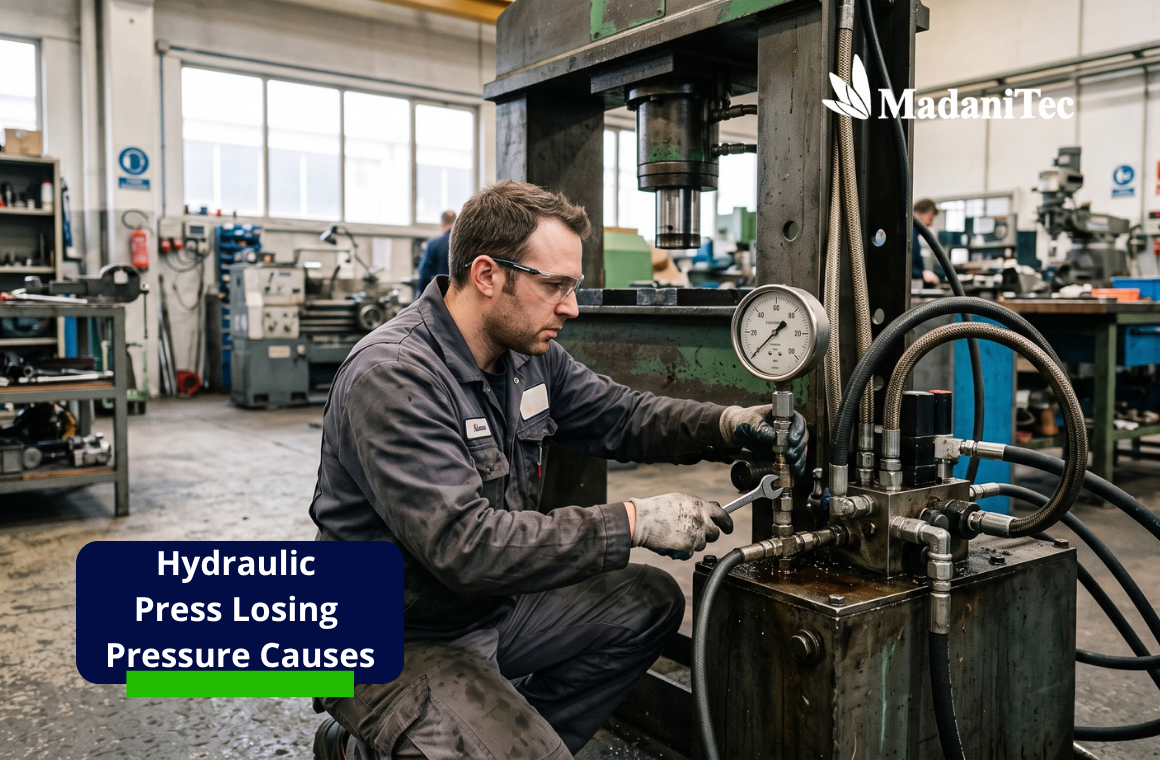
Even a small leak can gradually reduce system performance. Operators should inspect hoses, fittings, valves, and cylinder seals for visible oil, wet areas, or other signs of leakage.
2. Low or Contaminated Hydraulic Fluid
Insufficient hydraulic fluid can prevent the pump from operating efficiently. Contaminated fluid can also affect valves, seals, and other components.
Dirt, moisture, metal particles, or degraded fluid may interfere with proper hydraulic operation.
Checking the fluid level and following the equipment manufacturer’s recommendations for fluid type and replacement intervals can help maintain stable performance.
3. Worn Hydraulic Pump
The hydraulic pump is responsible for moving fluid through the system. Internal wear can reduce its ability to generate the required flow and pressure.
A worn pump may cause pressure to drop, particularly when the press is operating under a heavy load. Unusual noise, inconsistent operation, or reduced pressing performance may also indicate that the pump requires inspection.
4. Faulty Pressure Relief Valve
The pressure relief valve protects the hydraulic system from excessive pressure. If the valve is incorrectly adjusted, contaminated, damaged, or unable to close properly, hydraulic fluid may bypass the intended circuit.
As a result, the press may struggle to reach or maintain its normal operating pressure. The relief valve should therefore be inspected and adjusted according to the manufacturer’s specifications.
5. Damaged Hydraulic Cylinder Seals
Hydraulic cylinders use seals to prevent fluid from passing between internal areas where it should not flow. When these seals become worn or damaged, internal leakage can occur.
This type of leakage may not be immediately visible from outside the cylinder. However, the press may gradually lose force or fail to maintain pressure during operation.
6. Blocked or Dirty Hydraulic Filter
A clogged hydraulic filter can restrict fluid flow and make the hydraulic system work inefficiently. Over time, contaminants can accumulate in the filter, increasing resistance to fluid flow.
Regular filter inspection and replacement can help maintain proper hydraulic circulation and reduce the risk of pressure-related problems.
7. Air Inside the Hydraulic System
Air entering a hydraulic system can make the press behave inconsistently. Operators may notice jerky cylinder movement, unusual noise, or fluctuating pressure.
Air can enter through loose connections, low fluid levels, damaged seals, or other points where the system is not properly sealed.
The hydraulic circuit may need to be properly bled according to the equipment manufacturer’s procedure.
How to Troubleshoot a Hydraulic Press Losing Pressure
When troubleshooting pressure loss, avoid replacing components immediately without identifying the source of the problem. A systematic inspection can save time and reduce unnecessary maintenance costs.
Start by checking the hydraulic fluid level and looking for visible leaks. Next, inspect hoses, fittings, filters, valves, and the pressure gauge.
If the problem occurs mainly under load, the pump and hydraulic cylinder may require closer inspection.
If the pressure continues to fall despite these checks, a qualified hydraulic technician should evaluate the system. Hydraulic equipment can operate at high pressure, so repairs should follow the manufacturer’s safety procedures.
How to Prevent Hydraulic Pressure Loss
Preventive maintenance is one of the most effective ways to reduce hydraulic pressure problems. Keep the hydraulic fluid at the recommended level and replace it according to the maintenance schedule.
Operators should also inspect hoses, fittings, seals, filters, pumps, and cylinders regularly. Monitoring operating pressure can help identify changes before they develop into serious failures.
Keeping the hydraulic system clean is equally important because contaminants can accelerate wear and affect valves, pumps, and other precision components.
When Should You Call a Hydraulic Technician?
Professional inspection is recommended when pressure drops repeatedly, the cylinder cannot maintain force, hydraulic components show significant damage, or the cause cannot be identified through routine checks.
Because hydraulic systems can store significant amounts of energy, troubleshooting should be performed carefully.
Always depressurize the equipment and follow appropriate safety procedures before inspecting or servicing hydraulic components.
Conclusion
The main hydraulic press losing pressure causes include fluid leakage, low or contaminated hydraulic fluid, worn pumps, faulty relief valves, damaged cylinder seals, clogged filters, and air inside the hydraulic system.
Identifying the actual cause requires a systematic inspection rather than simply replacing individual components.
Regular maintenance, proper fluid management, and routine inspection can help keep hydraulic presses operating consistently and efficiently.
For businesses that rely on hydraulic equipment for production, choosing suitable technology and maintaining the system properly are both important for long-term operational reliability.
If you are considering hydraulic equipment for production or business development, Madanitec can be considered as one of the technology solution providers to discuss equipment requirements based on your application and production needs.
For consultations regarding machines and appropriate technology solutions for various processing and production needs, please contact the Madanitec team via WhatsApp at 081215778768.