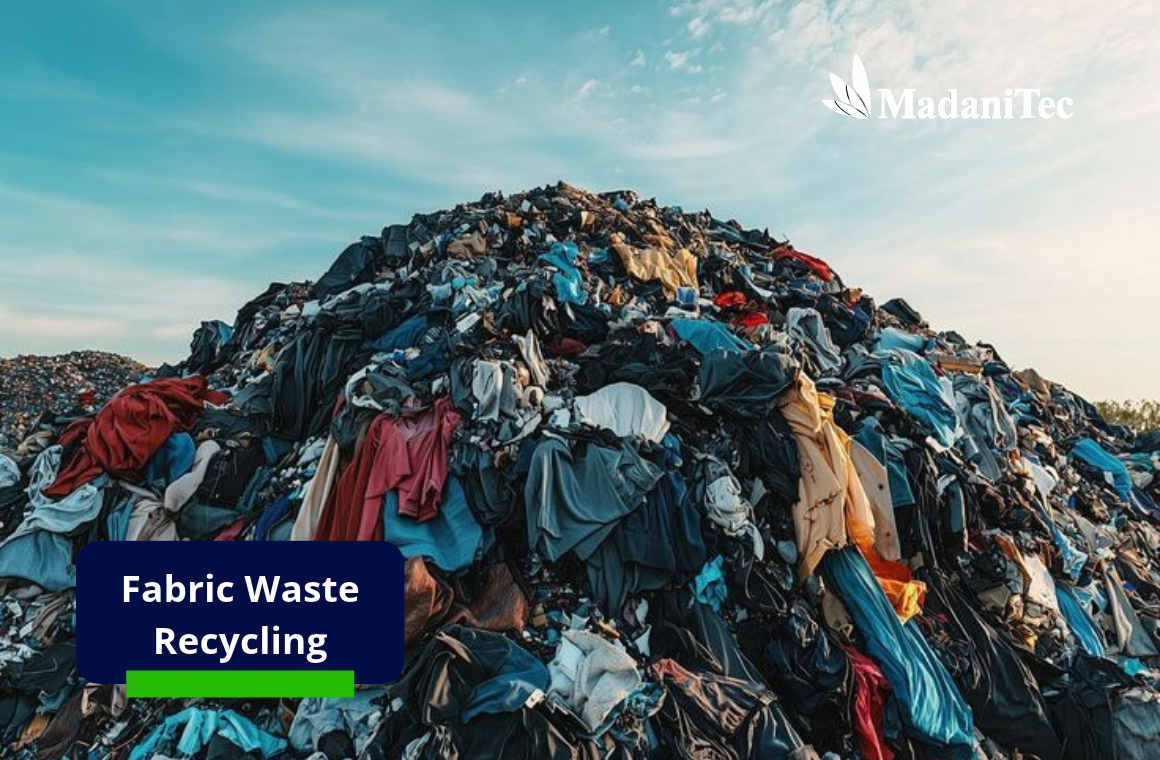
Fabric waste is often treated as something with little or no value. Offcuts from garment production, damaged clothing, upholstery scraps, and unused textile materials can quickly accumulate and become a challenge for businesses. However, many of these materials still contain useful fibers and properties that can be recovered.
Through proper fabric waste recycling, discarded textiles can be transformed into new materials and products. The right approach depends on the fabric composition, condition, thickness, and intended end use.
Why Is Fabric Waste Worth Recycling?
Textile materials can require significant amounts of raw materials, water, energy, and other resources during production. When fabric waste is discarded without further use, the material value embedded in it is also lost.
Recycling and reuse provide an alternative by keeping materials in circulation for longer. Fabric scraps can be sorted according to their characteristics and directed toward different applications, from simple reuse to fiber recovery.
For businesses, better fabric waste management can also help reduce unnecessary disposal while creating opportunities to develop new products from existing materials.
Learn more about: 7 Types of Thick Fabric That Can Be Recycled into Valuable Products
7 Ways to Turn Fabric Waste into Valuable Products
1. Recycled Textile Fiber
One of the most common applications for suitable textile waste is fiber recovery. Fabric scraps can be mechanically processed to separate and recover textile fibers.
The resulting fibers may be used in nonwoven materials, insulation, filling products, or other applications depending on their quality and composition.
Natural fibers and synthetic fibers may require different processing approaches, making proper sorting important from the beginning.
2. Filling and Padding Materials
Fabric waste can also become filling or padding material. Soft textile scraps and recovered fibers may be suitable for cushions, furniture padding, protective packaging, mattresses, and similar applications.
The suitability depends on cleanliness, fiber characteristics, and the requirements of the final product. Materials intended for filling applications should be properly prepared to maintain consistent quality.
3. Recycled Mats and Rugs
Another potential application is the production of mats, rugs, and other textile-based floor materials.
Thicker fabric scraps can sometimes be cut, layered, woven, or otherwise processed into useful products. This approach can be particularly interesting for businesses handling large quantities of consistent textile waste.
Instead of treating fabric offcuts as disposal materials, they can become an input for products with practical everyday applications.
4. Cleaning and Industrial Wipers
Not every piece of fabric waste needs to undergo complex recycling. Some clean textile scraps can be reused directly as cleaning cloths or industrial wipers.
Cotton and other absorbent fabrics may be useful for workshops, maintenance operations, machinery cleaning, and industrial environments.
Before reuse, the material should be checked for contamination, coatings, dyes, or substances that could make it unsuitable.
This is one of the simpler ways to extend the useful life of textile materials.
5. Upcycled Bags and Accessories
Fabric waste that remains in good condition can be transformed into new consumer products.
Depending on the size and characteristics of the material, scraps can become bags, pouches, wallets, organizers, accessories, or other creative products.
Denim, canvas, upholstery fabrics, and other durable textiles can be particularly interesting for this type of application.
Upcycling also gives businesses an opportunity to create products with distinctive designs while reducing the need for new raw materials.
6. Composite and Insulation Materials
Recovered textile fibers may also be incorporated into certain composite or insulation materials.
Textile-based insulation can be used in applications where thermal or acoustic properties are required, although the appropriate material and processing method depend heavily on the fiber type and technical specifications.
For this reason, fabric waste should be evaluated before processing rather than treated as a single uniform material.
7. Recycled Textile Products for New Markets
Fabric waste can ultimately become the raw material for entirely new product categories.
Depending on the available material, businesses can explore products such as industrial mats, protective materials, nonwoven products, padding, decorative items, and other textile-based goods.
The most valuable opportunity is not necessarily determined by the original fabric. Instead, it depends on how well the waste can be sorted, processed, and matched with a realistic market demand.
How Does Fabric Waste Recycling Work?
A basic fabric waste recycling process generally starts with collection and sorting.
The material is first separated according to fiber type, color, thickness, condition, and contamination. Unwanted components such as buttons, zippers, metal parts, plastic accessories, or other attachments may need to be removed.
After inspection and preparation, suitable fabric can be cut or mechanically processed into smaller pieces.
Depending on the intended application, the material may then undergo fiber recovery or other processing before becoming a new product.
A simplified process looks like this:
Collection → Sorting → Inspection → Cutting or Shredding → Fiber Recovery → Further Processing → New Products
The exact process can vary significantly depending on the material and final product.
Why Is Sorting Important in Fabric Waste Recycling?
Sorting is one of the most important stages because different textiles behave differently during processing.
Cotton, polyester, denim, wool, and blended fabrics have different fiber structures and properties. A fabric containing several fiber types may also require a different recovery approach from a single-fiber textile.
Condition is equally important. Clean production offcuts may be easier to process than heavily contaminated post-consumer textiles.
Better sorting therefore helps businesses identify which materials can be reused directly, which are suitable for recycling, and which require another form of waste management.
What Determines the Value of Recycled Fabric?
The value of recycled fabric is influenced by several factors, including material composition, cleanliness, consistency, volume, and intended application.
A large quantity of similar, clean fabric scraps may provide more practical recycling opportunities than a small quantity of mixed and contaminated materials.
This is why businesses should consider fabric waste as a material stream rather than simply as waste. Understanding its characteristics can reveal opportunities that might otherwise be overlooked.
Turning Fabric Waste into a Valuable Resource
Fabric waste recycling can help transform textile leftovers into useful materials while supporting more efficient resource use.
From recycled fibers and filling materials to industrial products and creative upcycled goods, the potential applications depend on the type and condition of the fabric.
For businesses generating fabric waste regularly, the next step is to understand the characteristics of the material and determine the most suitable processing route.
When the volume and material characteristics justify further processing, appropriate technology can make waste handling more consistent and efficient.
Madanitec can be considered as a technology partner for businesses exploring waste-processing solutions.
The appropriate solution can be matched to the type of material, processing requirements, and operational scale, helping fabric waste move from a disposal problem toward a more useful resource.
For consultations regarding machines and appropriate technology solutions for various processing and production needs, please contact the Madanitec team via WhatsApp at 081215778768.