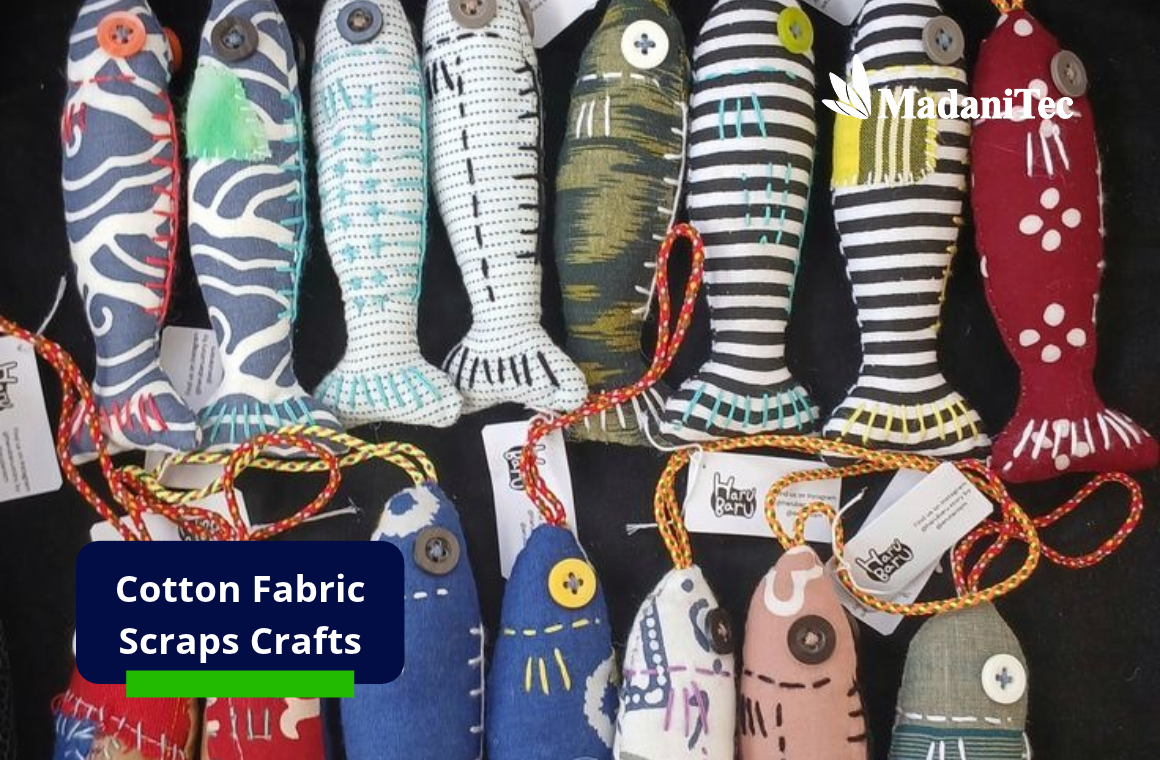
Cotton fabric is widely used in clothing, home textiles, accessories, and various handmade products. During cutting and sewing processes, however, leftover pieces often remain in different sizes and shapes. Instead of immediately treating them as textile waste, these scraps can still be transformed into useful products.
Cotton fabric scraps crafts offer a practical way to give leftover materials a second life. With the right design, combination of colors, and finishing techniques, small pieces of cotton can become attractive handmade products with potential selling value.
Why Are Cotton Fabric Scraps Suitable for Crafts?
Cotton is a versatile material for handmade products. It is generally easy to cut, sew, fold, layer, and combine with other fabrics. Its wide range of colors, patterns, and textures also makes it suitable for creative product development.
The size of the scraps does not necessarily determine whether they are useful. Small pieces can be combined into patchwork designs, while larger pieces can be turned into simple accessories or household products.
For home-based businesses and small textile workshops, using leftover cotton can also help make better use of available materials while reducing unnecessary waste.
Learn more about: 7 Types of Thick Fabric That Can Be Recycled into Valuable Products
5 Cotton Fabric Scraps Crafts with Selling Potential
1. Fabric Scrunchies and Hair Accessories
Small cotton scraps can be transformed into scrunchies, hair bows, headbands, and other simple accessories.
These products require relatively small pieces of fabric, making them suitable for utilizing scraps that may be too small for larger projects.
Different colors and patterns can also be combined to create collections for different customer preferences.
Because the products are compact and lightweight, they can be suitable for online sales, gift sets, or small accessory collections.
2. Reusable Fabric Pouches
Another practical option is making reusable fabric pouches. Depending on their size, these can be used for cosmetics, stationery, cables, accessories, or everyday personal items.
Cotton scraps with attractive patterns can give each pouch a distinctive appearance. Businesses can also create different sizes and designs from the same material stream.
Adding features such as zippers, buttons, handles, or inner lining can further expand the product range. This allows small fabric pieces to become functional products rather than remaining unused.
3. Patchwork Bags
Patchwork is one of the most interesting ways to combine cotton scraps with different colors and patterns.
Small pieces that are individually difficult to use can be arranged into a larger fabric surface before being made into tote bags, handbags, organizers, or other accessories.
The combination of different fabrics can create a distinctive visual identity. This can be especially useful for handmade products because variations in color and pattern can make each item look slightly different.
For businesses, patchwork bags can also become a way to communicate a more sustainable product concept by using existing textile materials.
4. Fabric Coasters and Table Accessories
Cotton scraps can also be used to create smaller household products such as coasters, placemats, napkin holders, pot holders, and simple table decorations.
These products are relatively flexible in terms of shape and design. Different scraps can be layered or combined to create patterns that match particular themes.
For example, a business could develop seasonal collections, minimalist designs, or colorful sets. Selling products in sets can also help turn several small pieces of leftover fabric into one marketable package.
5. Small Home Décor Products
Cotton fabric scraps can be developed into various small home décor products. Examples include cushion covers, fabric baskets, ornaments, decorative wall pieces, and small organizers.
The type of product should be matched to the size, thickness, pattern, and condition of the available fabric. Larger scraps may be more suitable for cushion covers, while smaller pieces can become decorative accents.
This approach allows businesses to explore different product categories without requiring entirely new raw materials for every design.
How Can Cotton Fabric Scraps Become More Valuable?
The value of a handmade product is not determined only by its raw material. Design, workmanship, functionality, durability, presentation, and packaging can all influence how customers perceive the finished product.
For example, several small cotton scraps may have limited value individually.
When combined into a well-designed patchwork bag, however, the same materials can become part of a finished product with a completely different market position.
Businesses can also create product collections based on color themes, patterns, or specific customer needs. Consistent finishing and attractive packaging can further strengthen the product’s appeal.
What Should You Consider Before Making Crafts from Fabric Scraps?
Not every piece of leftover fabric is suitable for every product. Before production, several characteristics should be considered.
First, check the size and condition of the scraps. Clean and undamaged pieces are generally easier to reuse. Next, consider the fabric thickness and texture, because these characteristics affect sewing and product durability.
Color and pattern should also be considered, particularly when combining multiple scraps. For larger-scale production, consistency in material quality can help maintain a more uniform product result.
It is also important to understand customer demand. A creative product becomes more commercially useful when its design, function, and price match the target market.
Can Cotton Fabric Scrap Crafts Become a Small Business?
Yes, they can become part of a small-scale business model when production is planned carefully.
Businesses can start with a limited selection of products and test customer responses before expanding the range. Online marketplaces, social media, craft fairs, custom orders, and gift packages can provide different sales channels.
Another opportunity is to create products based on specific waste streams. A garment workshop, for example, may have large quantities of similar cotton scraps that can be developed into a consistent product line.
The key is to balance creativity with production efficiency. The goal is not simply to use every piece of fabric, but to identify which materials can realistically become useful and desirable products.
Learn more about: 7 Ways to Turn Fabric Waste into Valuable Products
Turning Cotton Fabric Scraps into Products with Selling Potential
Cotton fabric scraps crafts show that leftover textile materials can still have practical and economic value.
From scrunchies and pouches to patchwork bags, table accessories, and home décor, different scrap sizes can support different product ideas.
For businesses generating larger amounts of cotton fabric waste, creative reuse can be one part of a broader material-management strategy.
When the volume or characteristics of textile waste require more systematic processing, appropriate technology can help businesses handle the material more efficiently.
Madanitec can be considered when businesses are exploring technology solutions for managing and processing production waste.
The appropriate approach can be adjusted according to the material characteristics, processing requirements, and operational scale, allowing textile waste to be managed as a potential resource rather than simply as discarded material.
For consultations regarding machines and appropriate technology solutions for various processing and production needs, please contact the Madanitec team via WhatsApp at 081215778768.