Coconut is one of the most versatile tropical crops, with applications extending far beyond its water, meat, and oil. One part that is often overlooked, however, is the coconut husk. Frequently treated as agricultural waste, the husk actually contains valuable natural fibers and other materials that can be processed into a wide range of useful products.
From coir fiber and horticultural growing media to erosion-control materials and natural composites, coconut husks have considerable potential across agriculture, manufacturing, and environmental applications. The Food and Agriculture Organization (FAO) identifies coconut husk as the primary raw material for the coir industry, where the fibers can be extracted through traditional or mechanical processes.
So, what can coconut husks be used for? Understanding their applications is an important first step toward turning an agricultural by-product into a valuable resource.
What Are Coconut Husks?
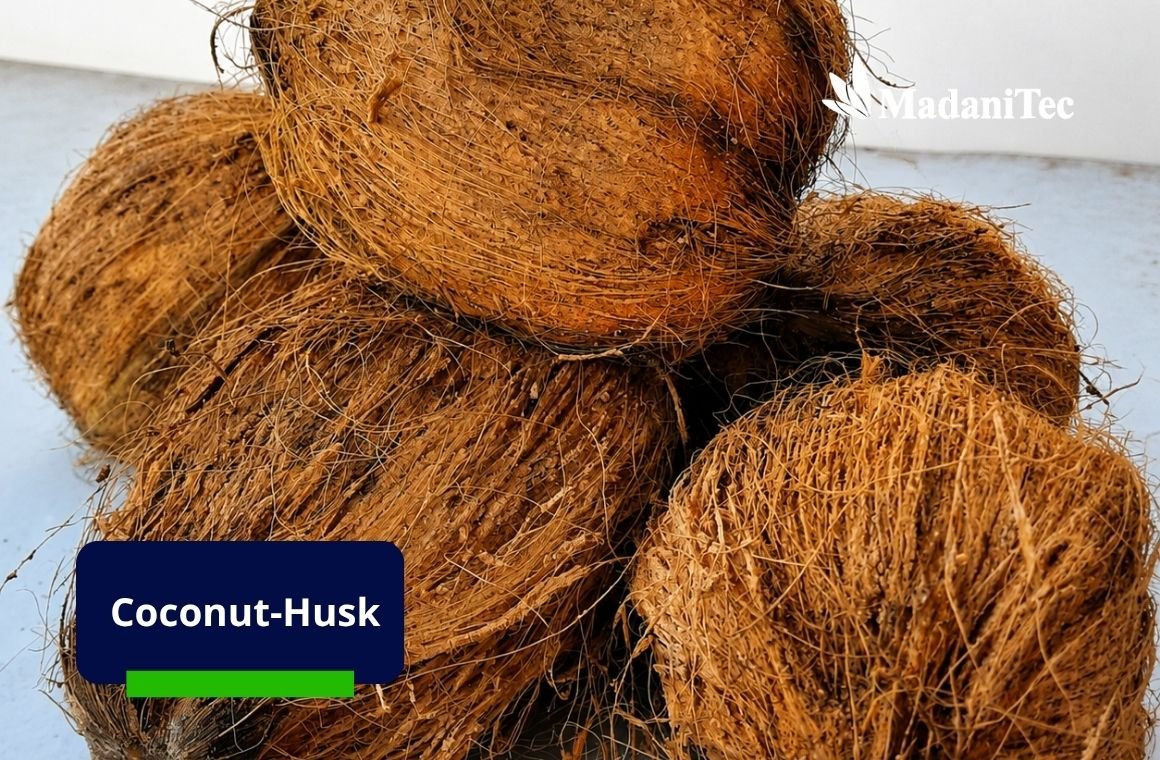
The coconut husk is the thick, fibrous layer surrounding the hard shell of a coconut. It contains coir fiber, along with finer material commonly referred to as coir pith or cocopeat.
The fibers can be separated from the husk through traditional retting methods or mechanical processing.
According to FAO, mechanical equipment such as decorticators and defibering machines can be used to separate fibers from the woody material and pith.
This makes the husk more than just a protective layer around the coconut. Once properly processed, it can become a useful raw material for a variety of products and industries.
5 Useful Applications of Coconut Husks
1. Coir Fiber and Fiber-Based Products
One of the most established uses of coconut husks is the production of coir fiber.
Coir is a natural fiber recognized for its durability and resilience. Traditional products include ropes, yarns, mats, brushes, brooms, bags, and mattress padding.
FAO notes that coir has long been used commercially in products such as mats, ropes, brushes, and other fiber-based goods.
Its applications are also expanding beyond traditional products. Research has explored coir fiber as reinforcement in polymer, cement-based, and other natural-fiber composites, creating opportunities for applications in manufacturing and construction.
2. Growing Media and Horticulture
Another valuable component of coconut husks is coir pith, commonly processed into cocopeat.
Because of its ability to retain moisture, processed coir material can be used in horticulture as a growing medium or soil amendment.
FAO has identified coconut pith and cocopeat as materials suitable for horticultural applications, including use as planting media and organic soil products.
This gives coconut processors another opportunity to utilize the husk instead of allowing it to accumulate as waste.
3. Erosion Control and Landscaping
Coconut coir can also be used to produce erosion-control mats, nets, and geotextiles.
These materials can help protect exposed soil on slopes, embankments, riverbanks, and landscaping projects. Their natural-fiber composition makes coir attractive for applications where biodegradable materials are preferred.
Recent research has also highlighted the potential of coir fiber as a biodegradable mulch because of its ability to support soil protection and moisture retention.
4. Natural Composites and Industrial Materials
The strength and stiffness of coir fiber have attracted increasing interest in the development of natural-fiber composites.
Researchers have investigated coconut coir as reinforcement for polymer and cement-based materials.
These applications are part of a broader effort to develop renewable and bio-based materials that can complement or partially replace conventional synthetic fibers in selected applications.
The potential applications include fiber boards, composite panels, construction materials, and other engineered products.
However, the suitability of coir depends on factors such as fiber quality, processing methods, moisture content, and the requirements of the final product.
5. Biomass and Other Value-Added Applications
Coconut husk residues can also be considered for biomass and other value-added applications.
Research continues to explore the use of coir and other coconut-processing residues in bio-based materials, agricultural products, and energy-related applications.
The growing interest reflects a broader shift toward the circular use of agricultural resources, where by-products are processed into useful materials instead of being treated solely as waste.
Read More About: Biomass Fuel: Can Agricultural Waste Really Become a Source of Energy?
Why Are Coconut Husks a Valuable Resource?
The real opportunity lies in changing the way coconut husks are viewed.
Instead of being treated simply as waste, the husk can become a secondary raw material with potential economic value.
FAO has highlighted the possibility of generating additional income from coconut fiber when suitable markets, processing capabilities, and product standards are available.
This approach supports the concept of waste-to-value, where agricultural residues are transformed into useful products and new sources of economic activity.
For coconut-producing communities and processing businesses, better utilization of the husk can therefore complement the value already generated from other parts of the coconut.
How Are Coconut Husks Processed?
Before the husk can be turned into fiber, cocopeat, geotextiles, or other products, it first needs to be separated from the coconut.
The basic process can be summarized as:
Coconut → Dehusking → Husk Separation → Fiber/Pith Processing → Finished Products
Traditional dehusking and fiber extraction can be labor-intensive and time-consuming.
FAO describes traditional coir production as a process requiring substantial manual work, while mechanical methods can be used to improve the efficiency of husk processing.
For operations handling larger quantities of coconuts, this first stage can therefore become an important consideration.
Why Efficient Coconut Dehusking Matters
The potential value of coconut husks begins with efficient separation.
For commercial coconut processors, handling a large volume of coconuts manually can require considerable labor and processing time.
Mechanical dehusking offers an alternative for operations looking to streamline this initial stage before the husks move into further processing.
Want to explore a more efficient way to remove coconut husks? Discover how a Large Size Coconut Dehusking Machine can support modern coconut processing.
The goal is not simply to remove the husk faster, but to create a more efficient starting point for turning an agricultural by-product into a useful resource.
Conclusion
Coconut husks are far more than agricultural waste. Once properly separated and processed, they can provide raw material for coir fiber, growing media, erosion-control products, natural composites, biomass applications, and other value-added products.
As demand for renewable materials and more circular production systems continues to grow, the potential of coconut husks deserves greater attention.
The opportunity begins with a simple shift in perspective: instead of seeing the husk as something to discard, it can be viewed as a valuable agricultural resource waiting to be processed and put to better use.
Madanitec — providing technology and machinery solutions to support waste processing and the development of circular economy-based businesses, Indonesia’s waste issues.
Affordable prices and reliable quality are supported by after sales service and warranty with every purchase. Do not hesitate to contact 081215778768 via WhatsApp and get a special offer today.