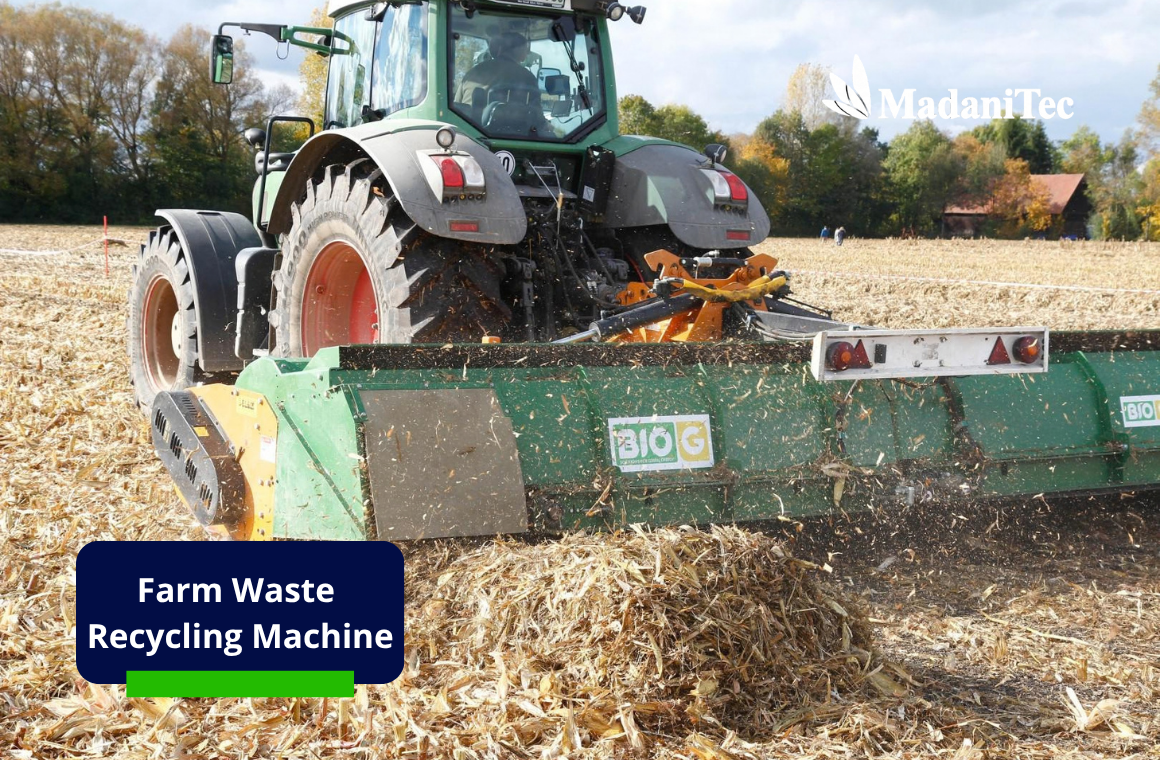
Agricultural activities generate large amounts of organic residues, including crop stalks, leaves, husks, straw, and other materials left after harvesting. When these residues are not managed properly, they can accumulate around farms and create additional waste-handling challenges.
A farm waste recycling machine can help transform suitable agricultural residues into more manageable or reusable materials. Instead of treating farm waste simply as something to discard, farmers and agricultural businesses can explore ways to process these materials according to their characteristics and potential uses.
What Is a Farm Waste Recycling Machine?
A farm waste recycling machine is equipment designed to process agricultural residues so they can be reduced, separated, processed, or prepared for further use. The exact process depends on the type of waste and the intended output.
For example, fibrous materials may require size reduction before they can be used for composting, biomass applications, or other processing purposes.
Organic residues may also require different handling methods depending on their moisture content, structure, and intended application.
How Does Farm Waste Recycling Work?
Although each recycling system can have a different configuration, agricultural waste processing generally involves several stages:
Collection → Sorting → Size Reduction → Processing → Reuse
Not every type of waste needs to pass through every stage. The appropriate process depends on the material and the final purpose of the processed output.
What Types of Farm Waste Can Be Recycled?
Agricultural waste comes in many forms, and its processing requirements can vary significantly.
Crop Residues
Crop residues can include corn stalks, rice straw, husks, leaves, stems, and other plant materials left after harvesting.
Some of these materials can be processed into smaller particles or prepared for further applications. Their suitability depends on factors such as moisture, fiber structure, cleanliness, and the intended end use.
Organic Livestock and Farm Waste
Farming and livestock operations can also generate organic residues. Depending on their characteristics, some organic materials can be processed as part of composting or other waste-management systems.
Proper handling is important because organic waste can decompose rapidly when exposed to unsuitable conditions.
Other Agricultural Residues
Agricultural processing can produce additional residues such as shells, skins, fibers, and other plant-based by-products.
Rather than using the same processing method for every material, agricultural businesses should first identify the physical characteristics and potential application of each type of residue.
Learn more about: What Are the Benefits of Fermented Feed for Goats and Cattle? Check Here!
Why Is Agricultural Waste Recycling Important?
Agricultural waste management is not only about keeping a farm environment clean. Proper processing can also help businesses make better use of materials generated during daily operations.
Reducing Waste Accumulation
Large quantities of agricultural residues can require considerable space for temporary storage. Processing suitable materials can reduce their volume or make them easier to handle.
This can be particularly useful for agricultural businesses that generate residues continuously throughout the production cycle.
Making Better Use of Agricultural Resources
Some materials classified as waste still contain useful organic matter or biomass potential.
Recycling and processing provide an opportunity to redirect these materials toward appropriate applications rather than immediately sending them for disposal.
Supporting More Sustainable Farming Practices
A more organized approach to agricultural waste management can contribute to resource efficiency. Instead of viewing farming as a linear process where materials are used and discarded, businesses can explore opportunities to reuse or process suitable residues.
This approach is consistent with broader efforts to improve resource utilization in agriculture.
How Can a Farm Waste Recycling Machine Improve Waste Management?
Manual handling can become increasingly difficult as the volume of agricultural residues grows.
A farm waste recycling machine can support waste management by making certain processing tasks more consistent and manageable.
Depending on the machine and material, potential advantages can include faster material handling, more consistent size reduction, reduced manual workload, and easier preparation of agricultural residues for further processing.
However, the machine should be considered as part of a complete waste-management process rather than a standalone solution.
Collection, sorting, storage, processing, and final utilization all influence the effectiveness of an agricultural waste management system.
What Should You Consider Before Choosing a Farm Waste Recycling Machine?
Choosing processing equipment should begin with the material that needs to be handled, not simply with the machine itself.
Type of Agricultural Waste
Different materials have different physical characteristics. A machine designed for fibrous crop residues may not be appropriate for wet or highly organic materials.
Before selecting equipment, identify the type, moisture level, size, density, and quantity of the agricultural waste.
Processing Capacity
The required capacity depends on how much material is generated and how frequently it needs to be processed.
Small farms and larger agricultural businesses may have very different requirements. Selecting equipment based on actual processing volume can help avoid choosing a system that is either insufficient or unnecessarily large.
Final Use of the Processed Material
The desired output should also influence the processing method.
Processed agricultural residues may potentially be used for applications such as composting, biomass utilization, animal-feed preparation in suitable cases, or other organic-material processing.
The final application must always be considered together with the characteristics and safety requirements of the material.
Power Source and Operating Environment
The available power source, working location, operating conditions, maintenance requirements, and operator capacity should also be considered.
A practical system is one that can operate consistently within the actual conditions of the farm or agricultural business.
From Agricultural Waste to Useful Resources
One of the interesting aspects of agricultural waste recycling is the possibility of turning residues into materials with a more defined purpose.
For example, crop residues may be reduced in size before entering another processing stage. Organic materials can also become part of a structured composting system, while suitable biomass residues may be prepared for energy-related applications.
The important point is that the appropriate processing method depends on the material. There is no single recycling process that works equally well for every type of agricultural waste.
Learn more about: Biomass Fuel: Can Agricultural Waste Really Become a Source of Energy?
Can Farm Waste Recycling Support Sustainable Agriculture?
Farm waste recycling can be one component of a broader sustainable agriculture strategy.
When agricultural residues are managed systematically, farms can potentially reduce unnecessary waste accumulation while improving the utilization of available resources.
Processing technology can support this process by helping businesses handle materials more efficiently.
However, sustainable waste management requires more than purchasing equipment. It also involves proper material separation, storage, processing procedures, worker safety, and a realistic plan for using the resulting materials.
Conclusion
Agricultural waste does not always have to be treated simply as material that needs to be discarded. Depending on its characteristics, crop residues and other farm waste can potentially be processed and redirected toward useful applications.
A farm waste recycling machine can support this process by helping agricultural businesses handle, reduce, and prepare suitable residues more efficiently.
The right equipment, however, should be selected according to the type of waste, processing capacity, desired output, available power, and actual operating conditions.
For agricultural businesses looking to improve their material-processing capabilities, choosing appropriate technology can be an important part of developing a more efficient operation.
Madanitec provides various appropriate-technology solutions for different processing needs, allowing businesses to consider equipment based on their materials and operational requirements.
For consultations regarding machines and appropriate technology solutions for various processing and production needs, please contact the Madanitec team via WhatsApp at 081215778768.