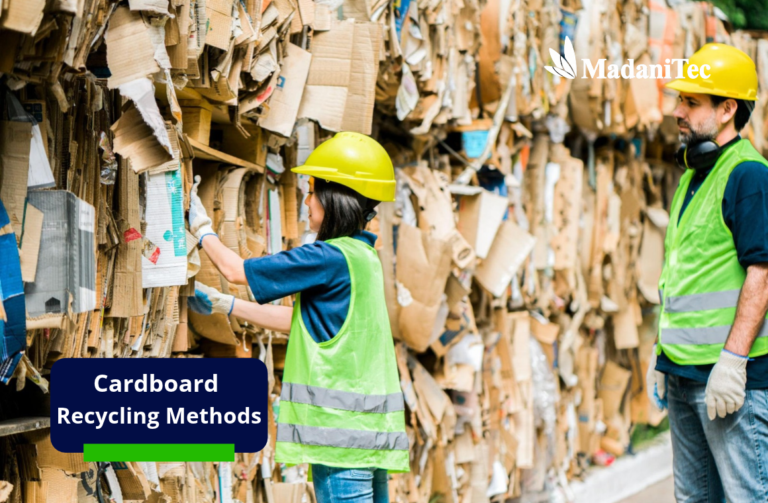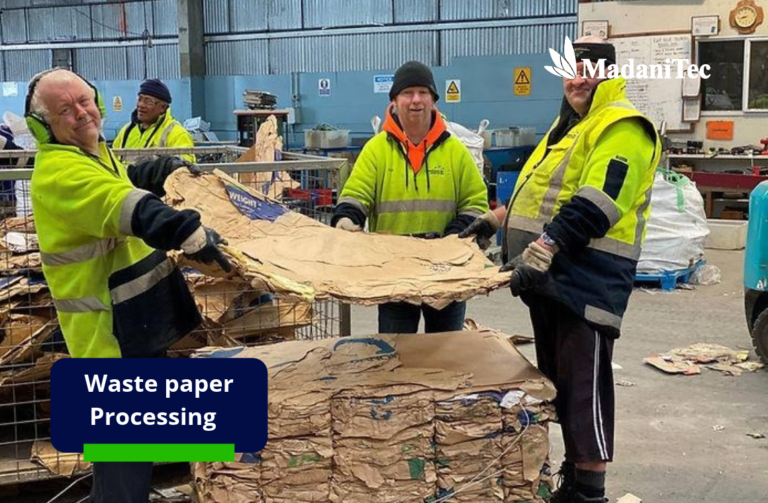
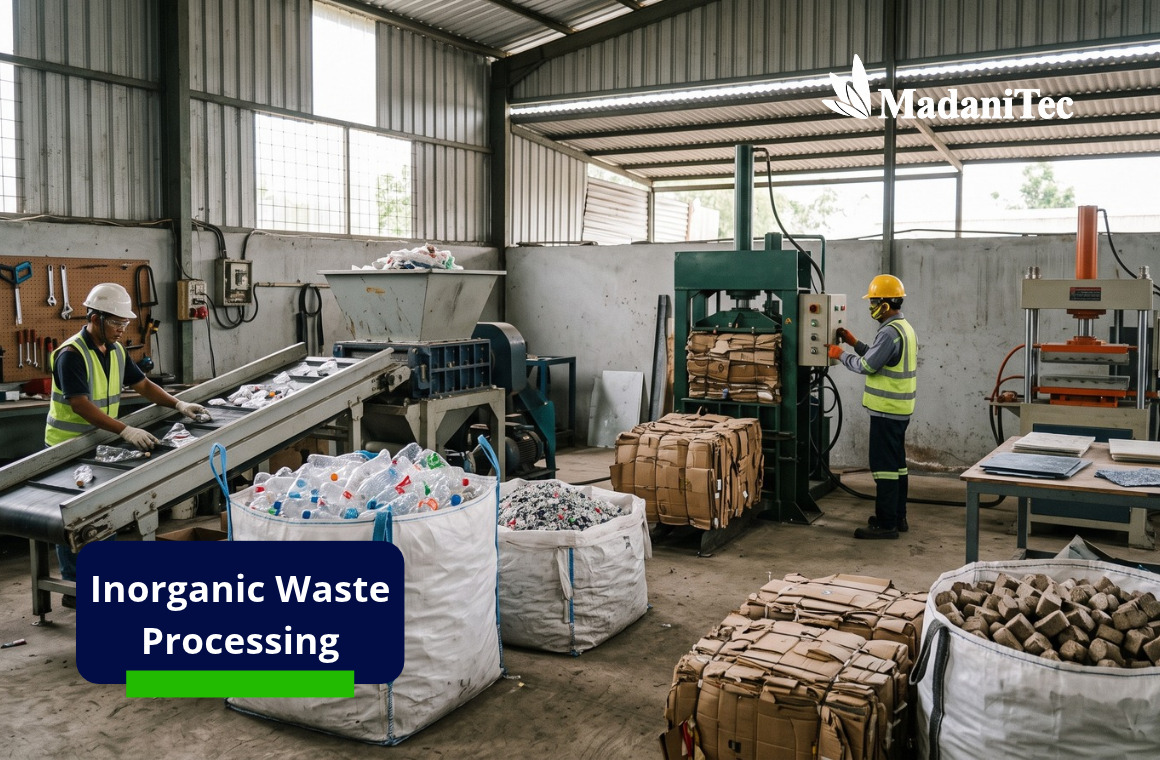
Inorganic waste such as plastic, bottles, cardboard, and various other materials is often considered difficult-to-manage waste. However, with the right approach, many of these materials can still be sorted, reduced in size, compacted, or reshaped into materials with useful applications. This makes inorganic waste processing an important step in reducing waste while creating opportunities to reuse discarded materials.
The development of technology has also introduced various approaches to waste management. Through appropriate technology, different processing stages can be carried out more systematically according to the characteristics of the material and the intended application. Madanitec is one of the technology developers working on solutions that support these needs.
Why Does Inorganic Waste Need to Be Processed?
Inorganic waste has different characteristics from organic waste. Materials such as plastic and certain types of packaging can take a very long time to naturally break down.
When poorly managed, accumulated inorganic waste can increase the overall volume of waste and make waste management more challenging.
However, not all inorganic waste needs to end up as residual waste. Materials that still have potential value can be separated and processed according to their characteristics.
Sorting is therefore an important stage because different materials require different handling and processing methods.
This is where technology can play an important role. Processes such as sorting, shredding, compacting, and material forming can be carried out using equipment designed for specific waste-processing needs.
Learn more about: Indonesia’s Waste Management Crisis: Landfills Are Filling Up—Where Will the Waste Go?
Getting to Know 5 Madanitec Innovations for Inorganic Waste Processing
Madanitec develops various appropriate-technology solutions that can support different stages of inorganic waste processing. Here are five innovations that can be used to support waste handling and material utilization.
1. Waste Sorting Machine
Sorting is one of the most important early stages of waste management. Mixed materials can be more difficult to process when they are not separated properly beforehand.
A waste sorting machine helps separate materials into specific categories, allowing subsequent processing stages to be carried out more systematically.
Through better sorting, materials that still have reuse or recycling potential can be separated from residual waste that cannot be processed further.
This stage can also prepare materials before they enter further processes such as shredding, compacting, or other forms of treatment.
2. Plastic Shredding Machine
Plastic is one of the most common types of inorganic waste found in everyday activities. Its varying shapes and sizes can make handling more difficult when the material remains in its original form.
A plastic shredding machine is designed to reduce plastic waste into smaller pieces, making the material easier to handle during subsequent processing.
The shredded material can then become an intermediate material for recycling or other utilization processes, depending on its type and condition.
Size reduction can also make plastic waste easier to store, transport, and organize before further processing.
3. RDF Shredder Machine
RDF, or Refuse Derived Fuel, is an approach that utilizes certain fractions of waste as an alternative fuel source.
Before being used in this process, waste materials need to be prepared according to the requirements of the intended application.
An RDF shredder machine plays a role in reducing suitable waste materials into smaller and more manageable sizes. Shredding can help make the material more consistent and easier to handle during subsequent RDF processing.
This technology demonstrates that waste management does not necessarily have to end with disposal. Certain waste materials can instead be directed toward applications that utilize their remaining energy potential.
4. Hydraulic Press Machine
Besides being shredded, certain types of waste can also be compacted to reduce their volume. A hydraulic press machine uses hydraulic pressure to compress suitable materials such as bottles, cardboard, and other types of waste.
Compaction can make waste materials more compact, making them easier to store, move, and collect for further processing.
For waste-management activities, reducing material volume can also help make storage space more efficient and improve the handling of collected waste.
5. Plastic Hot Press Machine
A plastic hot press machine combines heat and pressure to help shape plastic materials into specific forms. This approach can be used to increase the usefulness of prepared plastic waste by turning it into new forms or products.
Unlike shredding, which primarily focuses on reducing material size, hot pressing focuses more on forming the material. The final shape can depend on the type of plastic, mold, processing conditions, and intended application.
Because different plastics have different characteristics, the processing method should be selected carefully according to the type and condition of the material.
How Does Inorganic Waste Processing Work with Technology?
In general, inorganic waste processing can involve several stages, starting with sorting, material preparation, shredding or size reduction, compaction or forming, and finally reuse or further processing.
However, not every type of waste needs to go through every stage. The appropriate process depends on the type of material, its condition, the processing capacity, and the intended end use.
For this reason, selecting the right technology should involve more than simply choosing a machine. Material characteristics, operational requirements, processing capacity, and the desired output should also be considered.
What Are the Benefits of Processing Inorganic Waste?
Proper waste processing can provide several benefits. First, the volume of waste can be reduced, making it easier to handle and store.
Second, materials can be separated according to their characteristics, allowing subsequent processing to become more organized.
Processing can also increase the usefulness of materials that were previously considered waste. Plastic, cardboard, and other materials can be prepared for reuse or recycling according to their properties.
For businesses, these activities may also create economic opportunities based on waste management while supporting the principles of a circular economy.
Technology Creates Opportunities for Waste Utilization
Technology in waste management is not simply about making work faster. More importantly, it can help create a more organized and consistent process for handling different types of materials.
The five Madanitec innovations demonstrate several approaches to waste processing, ranging from sorting and shredding to compaction and material forming.
Each technology serves a different purpose, so its application needs to be matched with the characteristics of the material being processed.
With the right combination of processes, waste materials can be prepared more effectively for recycling, reuse, or other potential applications.
Learn more about: Waste Processing Technology Revolution: How Technology Turns Waste into Resources?
Developing Inorganic Waste Processing with Madanitec
The potential value of inorganic waste depends greatly on how the material is sorted, prepared, and processed.
With the right approach, materials that were once considered waste can be prepared for various reuse and recycling applications.
For businesses and waste-management operators looking to develop inorganic waste processing activities, technology selection should be based on material type, processing capacity, operational requirements, and the intended purpose of the process.
Madanitec can support businesses and waste-management initiatives by providing appropriate-technology solutions based on specific processing needs.
By choosing technology according to actual field conditions, waste can be managed more systematically while creating opportunities to recover value from materials that would otherwise be discarded.
For consultations regarding machines and appropriate technology solutions for various processing and production needs, please contact the Madanitec team via WhatsApp at 081215778768.