Coconut milk extraction is a familiar process in many kitchens and food businesses, but there is more happening behind it than simply squeezing grated coconut. From preparing the coconut to pressing and filtering the extracted liquid, each stage can influence the amount and characteristics of the coconut milk produced.
For small-scale use, these differences may not be noticeable. However, when coconut milk is produced regularly or in larger quantities, controlling the extraction process becomes increasingly important. Factors such as coconut maturity, grating size, water ratio, pressure, and extraction time can all affect the final result.
Understanding how the process works can help producers identify where efficiency and consistency can be improved.
What Is Coconut Milk Extraction?
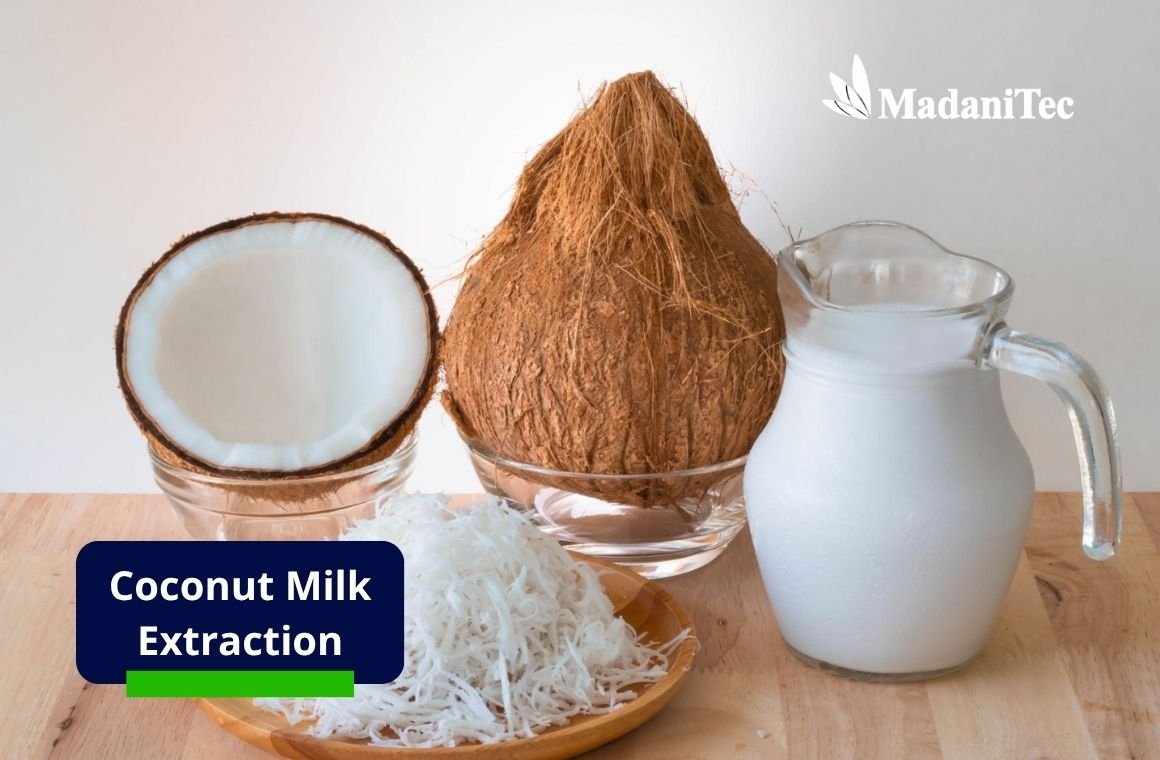
Coconut milk extraction is the process of separating liquid from grated coconut meat through pressing or other extraction methods.
It is different from coconut water, which is naturally present inside the coconut. Coconut milk is produced from the white flesh of the fruit after it has been prepared and processed.
During extraction, mechanical force is applied to the grated coconut to release its liquid components. The resulting liquid is then separated from the remaining coconut fiber.
Research has shown that extraction conditions, including pressure and holding time, can influence the amount of coconut milk obtained from coconut meat.
However, increasing pressure does not necessarily produce proportional increases in extraction efficiency.
This makes coconut milk extraction a process that requires the right combination of raw material preparation and operating conditions.
Learn more about: 6 Ways Coconut Processing Technology Is Transforming the Industry
How Does Coconut Become Coconut Milk?
Although methods vary between households, food businesses, and industrial operations, the general process follows several important stages.
Preparing the Coconut
The process starts with selecting suitable coconuts.
The coconut is opened and the white meat is separated from the shell. Depending on the intended application, the thin brown layer attached to the coconut meat may also be removed.
The maturity of the coconut can influence the characteristics of its meat. Using raw materials with relatively similar maturity can therefore make the extraction process easier to standardize.
For businesses processing coconut regularly, consistent raw material preparation is an important starting point for maintaining predictable results.
Grating the Coconut Meat
The prepared coconut meat is then grated into smaller particles.
Grating increases the surface area of the coconut material, making it easier for liquid components to be released during pressing. The size and consistency of the grated material can therefore affect how effectively it responds to the extraction process.
Uniform preparation becomes increasingly useful when the same process needs to be repeated across multiple production batches.
Adding Water and Mixing
Water is often added to grated coconut before extraction.
The amount of water depends on the desired characteristics of the coconut milk and the processing method. A higher amount of water can produce a more diluted extract, while insufficient water may make the coconut material more difficult to process.
For commercial production, maintaining a consistent water-to-coconut ratio can help reduce unnecessary variation between batches.
The appropriate ratio should be determined according to the intended product rather than simply using as much or as little water as possible.
Pressing and Extracting the Milk
Pressing is the stage where the liquid is separated from the coconut fiber.
The grated coconut is compressed, forcing the liquid out of the solid material. The extracted liquid becomes coconut milk, while the remaining solid material becomes coconut pulp.
Pressure is an important variable during this stage. Research on coconut milk extraction has found that increasing pressure and holding time can improve extraction under certain conditions, although the benefits may become limited beyond a particular range.
Therefore, effective extraction is not simply a matter of applying the highest possible pressure. The pressure needs to be appropriate for the material, equipment, and overall process.
Filtering the Extracted Coconut Milk
After pressing, the extracted liquid may still contain fine particles of coconut meat and fiber.
Filtering removes these solids and produces a smoother liquid that is more suitable for its intended application.
The level of filtration can vary depending on the final product. Coconut milk intended for direct cooking may have different requirements from coconut milk that will undergo additional food processing.
What Factors Affect Coconut Milk Extraction?
The amount and characteristics of extracted coconut milk are influenced by several factors rather than one variable alone.
Coconut maturity affects the composition and physical characteristics of the coconut meat.
Grating size influences how easily the liquid can be released from the prepared material.
Water ratio affects the concentration and characteristics of the resulting extract.
Extraction pressure determines how strongly the coconut material is compressed.
Extraction time determines how long the material remains under the applied force.
These factors interact with each other. A change in one part of the process can therefore influence the overall extraction result.
Learn more about: Why Does Coconut Milk Quality Vary? Understanding the Factors Behind Consistent Extraction
Learn more about: Why Does Coconut Milk Quality Vary? Understanding the Factors Behind Consistent Extraction
Manual vs Mechanical Coconut Milk Extraction
Manual extraction can be a practical option for households and small-scale food production. It requires relatively simple equipment and can work well when only a limited amount of coconut needs to be processed.
The situation changes as production volume increases.
Manual pressing relies heavily on operator effort and technique. Differences in physical force, pressing time, and working methods can make it difficult to maintain exactly the same conditions throughout repeated production.
Mechanical extraction provides a more structured way to apply force to grated coconut. For businesses processing larger quantities, this approach can help make the extraction stage more repeatable.
However, mechanical extraction is not a guarantee of better coconut milk by itself. Raw material quality, preparation, water ratio, pressure, equipment condition, and operating practices still play important roles.
Why Does Extraction Efficiency Matter?
Extraction efficiency matters because the objective is not simply to produce coconut milk. Producers also need to make effective use of their raw materials.
If too much liquid remains in the coconut pulp, part of the available material may not have been effectively utilized. On the other hand, trying to maximize extraction regardless of processing time may increase labor, energy use, and operating costs.
A practical production process therefore needs to balance several factors:
extraction yield + processing time + labor + energy + product requirements
The most efficient process is not necessarily the one that extracts the absolute maximum amount of liquid. It is the one that provides a suitable result without creating unnecessary processing costs.
When Does Coconut Milk Production Need Mechanization?
For a small operation, manual extraction may remain perfectly practical.
The need for mechanization becomes more relevant when production begins to grow and the extraction stage becomes a bottleneck.
For example, increasing orders can mean processing more coconuts every day. Manual pressing may then require additional workers, longer working hours, and more repetitive physical effort.
At this point, the important question is no longer simply:
“Can coconut milk be extracted manually?”
Instead, it becomes:
“Can the current extraction method handle the production volume and consistency we need?”
A coconut milk extractor machine can be considered when a business needs a more structured approach to processing larger quantities of coconut.
The appropriate equipment should still be selected according to actual production requirements rather than capacity alone.
Choosing the Right Coconut Milk Extraction Method
Before changing an extraction system, producers should evaluate several practical factors:
- Daily coconut processing volume
- Desired coconut milk output
- Coconut characteristics
- Water-to-coconut ratio
- Required consistency
- Available labor
- Production frequency
- Available workspace
- Cleaning and maintenance requirements
A small producer may not need the same extraction system as a food manufacturer processing coconut continuously.
The best method is therefore the one that matches the scale, workflow, product requirements, and production goals.
Conclusion — From Simple Pressing to a Controlled Extraction Process
Coconut milk extraction may look straightforward, but the final result is influenced by several interconnected stages.
From raw material preparation and grating to water addition, pressing, and filtration, every stage contributes to the characteristics of the final coconut milk.
Manual extraction can remain useful for smaller operations, while mechanical extraction may become more relevant as production volume and consistency requirements increase.
Ultimately, efficient coconut milk production is not about using the highest pressure or the most advanced equipment. It is about creating a process that is appropriate for the raw material, production scale, desired output, and final application.
Understanding that process is the first step toward making coconut milk production more consistent, efficient, and easier to manage.
Madanitec — providing technology and machinery solutions to support waste processing and the development of circular economy-based businesses, Indonesia’s waste issues.
Affordable prices and reliable quality are supported by after sales service and warranty with every purchase. Do not hesitate to contact 081215778768 via WhatsApp and get a special offer today.