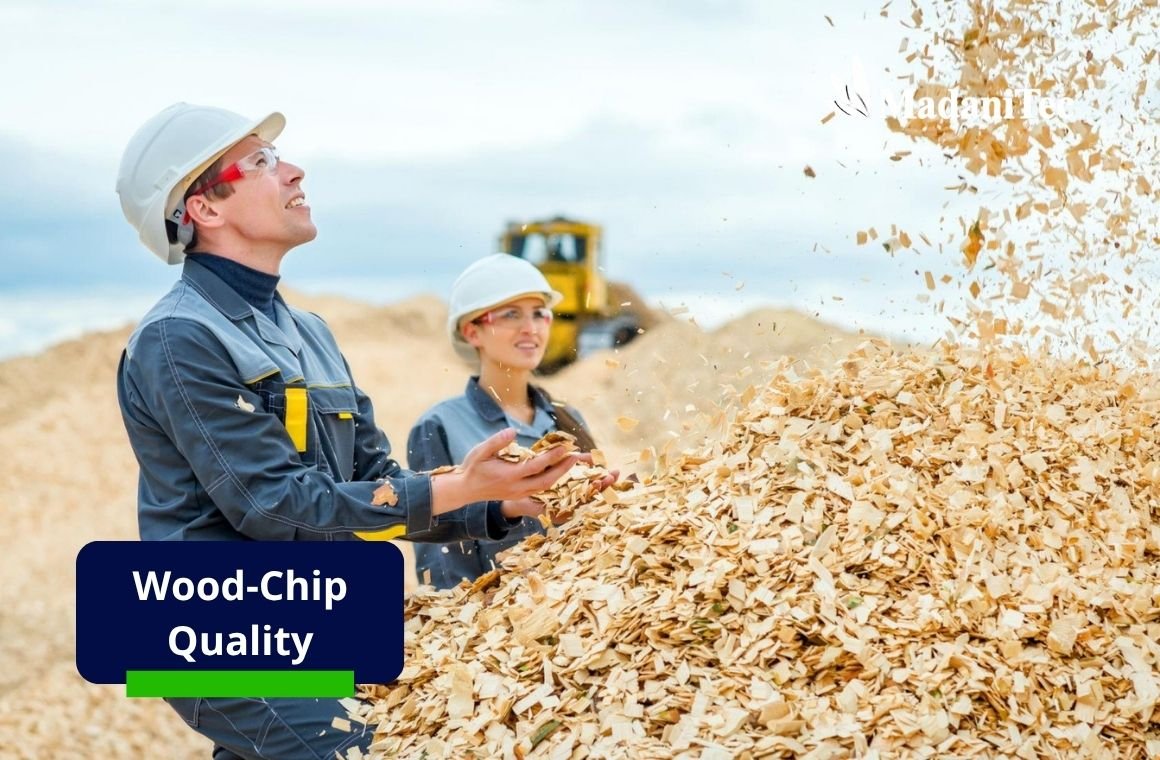
Wood chips may look like a simple by-product of wood processing, but their quality can vary significantly. Two piles of wood chips can look similar at first glance while having different moisture levels, particle-size distributions, ash content, and suitability for further processing.
This matters because wood chips are used as raw materials in biomass energy, pellet production, pulp and paper, and other industrial applications. Research published in Renewable and Sustainable Energy Reviews notes that moisture content, ash content, and particle-size distribution are among the important attributes used to assess wood chip quality.
So, what actually makes one batch of wood chips better than another?
Why Does Wood Chip Quality Matter?
Wood chip quality matters because it can affect what happens after the chipping process.
For biomass applications, inconsistent material can make drying, storage, feeding, and combustion more difficult.
A 2024 study published by the USDA Forest Service found that variations in heating value, moisture content, ash content, and size distribution can contribute to longer drying times, feed-system blockages, excess waste, and fluctuations in energy output.
In other words, producing wood chips is not simply about reducing large pieces of wood into smaller ones. The goal is often to produce material with characteristics that match the requirements of the next process.
Learn more about: Sawdust Is Not Just Waste: 7 Innovations That Give Wood Residues a Second Life
What Makes a Good Wood Chip?
There is no universal definition of a “perfect” wood chip because the ideal characteristics depend on how the material will be used.
However, several factors commonly influence quality.
Consistent Particle Size
Particle size is one of the first things to consider. Wood chips that vary widely in size can behave differently during transportation, feeding, drying, and further processing.
Research on chipping has shown that chip size distribution can be influenced by the chipper type, wood species, part of the tree being processed, knife condition, and screen configuration.
This is why consistent output can be more valuable than simply producing a large quantity of chips.
Controlled Moisture Content
Moisture is another critical factor.
A recent review found that moisture content directly affects the energy content, storage stability, and handling properties of wood chips.
Wood naturally absorbs and releases moisture depending on environmental conditions. The USDA Forest Service explains that controlling moisture during drying, handling, and storage is important for maintaining more stable material properties.
However, this does not mean that the driest wood chips are always the best. The appropriate moisture level depends on the intended application and the requirements of the next processing stage.
Low Contamination
Clean material is equally important.
Soil, sand, gravel, and other foreign materials can increase ash content and reduce the suitability of wood chips for certain applications.
Proper storage can help prevent contamination. USDA guidance, for example, recommends clean, well-drained storage surfaces to reduce the introduction of dirt, gravel, and other contaminants.
Suitable Raw Material
The source of the wood also matters.
Branches, logs, different wood species, and mill residues can produce different chip characteristics.
Research has found measurable differences in factors such as heating value, moisture, ash content, and size distribution among wood chip sources.
Therefore, quality control should begin before the material even enters the chipper.
Does Wood Chip Size Really Affect Its Quality?
Yes, but the “right” size depends on the application.
Oversized pieces may create problems during feeding or require additional size reduction. On the other hand, excessive fines can create handling and processing challenges.
Research on industrial chippers has shown that knife condition and screen configuration can significantly affect particle-size distribution.
Worn knives, for example, can reduce productivity and increase fuel consumption while also changing the proportion of different particle sizes.
This means size control is not simply about making every chip identical. It is about producing a particle distribution that is appropriate for the intended use.
How Does Moisture Affect Wood Chip Quality?
Moisture can influence both the technical and economic side of wood chip processing.
When wood chips contain excessive moisture, more energy may be required to remove that water before certain downstream applications. Moisture can also influence storage stability and handling characteristics.
Storage conditions matter as well. Poorly managed piles can retain moisture and create conditions that encourage deterioration.
The USDA Forest Service has also documented the importance of appropriate drying and storage practices for maintaining wood chip quality.
For this reason, moisture management should be considered part of the overall processing system rather than treated as a separate issue.
Can the Chipping Process Affect Wood Chip Quality?
Absolutely.
The condition of the machine and its cutting components can directly influence the output.
study found that knife wear caused a significant reduction in chipping productivity and increased fuel consumption, while also affecting particle-size distribution.
Another study found that managing knife wear can help maintain chip quality and reduce processing costs.
This is an important point for businesses processing wood residues regularly. A machine may continue operating even when its cutting components are no longer in optimal condition, but the resulting material may become less consistent.
Why Blade Condition Matters
Sharp and properly maintained knives help the machine cut material more effectively. As knives wear, the cutting process can become less efficient, potentially affecting productivity, fuel consumption, and chip quality.
How Screen Size Can Change Chip Output
For machines equipped with screens, screen configuration can influence the resulting particle distribution. Research has demonstrated that screen selection and knife condition can both affect chip size and machine productivity.
What Happens When Wood Chips Are Poor Quality?
Poor-quality chips do not necessarily become unusable, but they may require additional handling or processing.
Material that is too wet may require drying. Oversized pieces may need further size reduction. Excessive fines can complicate handling, while contaminated material may have limited applications.
The USDA Forest Service’s 2024 research illustrates why consistency matters: variations in key quality characteristics can lead to longer drying times, feed-system problems, waste, and fluctuations in energy output.
How Can Businesses Improve Wood Chip Quality?
Improving quality starts with understanding the material and the final application.
Businesses can begin by selecting suitable raw materials, controlling contamination, maintaining appropriate moisture levels, and paying attention to particle-size distribution.
The chipping equipment itself also deserves attention. Regular knife maintenance, appropriate machine settings, consistent feeding, and suitable screening can help produce a more predictable output.
The objective is not necessarily to produce the smallest possible chips or the highest volume possible. The better approach is to produce the right material for the intended application.
Is Better Wood Chip Quality Worth the Extra Processing?
In many situations, better quality can make downstream processing easier and more predictable. But improving quality also requires additional time, energy, equipment, and operating costs.
That means businesses should avoid pursuing specifications that are unnecessary for their target market.
The more practical question is:
What quality level does the final application actually require?
If the chips are going into a biomass boiler, pellet production line, or another industrial process, the required characteristics may be different.
The processing system should therefore be designed around the final application rather than simply around the machine’s maximum capacity.
How Do You Choose the Right Wood Chipping Process?
Before choosing a wood chipper or designing a processing line, several factors should be considered:
- Type and size of the raw wood
- Desired chip size
- Target production capacity
- Moisture content
- Expected contamination level
- Intended end product
- Need for screening or further processing
- Frequency of operation
- Maintenance requirements
This approach helps ensure that the equipment is matched to the actual production requirements.
A high-capacity machine can be valuable for businesses handling large volumes of wood, but capacity alone does not determine the quality of the final material.
The quality of the input, cutting system, machine condition, and downstream process all work together.
Conclusion: Quality Determines More Than Just Appearance
Wood chips may look simple, but their quality can determine much more than appearance.
Particle size, moisture content, cleanliness, raw material, and processing conditions can all influence how the material behaves after chipping.
For businesses using wood residues as biomass or as a raw material for further processing, understanding these factors can help reduce unnecessary processing problems and improve material consistency.
Ultimately, producing good wood chips is not simply about cutting wood into smaller pieces. It is about producing a material that is consistent, suitable for its intended purpose, and valuable enough to support the next stage of the process.
Madanitec — providing technology and machinery solutions to support waste processing and the development of circular economy-based businesses, Indonesia’s waste issues.
Affordable prices and reliable quality are supported by after sales service and warranty with every purchase. Do not hesitate to contact 081215778768 via WhatsApp and get a special offer today.