Plastic has become an important material in modern life because it is lightweight, durable, and versatile. However, the growing amount of plastic waste has also created a major challenge for waste management systems around the world. One approach to addressing this challenge is to recover discarded plastic and return it to productive use.
This is where a high yield plastic recycling machine can play an important role. By supporting more efficient plastic processing, recycling technology can help businesses recover valuable materials while reducing the amount of plastic that ends up as waste.
What Is a High Yield Plastic Recycling Machine?
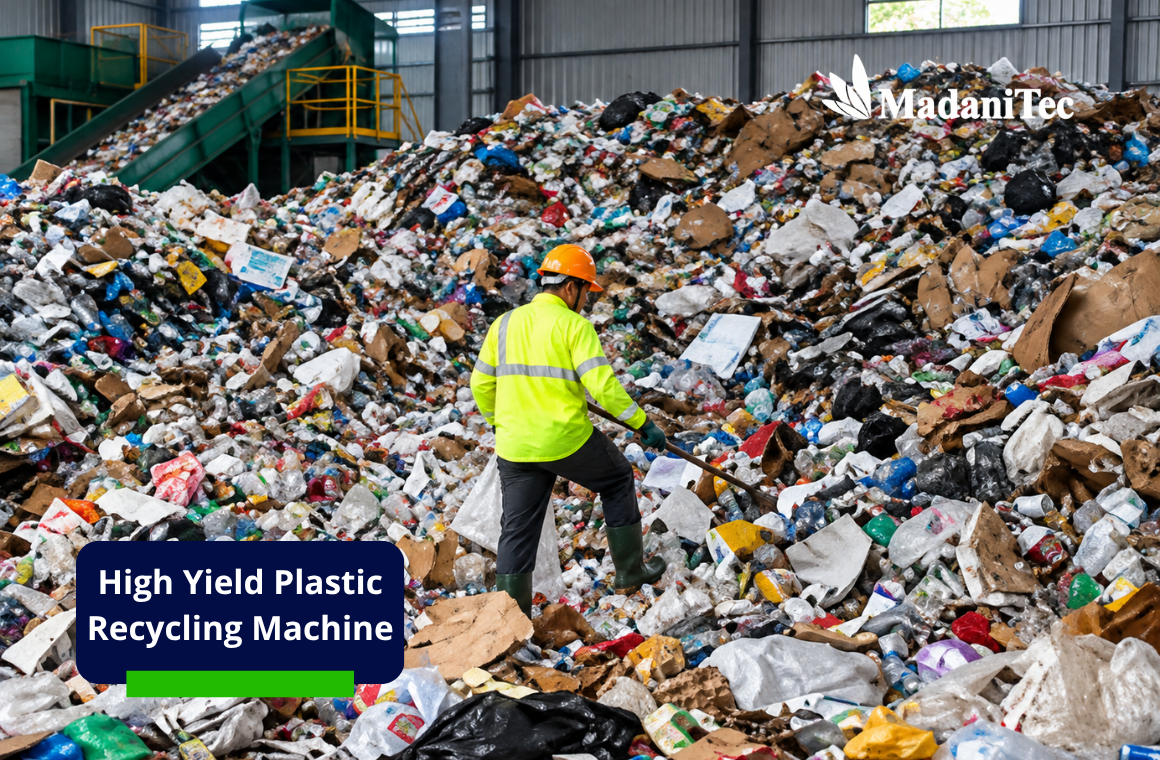
A high yield plastic recycling machine is designed to process discarded plastic materials and recover them for further use.
Depending on the machine configuration and the type of plastic being processed, the recycling process may involve several stages, including sorting, shredding, washing, drying, and size reduction.
The term “high yield” generally refers to the ability of a recycling process to recover a significant proportion of usable material from the incoming plastic waste.
However, yield does not depend on the machine alone. The quality of the input material, contamination levels, sorting process, moisture content, and operating conditions can all influence the final output.
For recycling businesses, understanding these factors is essential for creating a consistent and efficient processing system.
Why Does Plastic Recycling Matter in a Circular Economy?
A circular economy aims to keep materials in use for as long as possible rather than following a linear model of producing, using, and discarding products.
Plastic recycling supports this concept by giving discarded materials another opportunity to become useful resources.
Instead of treating used plastic as the final stage of a product’s life, recycling can help move the material back into the production cycle.
A more circular approach can also reduce dependence on newly produced plastic materials in applications where recycled material is suitable.
This makes efficient recovery and processing an increasingly important part of modern waste management.
Learn more about: Why Waste Is Becoming a Valuable Resource for Modern Industries
How Can Recycling Technology Improve Plastic Recovery?
Technology can influence several stages of the recycling process. A well-designed high yield plastic recycling machine can help businesses establish a more controlled processing workflow.
Better Material Preparation
Plastic waste often arrives in mixed forms and may contain dirt, labels, moisture, or other unwanted materials. Proper preparation before processing can help improve the quality and consistency of recycled output.
Sorting materials according to their type and condition is therefore an important step. Better preparation can reduce unnecessary losses during subsequent processing stages.
More Consistent Processing
Consistency is another important factor in recycling. Equipment that is properly matched to the material can provide more predictable processing conditions.
For example, different plastic materials may require different approaches to size reduction and processing. Selecting suitable equipment can help businesses maintain a stable workflow while handling larger quantities of recyclable material.
Reducing Material Loss
Material loss can occur when plastic is poorly sorted, contaminated, incorrectly processed, or damaged during handling. Improving the overall process can help businesses recover more usable material from the same input volume.
This does not mean that every plastic waste stream can achieve the same recovery rate. Instead, businesses should evaluate the characteristics of their material before determining which recycling technology is appropriate.
What Types of Plastic Can Be Recycled?
Not all plastics behave in the same way during recycling. Common recyclable plastics include materials such as polyethylene terephthalate (PET), high-density polyethylene (HDPE), low-density polyethylene (LDPE), and polypropylene (PP), although suitability depends on the specific application and processing system.
Plastic products can also differ in terms of thickness, contamination, additives, and previous use. These differences can affect how efficiently the material can be processed.
For this reason, recycling businesses should identify the dominant plastic materials in their waste stream before selecting equipment.
What Factors Affect Plastic Recycling Yield?
Several factors can influence recycling performance.
Input quality is one of the most important. Cleaner and better-sorted plastic generally provides a more suitable starting point for processing.
Contamination can also reduce usable output. Food residue, dirt, metal, paper, and other unwanted materials may complicate the recycling process.
Moisture content is another consideration, particularly when washing is part of the recycling workflow. Proper drying and material handling can help maintain more consistent processing conditions.
Finally, machine capacity and configuration should correspond to the actual material volume and type. A system that is too small may create processing bottlenecks, while unsuitable equipment may not provide the desired output consistency.
How Can High-Yield Recycling Support Businesses?
Efficient plastic recycling can create opportunities beyond waste reduction. Recovered plastic materials may become inputs for other manufacturing processes, depending on their quality and intended application.
For businesses, this creates the possibility of turning a waste stream into a more useful material resource. It can also encourage the development of new recycling activities, collection networks, and supporting businesses.
However, profitability should not be judged by machine capacity alone. Businesses need to consider material availability, labor, energy consumption, maintenance, transportation, product quality, and market demand for recycled materials.
A high yield plastic recycling machine can become part of this system, but successful recycling ultimately depends on how well the entire operation is designed and managed.
Why Does a Circular Plastic Economy Matter for the Future?
The future of plastic management will require more than simply collecting waste. Materials need to be sorted, processed, recovered, and returned to productive applications wherever technically and economically feasible.
This creates an opportunity for businesses to explore technologies that improve material recovery while supporting more responsible resource use.
For small and medium-sized businesses in particular, the development of practical recycling systems can become part of a broader effort to build local circular-economy activities.
The right technology can help connect waste collection with material recovery and create a more structured recycling value chain.
Learn more about: How Modern Waste Sorting Technology Is Changing Recycling Efficiency
Conclusion: Building a More Circular Plastic Value Chain
Plastic recycling is an important part of the transition toward a more circular economy. Improving recovery efficiency can help businesses make better use of discarded materials while reducing unnecessary waste.
A high yield plastic recycling machine can support this process by providing a more controlled and efficient way to handle recyclable plastic.
However, achieving good results requires more than choosing equipment. Material quality, sorting, contamination, moisture, operating practices, and market demand all need to be considered together.
For businesses exploring plastic recycling as part of their waste-management or production strategy, choosing technology based on actual material characteristics and processing requirements is an important starting point.
With the right approach, recycling can move beyond waste handling and become part of a more sustainable and productive plastic value chain.
Madanitec develops technology solutions for various business and waste-processing needs. For businesses looking to explore suitable processing technology, understanding the material, capacity, and desired output first can make the equipment selection process more practical and targeted.
For consultations regarding machines and appropriate technology solutions for various processing and production needs, please contact the Madanitec team via WhatsApp at 081215778768.